
Learning Exchange event in Bogota 2019

Learning from both our successes and challenges – as well as sharing that knowledge – are at the heart of the Tenure Facility’s work. The importance of creating spaces for this to happen cannot be overstated when dealing with complex subjects like land tenure, as it promotes the blossoming of new ideas, problem solving, and better ways of getting things done.

In October, project leaders from Africa, Asia, and Latin America met in Bogota, Colombia, for the sixth Tenure Facility Learning Exchange event. It brought together more than 100 participants from over 19 countries, including at least 15 representatives from 12 participating governments, in addition to project members – representing 14 projects in 13 countries – donors, academics and others. It was co-hosted by the Javeriana University, the office of the Attorney General of the Government of Colombia, the Rights and Resources Initiative (RRI), and the Tenure Facility.

Highlights from the event included a chance for different projects to share their achievements, in everything from numbers of people reached, hectares of land where tenure has been titled or strengthened, to the launching of a sustainable tourism initiative and even the development of an app to help smooth titling and registration of communal lands.
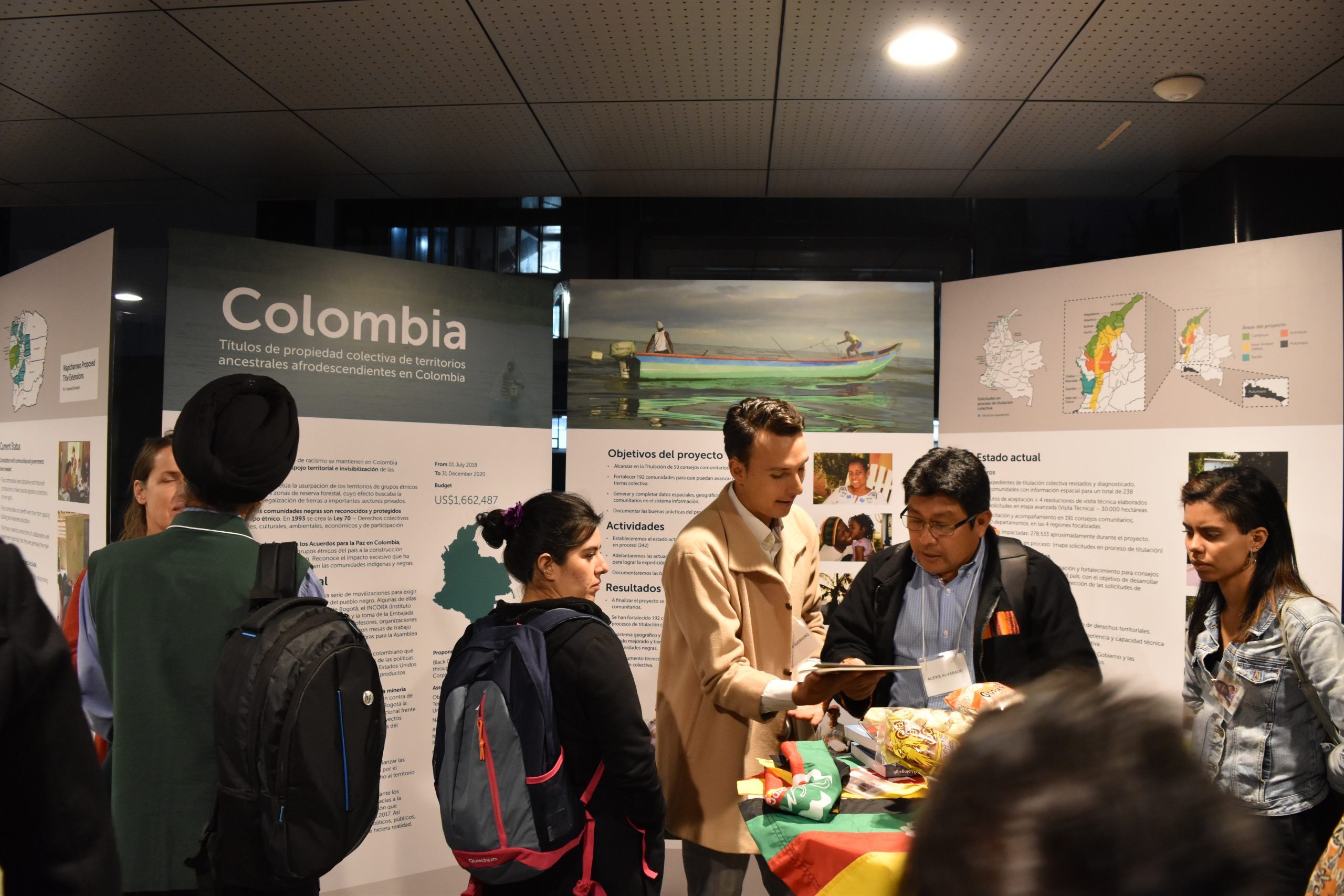
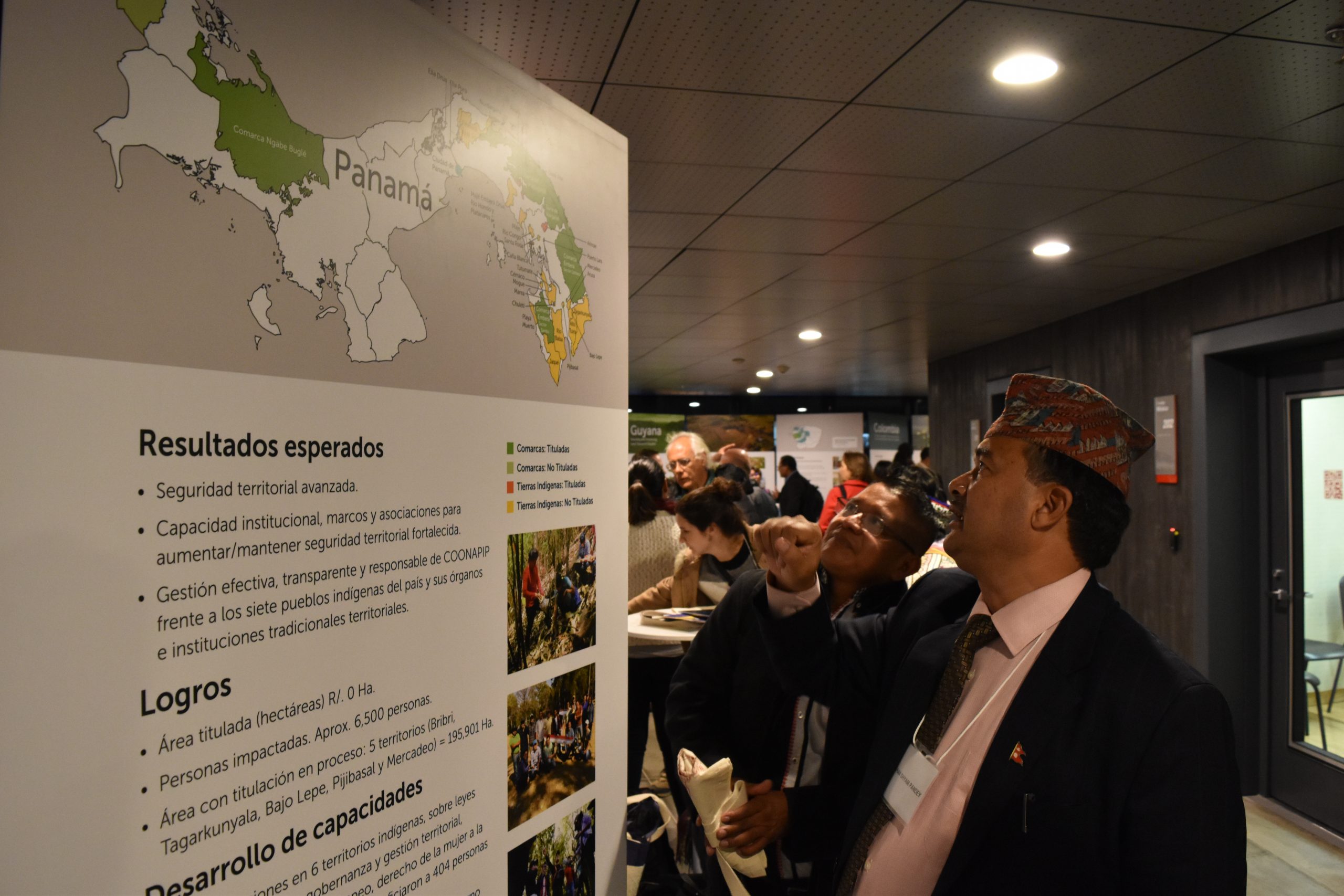
In Colombia, the project has impacted more than a quarter of a million people since its launch in August 2018, while in Panama, there were impressive advancements in relation to rights of indigenous peoples living in protected natural areas. Furthermore, land titling processes have been launched for Panamanian territory covering nearly 200,000 hectares – this in a country with a total area of just 7.7 million hectares.

In Peru, our partners have strengthened the legal security of 2,400,000 hectares of indigenous territories at the national level and have accomplished the titling of nearly 650,000 hectares for native communities in Loreto and Madre de Dios.

Our partners from Indonesia shared some powerful lessons learned and progress: these included the establishment of an eco-tourism initiative in Lebak District, which offers a glimpse of the brighter future local communities can expect with more secure tenure, and with the right support.

The India project had a wealth of information to share on the successes and challenges they’ve faced in the roll-out of a tool – which includes a highly innovative mobile telephone app – that they have developed to simplify and support titling and registration. It is hoped this could help hugely with the current challenges that the government’s administration has been facing in relation to handling titling processes.
In Liberia, work is underway in 24 communities to title half a million hectares collectively, with an estimated 100,000 people benefiting from the project. Our partners in Mali meanwhile focused on their successful efforts to raise awareness of rights amongst local communities, helping them challenge for and claim their territories, as well as respecting the rights of others.

Newer projects in Guyana and Mozambique were able to start learning vital lessons from their colleagues, as well as laying out exciting visions for their own initiatives.

Overall this learning exchange experience resulted in a highly fruitful event where all the Tenure Facility’s partners could learn from each other and grow. Honest and open dialogue on what we have done well and what we can do better is central to our commitment to constantly improve, and we look forward to more meetings and learning opportunities in the near future. For more information on the impacts and results of our projects read here.

Articles

17 August 2026

Cameroon

The land beneath their feet: Bagyeli communities’ journey towards recognition and security of their land and forest rights

In the Ocean Department of southern Cameroon, roads wind through dense forests, long stretches of red laterite tracks, major development projects — including mining and agro-industry — and industrial plantations that seem to expand a little further each year, gradually reducing the living space available to communities.

04 August 2026

Blogs

Pourquoi les droits fonciers ne peuvent pas attendre la paix

Et si attendre la paix était l’un des plus grands obstacles à la sécurisation des droits fonciers ? Pendant des décennies, la gouvernance foncière a été largement considérée comme un élément de la reconstruction post-conflit. L’hypothèse était simple : le conflit prend fin, les institutions se redressent, les populations rentrent chez elles, et ce n’est qu’alors que les droits fonciers peuvent être rétablis. Dans de nombreuses régions du monde, cependant, cette séquence ne correspond pas à la réalité. Les conflits sont souvent prolongés, les institutions peuvent être affaiblies ou inexistantes, et les registres fonciers officiels ont parfois disparu. Pourtant, les communautés continuent de cultiver leurs terres, de gérer les forêts, de résoudre les différends et de défendre leurs territoires en s’appuyant sur les systèmes de gouvernance qui restent à leur disposition.

23 July 2026

Blogs

Why land rights can't wait for peace

What if waiting for peace is one of the biggest obstacles to securing land rights? For decades, land governance has largely been treated as part of post-conflict recovery. The assumption has been straightforward: conflict ends, institutions recover, people return home, and only then can land rights be restored. In many parts of the world, however, that sequence does not reflect reality. Conflict is often prolonged, institutions may be weakened or absent, and official land records may have disappeared. Yet communities continue farming, managing forests, resolving disputes, and defending their territories using the governance systems still available to them.

13 July 2026

Brazil

"We are the middle, the beginning and the middle." : Quilombola women in land rights and climate action

Long before a land title is granted or a policy is signed, movements are built. They are built by women and men organising communities, defending territories, passing on ancestral knowledge, protecting culture, and ensuring generations of struggle are never forgotten. Between 10 and 14 June 2026, the III Meeting of CONAQ's Quilombola Women's Collective brought hundreds of these leaders together from across Brazil, alongside representatives from Latin America and Africa. Over five days, they celebrated victories, confronted urgent challenges and strengthened a movement that continues to shape Brazil's conversations on land rights, climate justice, gender equality and historical reparation.

02 June 2026

Congo Brazzaville

Seeding land rights in northern Republic of Congo

The road into the Sangha and Likouala departments in northern Republic of Congo passes through thick forest. Yet asphalt gives way to red soil where logging trucks pass day and night, carrying off trees that stood firm for centuries before concession paperwork tried to redefine who owns the land. These forests hold more than timber—they cradle rivers, fertile soils, unique species, and carbon stock.

14 May 2026

India

Reclaiming forests, reviving lives: a global lesson from Kalika Prasad, India

In the past, protecting the forests of eastern India could make you a criminal. “We were afraid to enter the forest where we had lived all our lives,” recalls a villager. “Today, that same forest is under our care.”