
2025-03-20
The Amazon is often imagined as an endless sea of dense green, but the reality in Maranhão, Pará, and neighboring Piauí tells a different story. Here, dry fields stretch into the horizon, interrupted by dense forests of babassu palms. The red dust rises, and the land feels both vast and raw. This is the northeastern Amazon, where the forest and the cerrado meet, a place as fragile as it is resilient.
In this landscape, the women of the Interstate Movement of Babassu Coconut Breakers (MIQCB) are leading a quiet but powerful fight. They move through the babassu forests with care, harvesting what the palm gives without taking too much. Their work doesn’t just sustain their families; it preserves the land, strengthens their culture, and protects the environment.
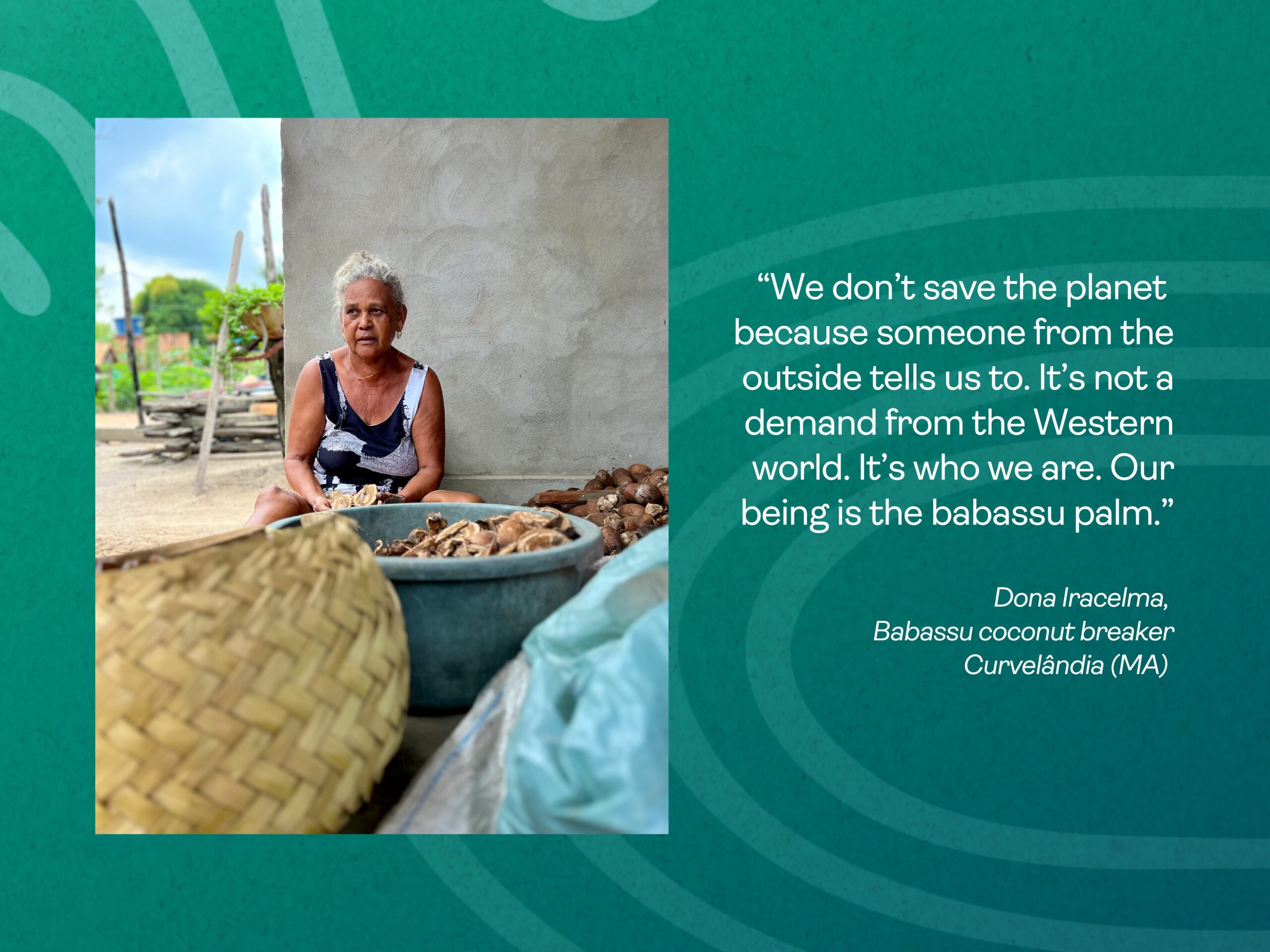
For the quebradeiras, the babassu palm is more than a tree; it is life. Every part of the palm is used: the oil for cooking, the shell for charcoal, and the fruit for flour. This connection runs deep and is often described as maternal.
“It carries its fruit bunch for nine months, just as a woman carries a child. It represents us, even the shape of the coconut resembles a woman’s breast.” – Alana, daughter of a Babassu coconut breaker from Piauí.
But this way of life is constantly threatened. Agribusiness expansion, land grabbing, and deforestation continue to push communities out, jeopardizing livelihoods and socio-biodiversity.

Babassu coconut products
For decades, the quebradeiras have fought for their right to access and use babassu forests. A major victory in this struggle has been the Free Babassu Laws, a set of groundbreaking state and municipal laws that prohibit landowners from blocking access to Babassu palm groves. These laws, now in place in Maranhão, Pará, Tocantins, and Piauí, are a landmark achievement, ensuring that the thousands of women who depend on babassu for their livelihoods can continue their way of life.
In Piauí, the Território das Quebradeiras de Coco Babaçu Law (Law 7888/2023) represents another unprecedented milestone. It is the only territorial law in Brazil specifically framed around women’s land rights, recognizing the historical role of quebradeiras in protecting and cultivating these lands.
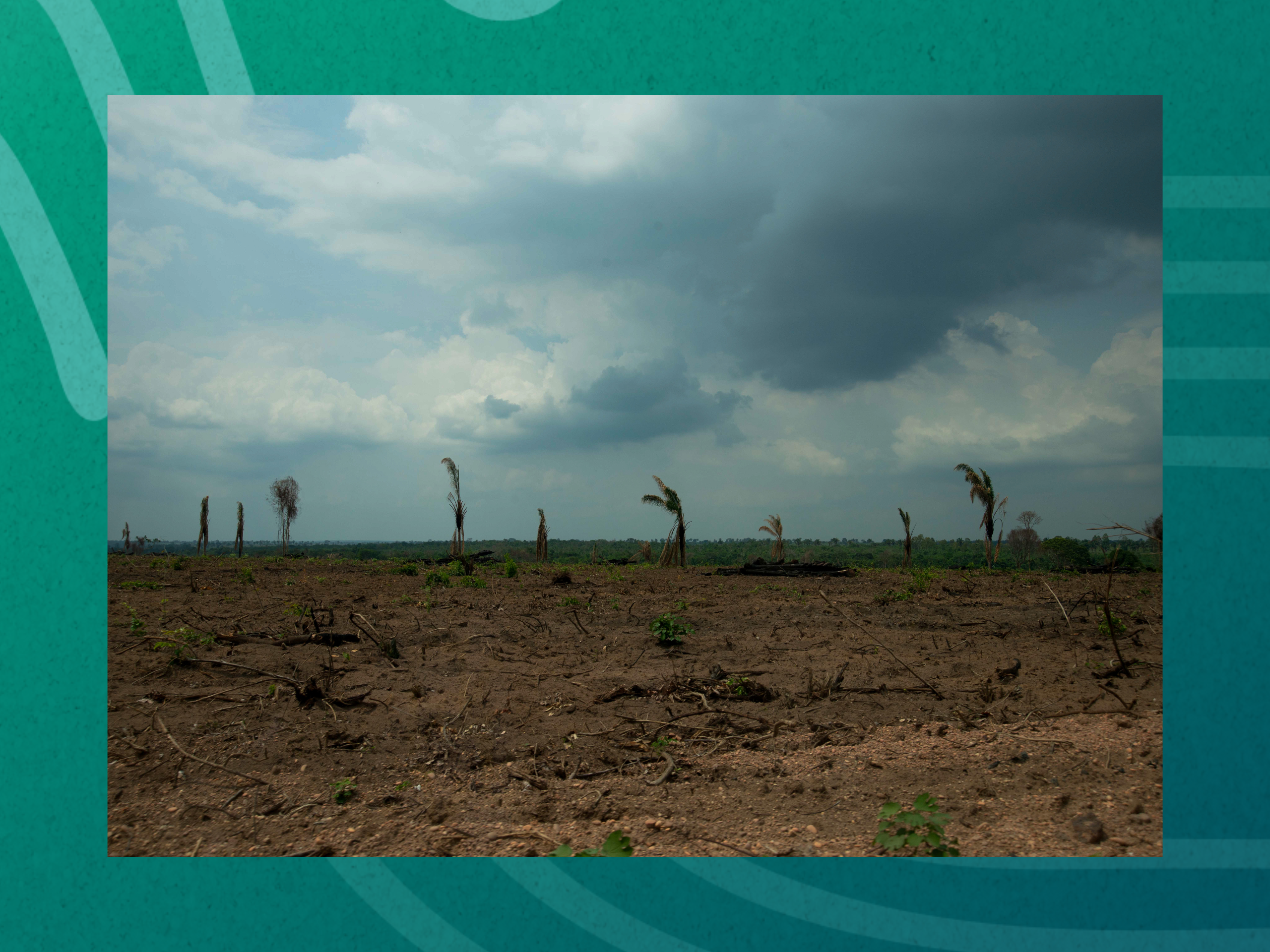
Deforested land in Curvelândia, Maranhão.
This law has been central to the land rights struggle in Santa Rosa (PI), where the community officially received its collective land title in January 2025. After years of persistence, advocacy, and navigating bureaucratic challenges, their land is now legally recognized. The official entrega (handover) ceremony on February 13th will mark the formal transition of ownership and a new chapter in their fight for security and autonomy. With the support of Tenure Facility through the BAQUELI Project, MIQCB has worked alongside the community to secure legal recognition of their territory.
“This isn’t something that happens overnight where you get regularized and receive the title the next day. No, because each step is part of a process.” —Dona Ramida, quebradeira de coco, Santa Rosa (PI).
The process began with community meetings, where families came together to document their traditions, professions, and cultural practices. Their signatures were presented to INTERPI, the state land agency, which initiated the registration process. Leadership teams were formed, and the community secured its CNPJ (tax ID), moving closer to land titling.
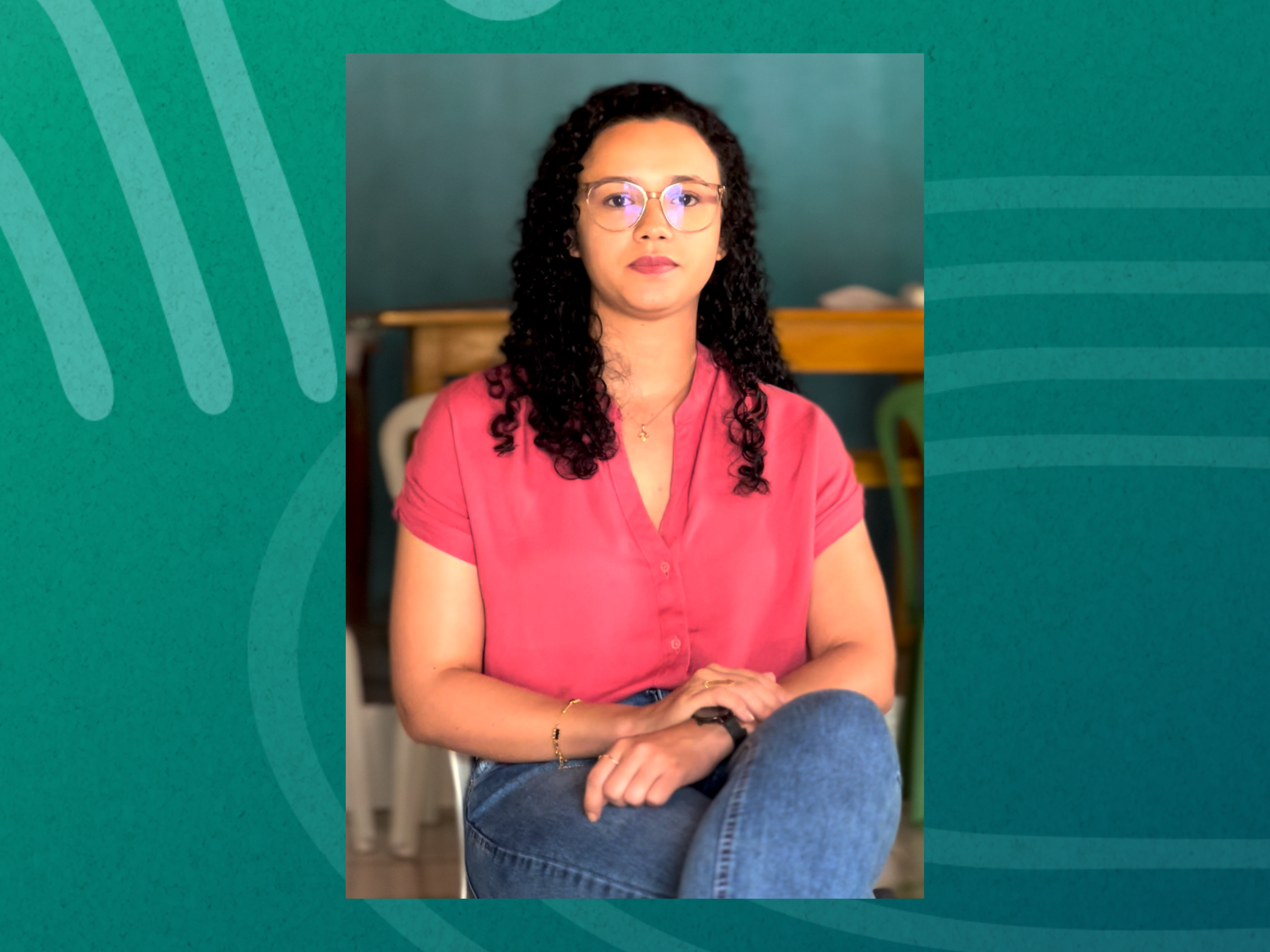
Yaponyra Aglaia Rodrigues, MIQCB's lawyer
A key turning point in the fight for land rights and environmental protection was the addition of female lawyer Yaponyra, who has transformed how communities navigate legal processes. Supporting the Interstate Movement of Babaçu Coconut Breakers (MIQCB) in Piauí, Yaponyra Aglaia Rodrigues has been crucial in advancing stalled land titling efforts in communities like Vila Esperança and Santa Rosa.
Before her involvement, complex legal disputes and bureaucracy hindered progress. Now, Yaponyra provides essential legal support, empowering communities to make informed decisions.
"We now have a lawyer working specifically within our territory here in Piauí. This has greatly strengthened our efforts. She is a very competent lawyer, and so far, I have nothing but praise for her. Whenever we face obstacles, we call her, and she answers right away. It only strengthens us. "
Balancing her final year of university, Yaponyra works closely with MIQCB’s women and youth, embodying the movement’s commitment to women’s leadership and lasting change in the fight for land rights.
The fight for land is the fight for the forest. And the fight for the forest is the fight for the climate.
Studies show that deforestation rates are significantly lower where local communities have legal land rights. Secure land tenure means that forests remain intact, carbon stays stored in trees and soil, and biodiversity thrives.
“We use the funds for border mapping, advancing titling processes, mobilizing, and campaigning. It’s all connected to our survival, our freedom.” —Marinalda Rodrigues, MIQCB coordinator, Esperantina (PI).
These aren’t just legal victories; they are acts of climate action.
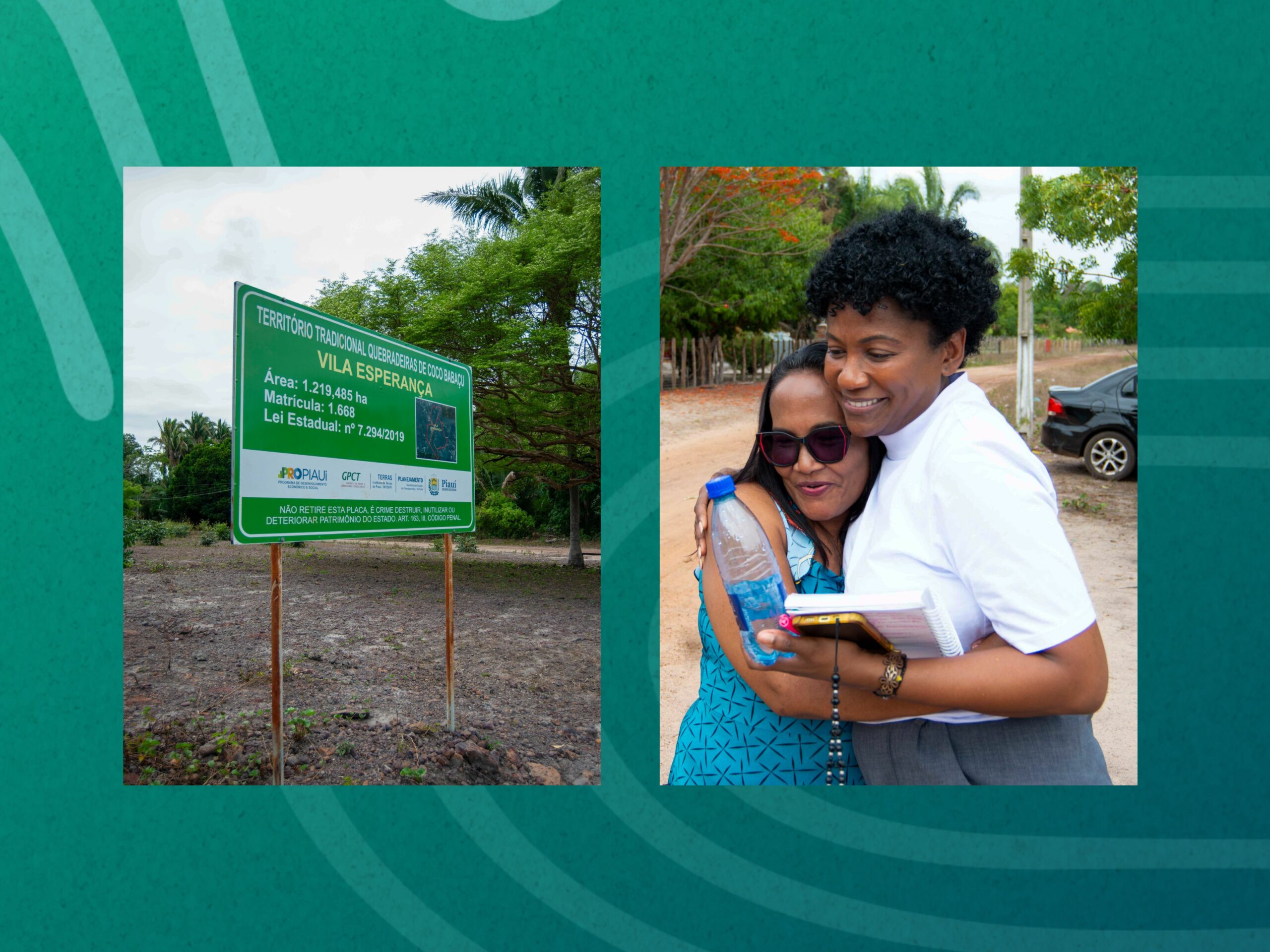
Dona Rosa (Babassu coconut breaker and Santa Rosa community member) and Robervone Nascimento (Tenure Facility)
MIQCB’s vision extends beyond today. A cornerstone of this vision is the Centro de Formação das Quebradeiras de Coco Babaçu (Training Center for the Babaçu Coconut Breakers), inaugurated in May 2023 in São Luís, Maranhão. This educational hub empowers women and youth across Maranhão, Pará, Tocantins, and Piauí through training in socio-environmental project development, community leadership, and land rights.
For the quebradeiras, protecting the forest is about protecting their children’s future.
“MIQCB helped us with organization, and the organization motivated my children with activities. One very concrete result is that my son got into college—he’s studying now.” —Dona Raimunda, quebradeira de coco, Curvelândia, Maranhão.
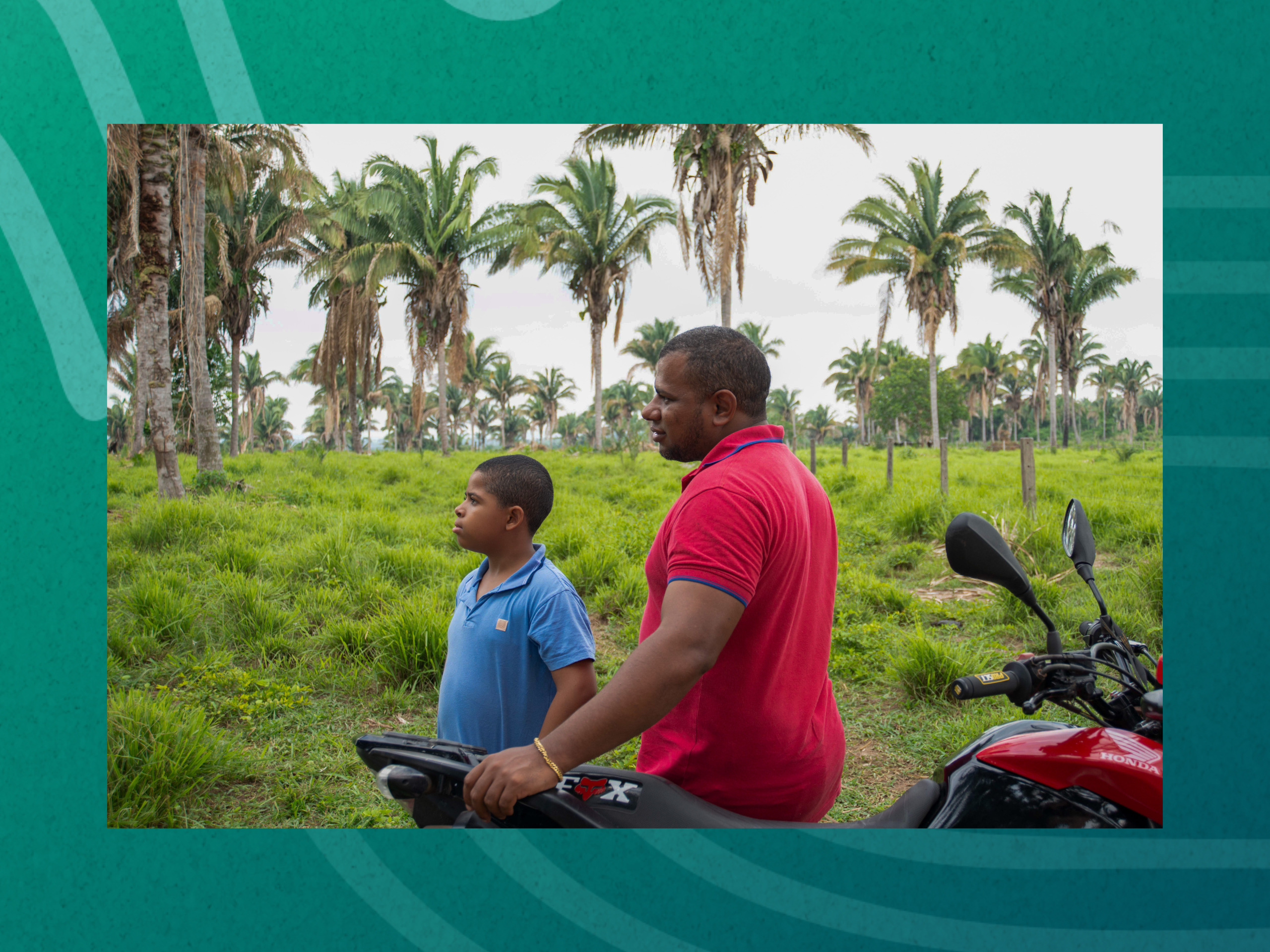
Dona Raimunda's son and her grandson, Curvelândia, Maranhão
The landscapes of Maranhão and Piauí are not the Amazon that many picture, but they are just as critical to the planet’s health. This wide, varied forest is a frontline in the fight against climate change, and the women of MIQCB are its most dedicated defenders.
At Tenure Facility, we support MIQCB because their leadership proves that land and territorial rights—along with the right to access and use natural resources—are fundamental to environmental protection. Their work in securing land tenure is essential for preserving Babassu forests, protecting biodiversity, and strengthening climate resilience.
Our role is to provide financial support and resources that help MIQCB advance its efforts, whether through land mapping, legal advocacy, or strengthening community organizing. But it is MIQCB that leads this fight. Their knowledge, experience, and commitment drive the real impact on the ground.
Supporting MIQCB means standing behind communities already protecting their land, their culture, and our planet.
Articles