
2025-08-21
By Jeremy Gaunt
When leaders, ministers, diplomats, and others meet for the United Nations COP30 summit on climate change in November, Indigenous Peoples’ participation and influence are expected to reach record levels.
This is not just because the summit is being held in Belém, Brazil, the gateway to the Amazon and home to some 1.7 million Indigenous Peoples. It is also because Indigenous Peoples, as experts, must be included in the fight to combat climate change. They are demanding that recognition at a level never before seen.
Belém will serve as the crucible of a historic drive to include Indigenous Peoples’ needs in nationally determined contributions, or NDCs. These, in essence, are countries’ public statements about their efforts to cut national emissions and adapt to climate change in line with the Paris Agreement.
At COP30, governments will renew their NDCs. But this time, Indigenous Peoples have prepared the ground for their roles, rights, and representation—indeed, their climate expertise and lifestyles—to be included.
“This is not only about climate; it’s something about life, the livelihoods of our communities,” Patricia Suárez, adviser to the National Organisation of Indigenous Peoples of the Colombian Amazon (OPIAC), told participants during a Land Dialogues webinar From the Ground Up: Indigenous NDCs for Climate Justice in the Amazon Basin hosted by Land Portal and Tenure Facility with the support of Ford Foundation in July.
"This is not only about climate; it’s something about life, the livelihoods of our communities."
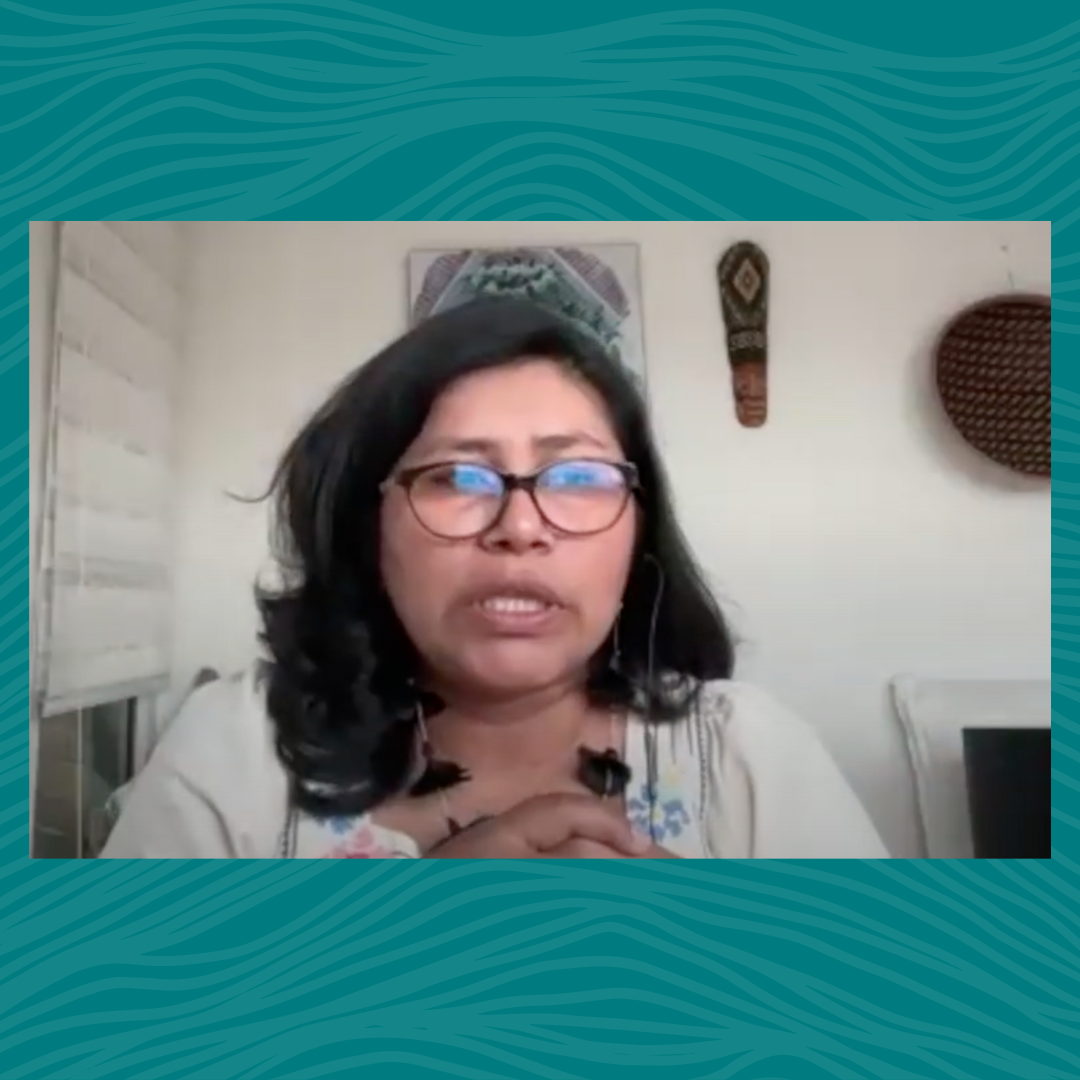
Patricia Suárez at the Land Dialogues Webinar July 2025
Leading the effort are Indigenous Peoples’ organisations from nine Amazon Basin countries, who have presented a momentous joint demand to their respective governments. In it, they advocate for Indigenous Peoples’ leadership at COP30 and inclusion in conversations to shape and implement the upcoming NDCs.
In their statement, they write: “For the first time, the world will discuss the future of climate in our territory, within the Amazon—where the forest speaks for us, and her voice echoes to the world with urgency.”
These organisations, which represent over 500 Indigenous Peoples, agreed on their demands at Pre-COP Indígena, a meeting in Brasilia in June. They are calling upon Brazil, Peru, Bolivia, Ecuador, Colombia, Venezuela, Guyana, Suriname, and French Guiana to include six key elements in their new NDCs.
These are: the protection of Indigenous territories as part of climate policies; direct access for Indigenous Peoples to climate finance; the inclusion in decision-making at all levels; protection for Indigenous defenders of forest lands; recognition of the value of Indigenous knowledge in protecting their lands; and the exclusion of Indigenous territories from mining and oil exploitation.
As well as the joint declaration, some Indigenous groups have launched their own NDCs. In April, for example, the Articulation of Indigenous Peoples of Brazil (APIB) agreed an Indigenous NDC designed to reflect self-determination and direct participation in climate change.
The APIB NDC focuses on territorial rights as an essential factor in climate mitigation, direct financing, the importance of ancestral knowledge, and justice, among other factors.
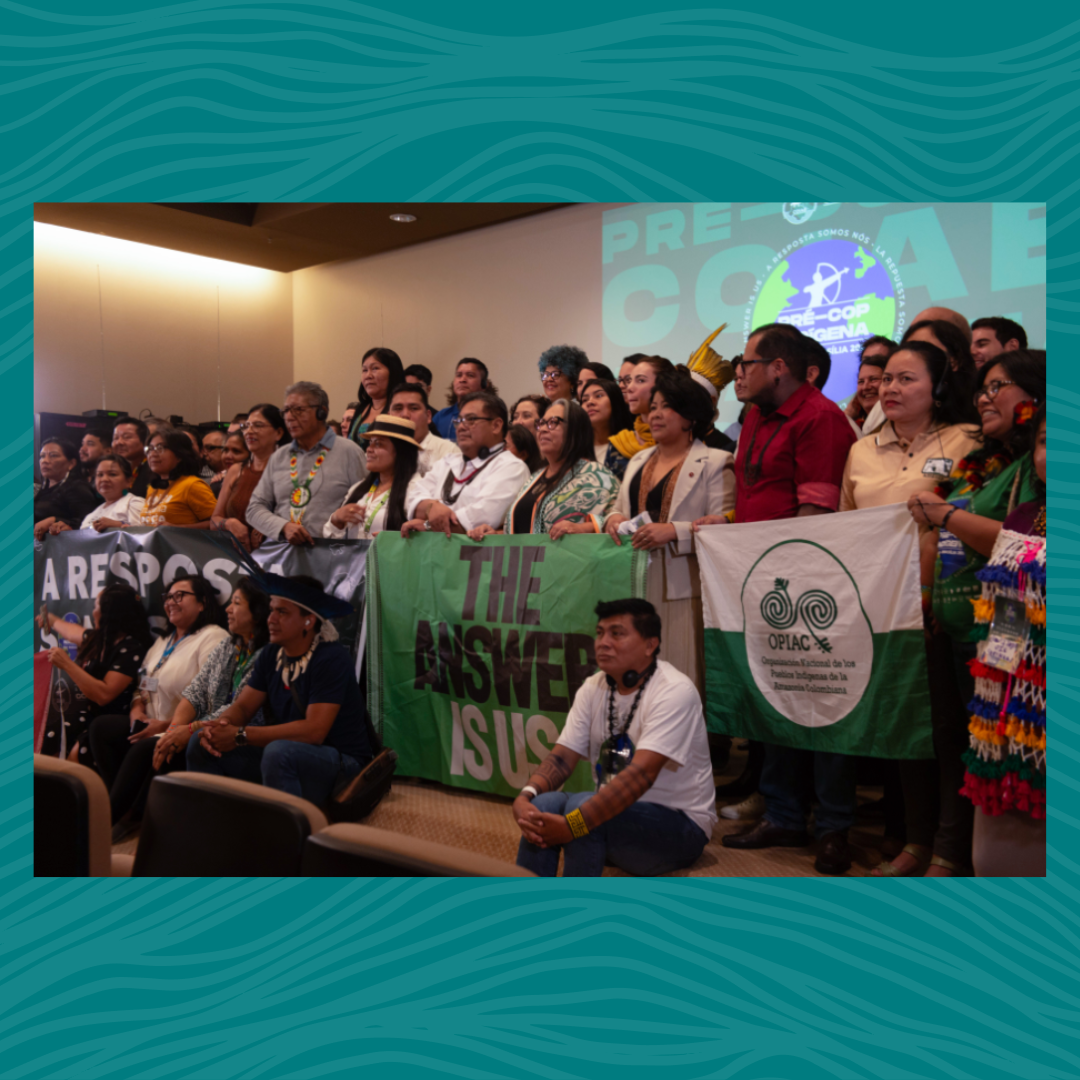
Indigenous organisations at the Pre-COP Indígena, Brazil
Hands off our lands
From a climate policy standpoint, the basis for Indigenous Peoples leading protection of their own lands is simple—they are better at it than anyone else.
A World Resources Institute study, for example, found that deforestation rates in the Amazon Basin were two to three times lower in Brazil, Bolivia, and Colombia where Indigenous Peoples had titles to their land compared to areas where they did not.
Similarly, Project Drawdown, an international organisation seeking science-based solutions to climate change, has calculated that doubling the area where Indigenous Peoples have legal rights to forests could reduce global carbon emissions by 8.69 gigatons of CO2 equivalent by 2050—about one-fifth of the world’s annual CO2 emissions.
There is, of course, the broader issue that Indigenous Peoples have historically been ignored—or worse—when it comes to the exploitation of their lands.
To address this challenge, Britain, Norway, Germany, the United States, the Netherlands, and 17 private funders agreed at COP26 to disburse $1.7 billion by 2025 for Indigenous Peoples and local communities to protect forests and advance tenure rights.
The money has mostly been distributed, but the latest Forest Tenure Funders Goup data on 2021-2023 disbursements showed that only $70 million out of £1.34 billion went directly to Indigenous-led or local community organisations in the three years — hence, the demand in the proposed NDCs for direct access to climate finance.
Pressure, meanwhile, is building for a similar or enhanced pledge to be made at Belém now that the original five-year time frame has run its course.
It will be a tough negotiation in a period when several countries are reining in overseas aid due to budget constraints and the United States has taken the political decision to close its international development agency, USAID.
"From a climate policy standpoint, the basis for Indigenous Peoples leading protection of their own lands is simple—they are better at it than anyone else. "
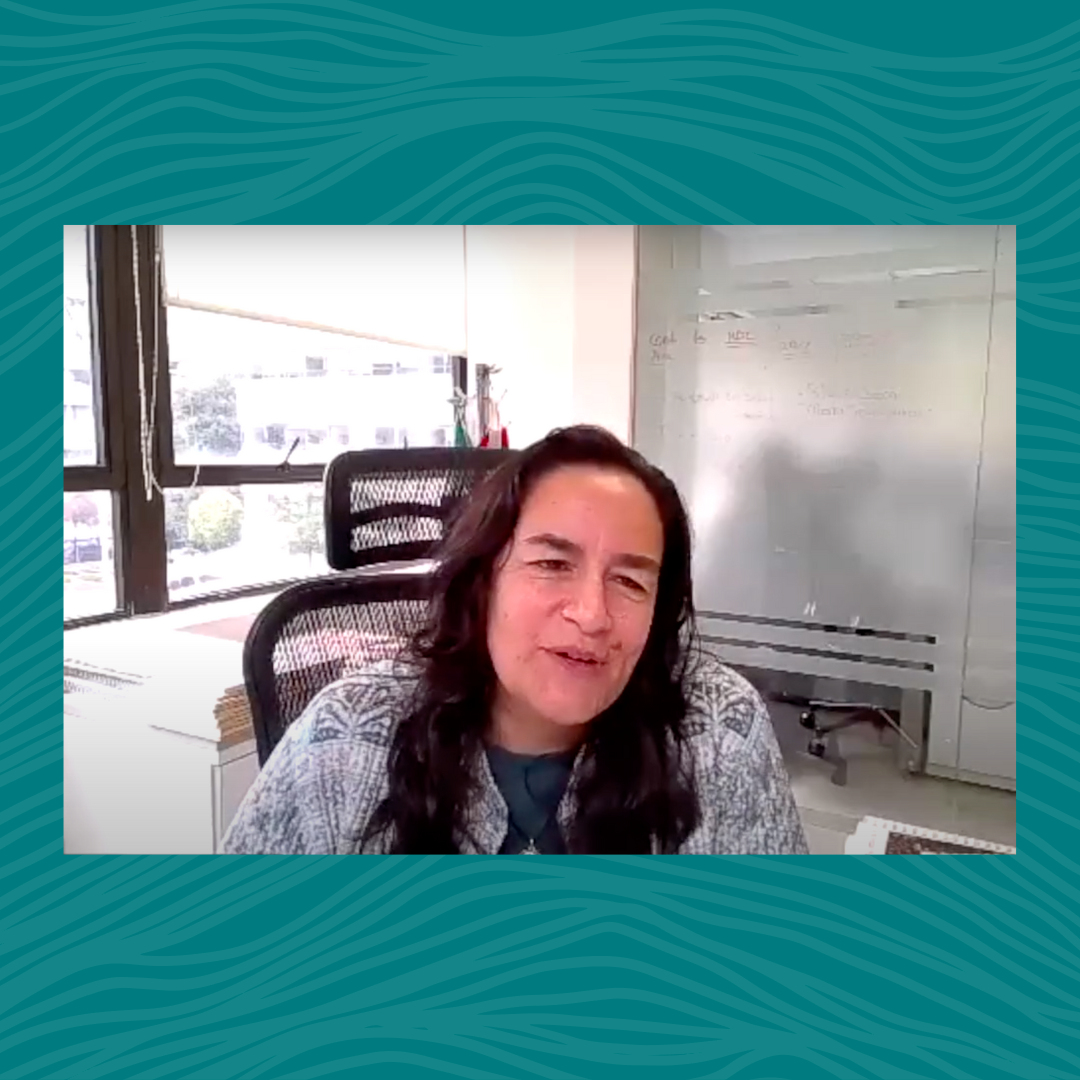
Luz Helena Hernández, director at Colombia’s Ministry of Environment and Sustainable Development, speaking at the Land Dialogues webinar July 2025
Entry point
The NDCs themselves—old and new—have a mixed record. As of mid-August, only 29 countries, representing 21 percent of global emissions, has submitted their 2035 targets ahead of Belém. This is despite a deadline to do so by last February.
Were these NDCs to achieve their goals, the World Resources Institute estimates global CO2 emissions would drop by 1.4 gigatons by 2035 from where they are supposed to be in 2030. That would still be 18.4 gigatons higher than needed to keep global temperatures at or below 2 degrees Celsius above pre-industrial levels.
But for Indigenous Peoples, the NDCs offer an official entry point into global climate policy. They serve as tools to secure recognition, financing, capacity-building, and co-benefits.
An example was on display at the July Land Dialogue. Luz Helena Hernández, director at Colombia’s Ministry of Environment and Sustainable Development, said that her government welcomed the push by Indigenous Peoples to be heard in climate policy.
“We are committed to including Indigenous Peoples’ vision in our NDCs” she said.
Jeremy Gaunt is a veteran correspondent and editor, with more than four decades of experience reporting, including 27 years for Reuters. Jeremy has written extensively on environmental and human rights issues and is a regular writer contributor to Tenure Facility’s website.
Articles