
2021-06-28
By Jeremy Gaunt
The elders of the Waorani nation in the Amazon forests of Ecuador, like many older people across the world, reckon everything has changed in their lives since they were young. And not for the better.
In their case, it is the environmental damage to their territory — changes to the climate, such as less rain, and to the flora and fauna around them — that most disturbs them.
“(They say) the world is punishing us. We don’t understand why,” Oswando, Nenquimo, co-founder of the Alianza Ceibo, a group defending the Indigenous People’s territories of the region, said. “The jungle gives us the oxygen to breathe. We have already defended our trees. But threats (keep) coming.”
Nenquimo was speaking at a June 17 Land Dialogues webinar hosted by the Tenure Facility, Land Portal, and Ford and Thomson Reuters foundations. Its remit was to explore what Indigenous Peoples can teach the rest of the world about resilience to climate change.
Standing up for what is yours, is the main way.
“Our message is that we live in the lungs of the world. We have learnt resistance against the state, the oil industry and others. We know how to govern our territory, our terrain,” Nenquimo said.
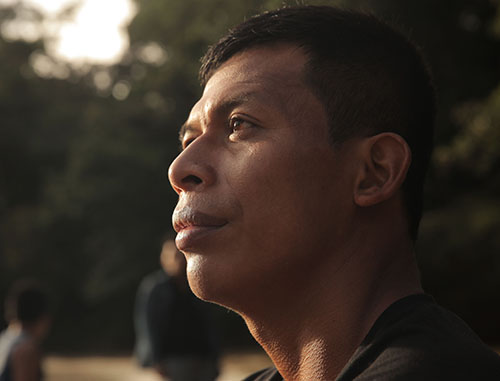
The thrust of the webinar was that Indigenous Peoples are ideally placed — with traditional knowledge and proven guardianship — to protect the lands upon which they live and, by extension, the rest of us.
Rainforests, in particular, are key to protecting against environmental degradation — through absorbing carbon dioxide and creating rainfall. Chop them down for cattle ranching and/or industrial development and those benefits are lost forever.
Hard evidence of the ways in which Indigenous People combat deforestation and provide environmental protection was presented by both Holly Jonas, global coordinator for the Indigenous conservation association ICCA Consortium, and Duncan MacQueen, principal researcher and forest expert at the International Institute for Environment and Development.
Jonas outlined some of the issues highlighted in 17 case studies in ICCA Consortium’s new report on conservation among Indigenous and traditional communities — “Territories of Life”.
“Indigenous peoples and local communities are on the front lines of resisting the main industrial drivers of global biodiversity loss and climate breakdown, including mining, oil and gas, logging and monoculture plantations. They often face violence and retribution for resisting these industries… However, they continue to resist and respond in really powerful and diverse ways,” Jonas said.
"Indigenous peoples and local communities are on the front lines of resisting the main industrial drivers of global biodiversity loss and climate breakdown, including mining, oil and gas, logging and monoculture plantations. They often face violence and retribution for resisting these industries... However, they continue to resist and respond in really powerful and diverse ways"
Interviewed earlier by the Tenure Facility, Jonas cited examples of Indigenous resilience against environmental encroachment that included policing, restore-to-protect projects and declaring forest as living beings with rights.
MacQueen, meanwhile, addressed the kind of actions against environmental change being taken by local farmers in Bolivia, Ecuador, Guyana, Kenya, Madagascar, Tanzania, Togo, Zambia, Nepal, and Vietnam.
Case studies showed actions by Indigenous and small-holder farmers that included diversifying to lessen the risk of crop failure and investing in physical and technological methods such as creating fire breaks, building terraces, and irrigation systems, as well as better communicating with each other.
“We found that most of the local forest and farm organisations were already doing most of these things,” MacQueen said. “They’re wizards at resilience already.”
A view from the top of the world, so to speak, came from Pasang Dolma Sherpa, executive director of Nepal’s Centre for Indigenous Peoples Research and Development, who was recently interviewed by the Tenure Facility.

Sherpa said that resilience against environmental degradation was part of the culture and everyday life of Indigenous Peoples. This included only taking what they need from the forests that cover great portions of Nepal, being sure to leave the roots of small plants behind for next year’s needs.
She said Indigenous People protect resources by using what is available on the basis of need and not on greed, “the capitalistic worldview of getting more and more and more”.
“Our culture, our practices (contribute to) sustaining … resources,” Sherpa said.
A similar picture was painted by Maricela Fernández, a leader of the Cabécar people of eastern Costa Rica and founder of women’s group Kábata Könana (Defenders of the Forest).
She emphasised the use of traditional and cultural methods of farming to protect forests, noting that working with 110 families on planting sustainable crops and bartering has led to increased food security.
None of this, of course, is to say that all is well. Forest regions continue to face threats from industry and governments seeking to exploit natural resources. Sometimes, even conservation areas can shut Indigenous Peoples out of their traditional lands.
But there is resilience against the tide, which is crucial given the stakes.
As Nenquimo put it: “We need to do everything to leave a heritage of clean territory, clean rivers, clean oxygen, so that children can breathe properly and preserve our culture in the future.”
Jeremy Gaunt is a veteran correspondent and editor, with more than four decades of experience reporting, 27 of them for Reuters. Jeremy has written extensively on environmental and human rights issues and is a regular writer contributor to the Tenure Facility´s website.
Articles