
European Union Grants €5 million to Support Forest Communities

(Stockholm, Sweden February 3rd, 2020) – The European Union (EU) is to support communities living in some of the most important and fragile forested areas on earth – granting €5million to help them secure rights over their land and protect it from unsustainable logging and other exploitation.

Reduced deforestation is seen as a key to turning the tide against potentially catastrophic climate change, and can provide one-third of the emissions reductions needed before 2030 to avoid dangerous global warming.

Recent research suggests that Indigenous Peoples and local communities are often the most effective stewards of the forests they live in when they have recognized land rights, but often these rights do not exist or are simply ignored – something the Sweden-based International Land and Forest Tenure Facility is working to change.

The EU has been promoting responsible forestry management, and this money will directly help Indigenous Peoples and local communities gain and exercise communal ownership of their forests – allowing them to better protect them, to the benefit of all. The grant agreement was signed in early December and it covers the period of three years.

We are extremely grateful to the European Union for helping us continue and scale up our work in some of the most important and biodiverse forested regions on earth, says Nonette Royo, Executive Director of the Tenure Facility, which since its launched in 2017 has started 10 projects in Asia, Africa and the Americas.

As many as 2.5 billion people from Indigenous Peoples and local communities live on and manage more than 50% of the earth’s land through customary or traditional systems.

Despite this, only 10% of communal forest land globally is recognized under national law, and where legislation exists, it is often not enforced or implemented, allowing illegal logging and other destructive practices to take their toll, as well as stirring conflicts over land and resources.
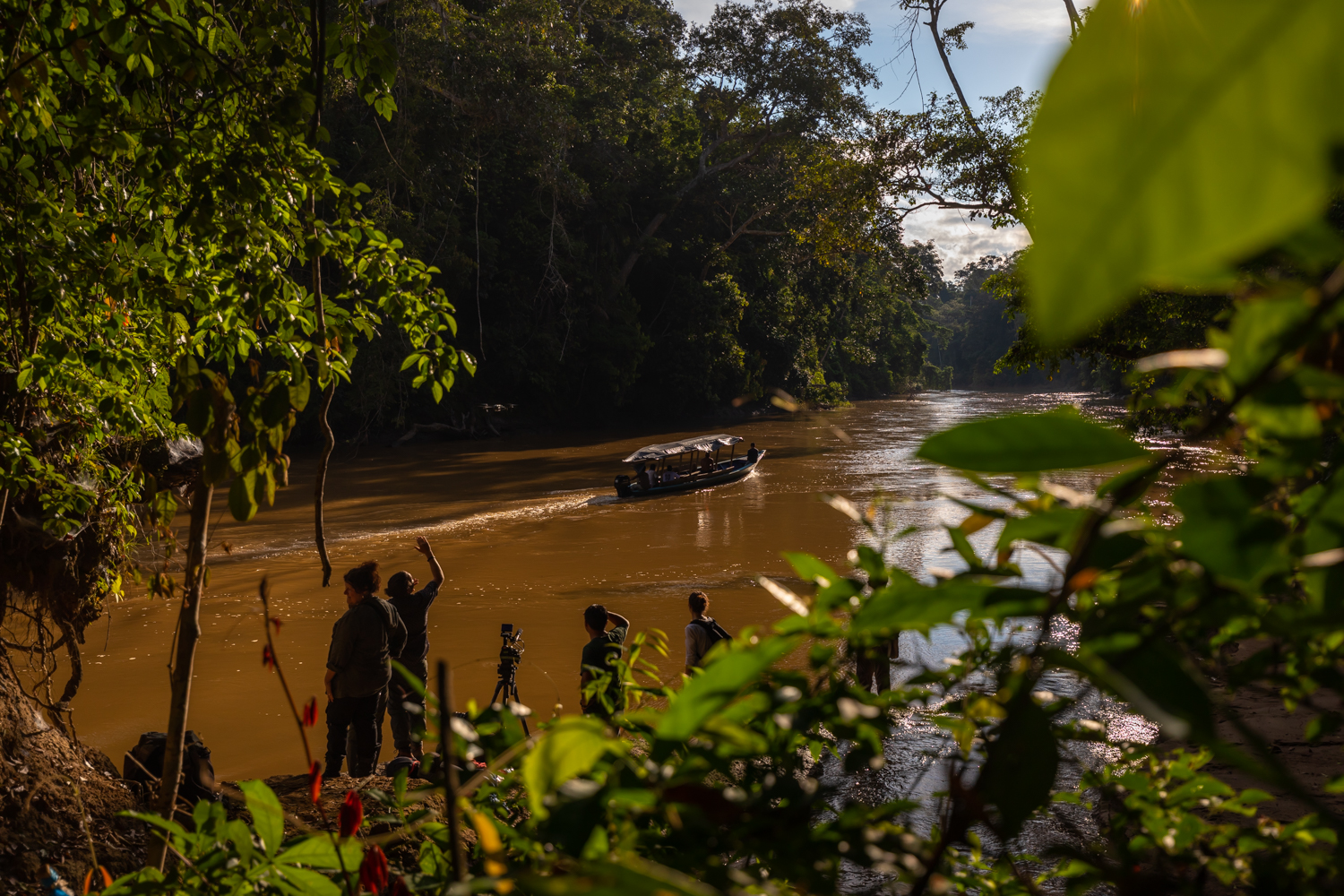
If we work with Indigenous Peoples and local communities to achieve recognized rights over lands they have lived on and tended for generations, we can all reap the rewards of living forests and thriving communities, Royo states.

– We witness in our work how passionately these communities are invested in protecting their heritage and livelihoods.  No one knows and loves these forests better than they do, and that’s good for the whole planet, if only we support them, she adds.

The Tenure Facility is the first and only international, multi-stakeholder financial mechanism exclusively focused on securing land rights for Indigenous Peoples and local communities. It works closely with local partners, offering financial and technical assistance to implement tenure rights under existing law and policy, as well as promoting better implementation of current rights.


———————

For interview requests please contact:


Paula Alvarado

Head of Strategic Communications and Outreach

Tenure Facility

palvarado@thetenurefacility.org

Articles

24 August 2026

Cameroon

La terre sous leurs pieds : le cheminement des communautés Bagyeli vers la reconnaissance de leurs droits fonciers

Dans le département de l’Océan, au sud du Cameroun, les routes serpentent entre des forêts denses, de longues pistes de latérite rouge et des plantations industrielles qui semblent s’étendre un peu plus chaque année.

17 August 2026

Cameroon

The land beneath their feet: Bagyeli communities’ journey towards recognition and security of their land and forest rights

In the Ocean Department of southern Cameroon, roads wind through dense forests, long stretches of red laterite tracks, major development projects — including mining and agro-industry — and industrial plantations that seem to expand a little further each year, gradually reducing the living space available to communities.

04 August 2026

Blogs

Pourquoi les droits fonciers ne peuvent pas attendre la paix

Et si attendre la paix était l’un des plus grands obstacles à la sécurisation des droits fonciers ? Pendant des décennies, la gouvernance foncière a été largement considérée comme un élément de la reconstruction post-conflit. L’hypothèse était simple : le conflit prend fin, les institutions se redressent, les populations rentrent chez elles, et ce n’est qu’alors que les droits fonciers peuvent être rétablis. Dans de nombreuses régions du monde, cependant, cette séquence ne correspond pas à la réalité. Les conflits sont souvent prolongés, les institutions peuvent être affaiblies ou inexistantes, et les registres fonciers officiels ont parfois disparu. Pourtant, les communautés continuent de cultiver leurs terres, de gérer les forêts, de résoudre les différends et de défendre leurs territoires en s’appuyant sur les systèmes de gouvernance qui restent à leur disposition.

23 July 2026

Blogs

Why land rights can't wait for peace

What if waiting for peace is one of the biggest obstacles to securing land rights? For decades, land governance has largely been treated as part of post-conflict recovery. The assumption has been straightforward: conflict ends, institutions recover, people return home, and only then can land rights be restored. In many parts of the world, however, that sequence does not reflect reality. Conflict is often prolonged, institutions may be weakened or absent, and official land records may have disappeared. Yet communities continue farming, managing forests, resolving disputes, and defending their territories using the governance systems still available to them.

13 July 2026

Brazil

"We are the middle, the beginning and the middle." : Quilombola women in land rights and climate action

Long before a land title is granted or a policy is signed, movements are built. They are built by women and men organising communities, defending territories, passing on ancestral knowledge, protecting culture, and ensuring generations of struggle are never forgotten. Between 10 and 14 June 2026, the III Meeting of CONAQ's Quilombola Women's Collective brought hundreds of these leaders together from across Brazil, alongside representatives from Latin America and Africa. Over five days, they celebrated victories, confronted urgent challenges and strengthened a movement that continues to shape Brazil's conversations on land rights, climate justice, gender equality and historical reparation.

02 June 2026

Congo Brazzaville

Seeding land rights in northern Republic of Congo

The road into the Sangha and Likouala departments in northern Republic of Congo passes through thick forest. Yet asphalt gives way to red soil where logging trucks pass day and night, carrying off trees that stood firm for centuries before concession paperwork tried to redefine who owns the land. These forests hold more than timber—they cradle rivers, fertile soils, unique species, and carbon stock.