
Scaling up community land rights for peace and women’s rights

Building on the successful Tenure Facility pilot initiative, four Liberian organizations are scaling up collective customary land rights under the Land Rights Act. Signed into law by the President in 2018, the LRA establishes the legal framework for securing the customary collective community land and resource rights of two million Liberians. Anticipating passage of the LRA, the Tenure Facility pilot project in Liberia, completed in 2017, prepared for nationwide land reform by developing and testing a practical guide to support local communities in the process of self-identification, the first step in claiming their land rights. “The LRA is the cornerstone for ensuring more just and equitable land ownership in Liberia, ensuring that our communities’ lands are recognized and protected is essential to sustaining peace in Liberia after two civil wars, sustainable development in our rural areas, and protection of Liberia’s threatened forests. The LRA also provides opportunities for us to overcome traditional barriers to women’s participation in decision-making over land and resources by ensuring their voices are heard”, said Julie Weah of the Foundation for Community Initiatives (FCI).
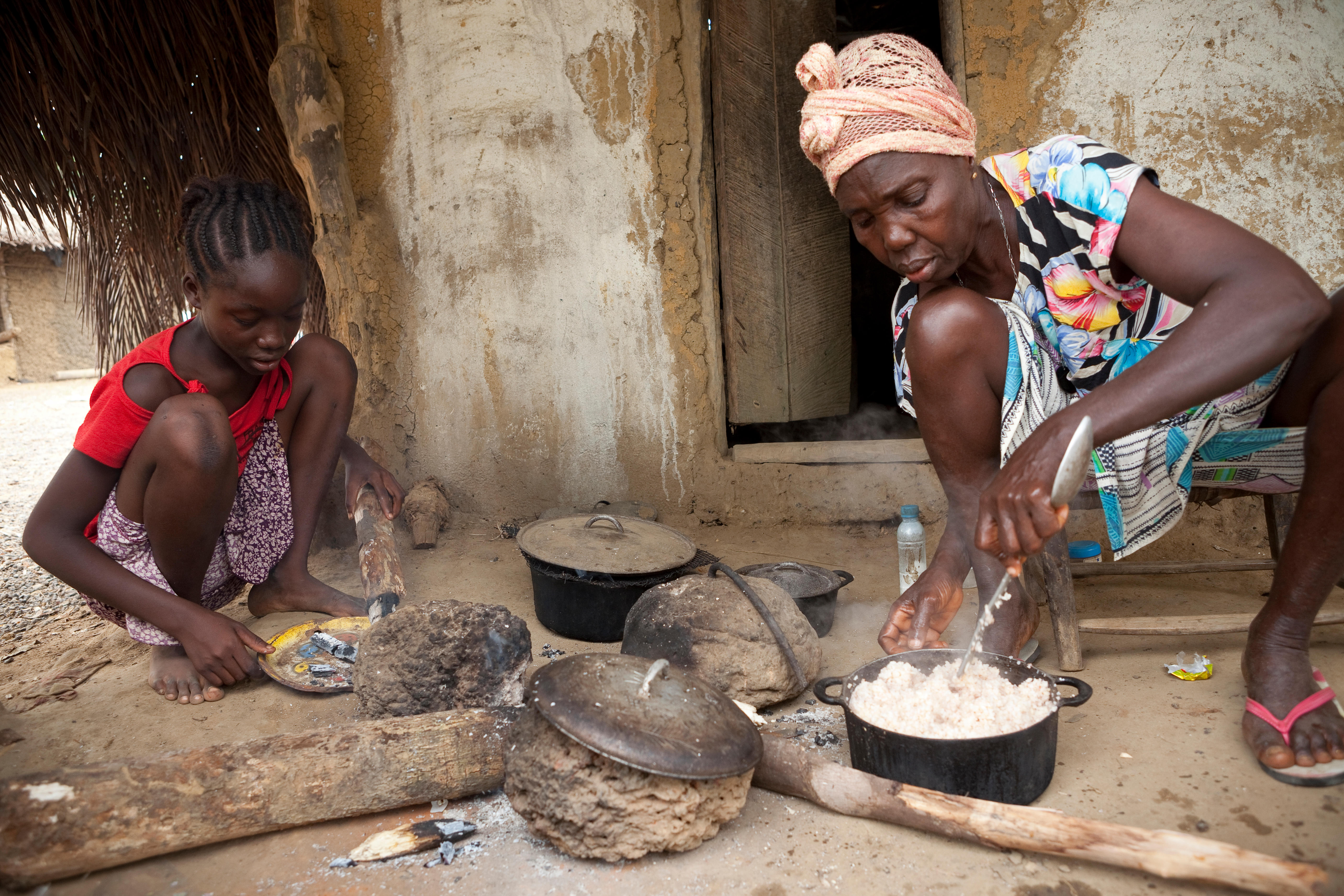
 

FCI, a Liberian non-governmental organization that advocates for the rights of women, youth and other groups that are facing social exclusion or marginalization in the natural resource sector, is leading the two-year initiative. Other partners include Parley Liberia, the Sustainable Development Institute (SDI), and the Liberia Land Authority (LLA).

Parley Liberia provides intermediary and advisory services to communities, companies and government regulators who are collaborating to develop land and natural resources in Liberia. SDI works to transform decision-making about natural resources in Liberia, so that benefits are shared equally. The Liberia Land Authority controls access to public land and promulgates regulations necessary for effective land governance.

With a Tenure Facility investment of almost 2 million US dollars, the initiative aims to advance tenure security over 788,190 hectares for 24 communities, benefiting 100,000 people in seven counties. See map below.


"The LRA is the cornerstone for ensuring more just and equitable land ownership in Liberia, ensuring that our communities' lands are recognized and protected is essential to sustaining peace in Liberia after two civil wars, sustainable development in our rural areas, and protection of Liberia's threatened forests. The LRA also provides opportunities for us to overcome traditional barriers to women's participation in decision-making over land and resources by ensuring their voices are heard. "

- Julie Weah of the Foundation for Community Initiatives (FCI)

The partners are developing a common methodology for participatory mapping, developing guidelines to help communities navigate the LRA process, and training a cadre of organizations and individuals to support communities across Liberia as they secure their rights. In addition to mapping, demarcating, documenting and registering their claims with the Liberia Land Authority, the 24 communities are developing by-laws and/or constitutions for governing and managing their lands. They are also learning to resolve conflicts and to include women, youth, and other groups in decision-making and on land governance bodies. The initiative is aligned to support other Liberian national and donor-funded programs, such as the USAID-funded Land Governance Support Activity and the World Bank-funded Liberia Land Administration Project.

To read a brief overview of Liberia, click here. 

For a timeline of land and forest rights in Liberia, click here. 

To read about our related project, click here.


Articles

24 August 2026

Cameroon

La terre sous leurs pieds : le cheminement des communautés Bagyeli vers la reconnaissance de leurs droits fonciers

Dans le département de l’Océan, au sud du Cameroun, les routes serpentent entre des forêts denses, de longues pistes de latérite rouge et des plantations industrielles qui semblent s’étendre un peu plus chaque année.

17 August 2026

Cameroon

The land beneath their feet: Bagyeli communities’ journey towards recognition and security of their land and forest rights

In the Ocean Department of southern Cameroon, roads wind through dense forests, long stretches of red laterite tracks, major development projects — including mining and agro-industry — and industrial plantations that seem to expand a little further each year, gradually reducing the living space available to communities.

04 August 2026

Blogs

Pourquoi les droits fonciers ne peuvent pas attendre la paix

Et si attendre la paix était l’un des plus grands obstacles à la sécurisation des droits fonciers ? Pendant des décennies, la gouvernance foncière a été largement considérée comme un élément de la reconstruction post-conflit. L’hypothèse était simple : le conflit prend fin, les institutions se redressent, les populations rentrent chez elles, et ce n’est qu’alors que les droits fonciers peuvent être rétablis. Dans de nombreuses régions du monde, cependant, cette séquence ne correspond pas à la réalité. Les conflits sont souvent prolongés, les institutions peuvent être affaiblies ou inexistantes, et les registres fonciers officiels ont parfois disparu. Pourtant, les communautés continuent de cultiver leurs terres, de gérer les forêts, de résoudre les différends et de défendre leurs territoires en s’appuyant sur les systèmes de gouvernance qui restent à leur disposition.

23 July 2026

Blogs

Why land rights can't wait for peace

What if waiting for peace is one of the biggest obstacles to securing land rights? For decades, land governance has largely been treated as part of post-conflict recovery. The assumption has been straightforward: conflict ends, institutions recover, people return home, and only then can land rights be restored. In many parts of the world, however, that sequence does not reflect reality. Conflict is often prolonged, institutions may be weakened or absent, and official land records may have disappeared. Yet communities continue farming, managing forests, resolving disputes, and defending their territories using the governance systems still available to them.

13 July 2026

Brazil

"We are the middle, the beginning and the middle." : Quilombola women in land rights and climate action

Long before a land title is granted or a policy is signed, movements are built. They are built by women and men organising communities, defending territories, passing on ancestral knowledge, protecting culture, and ensuring generations of struggle are never forgotten. Between 10 and 14 June 2026, the III Meeting of CONAQ's Quilombola Women's Collective brought hundreds of these leaders together from across Brazil, alongside representatives from Latin America and Africa. Over five days, they celebrated victories, confronted urgent challenges and strengthened a movement that continues to shape Brazil's conversations on land rights, climate justice, gender equality and historical reparation.

02 June 2026

Congo Brazzaville

Seeding land rights in northern Republic of Congo

The road into the Sangha and Likouala departments in northern Republic of Congo passes through thick forest. Yet asphalt gives way to red soil where logging trucks pass day and night, carrying off trees that stood firm for centuries before concession paperwork tried to redefine who owns the land. These forests hold more than timber—they cradle rivers, fertile soils, unique species, and carbon stock.