
2023-06-29
By Anne-Sophie Gindroz
Editor’s note: In late May and early June, the Tenure Facility co-hosted a regional learning exchange that united participants from nine countries across Asia in Bali, Indonesia, to exchange ideas and personal experiences from their fights for land rights. The five-day event featured deep discussions with Indigenous Peoples and local communities on issues affecting women, youth and other marginalised groups.
Anne-Sophie Gindroz, a program officer at the Tenure Facility, retells a story below that she heard during the exchange. It shows how sharing knowledge can promote collaboration and innovation, helping us find creative solutions to complex problems.
They are five friends who shared the same dream: to work on a cruise ship to travel the world.
They left their village in the north of Bali for the southern coast, a popular destination for international tourists, and enrolled in a vocational high school to learn how to work in the tourism industry. Except for one who chose IT, the others trained in restaurants and hotels, gaining experience in the kitchen, at the front desk, in housekeeping and as waiters before they would sail the seas. They were determined to have a life different from that of their parents, away from farming and their troublesome journey.
Their parents migrated to East Timor in the 80’s, when this half of the island was still an Indonesian province. They were part of a government-sponsored program moving people across the archipelago to farm where land was not scarce. But 15 years later, East Timor became an independent country following a referendum held in 1999. Their parents were pressured to move back to Bali but had nowhere to resettle and became refugees on their own land for a year, before the local government relocated them on a state forest bordering a national park. This was the beginning of a new conflict opposing the Sumberklampok community against the Ministry of Forestry.
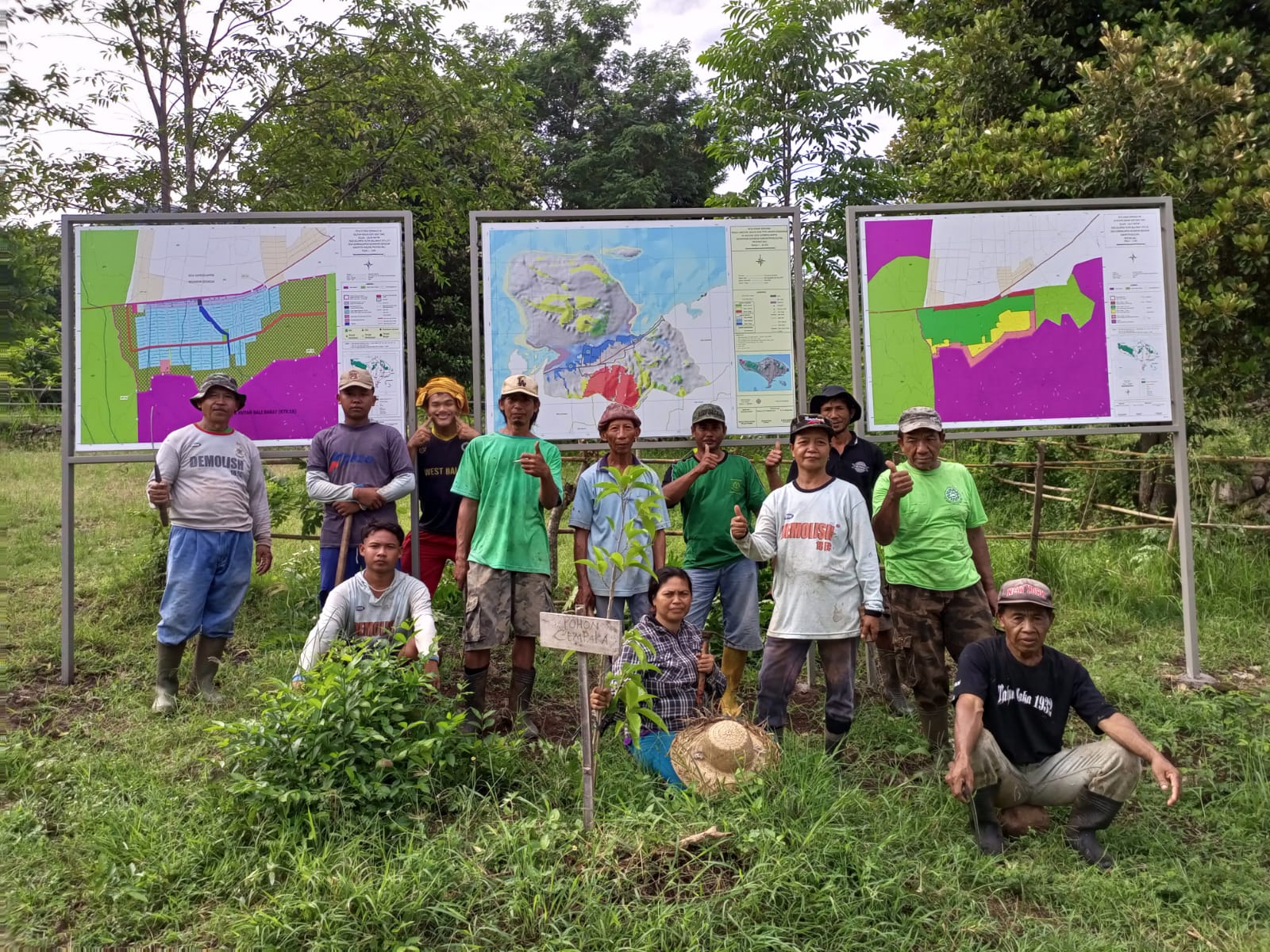
Photo courtesy of Wayan Suweca
The returnees got organised into a peasant union and joined KPA, the Consortium for Agrarian Reform. A longtime partner of the Tenure Facility, KPA supports its member organisations to get land from ex-concession or forest areas redistributed to the people through Priority Location for Agrarian Reform (LPRA). So far only an area for housing, less than 8 hectares in total, has been released from the State Forest Area to the peasant union in Sumberklampok. The farming area, about 100 hectares, has not. But the five young friends were looking beyond the land and watching the horizon off the coast.
Then Covid struck, closing borders and sending students and young people back home jobless. The five friends moved back to their home village in northern Bali. They started to help their parents and unintentionally attended a discussion of the peasant union. It was all about the land struggle. And it was interesting.
A woman, Ni Made Indrawati, who is KPA’s coordinator in Bali, suggested they form a youth group. So they did, and named themselves the Young Generation group. KPA provided them with a laptop. They started to take notes during meetings and document the peasant union’s activities. They improved their skills in photography and produced short videos. They were trained to do mapping. With GPS devices, they mapped the land that was claimed by the community. They documented their parents’ efforts to make the land productive, plant fruit trees, and the peasant union initiatives to source water, build water storage and plant large trees on the edge of the national park. They even started to help other peasant organisations to map their lands.
In their early twenties, they are now an essential support in this on-going land struggle.
“The role of the Young Generation is very important,” explains Ketut, a resident in Sumberklampok. “We are farmers and we do not know how to use computer!” KPA’s coordinator in Bali is also relying on the Young Generation group to prepare supporting documents and keep track of the on-going negotiations. Indra Made is a single woman, but “I have many children here!” she says, referring to the young people she is coaching. Dipa, one of the five friends, has become Indra Made’s assistant.
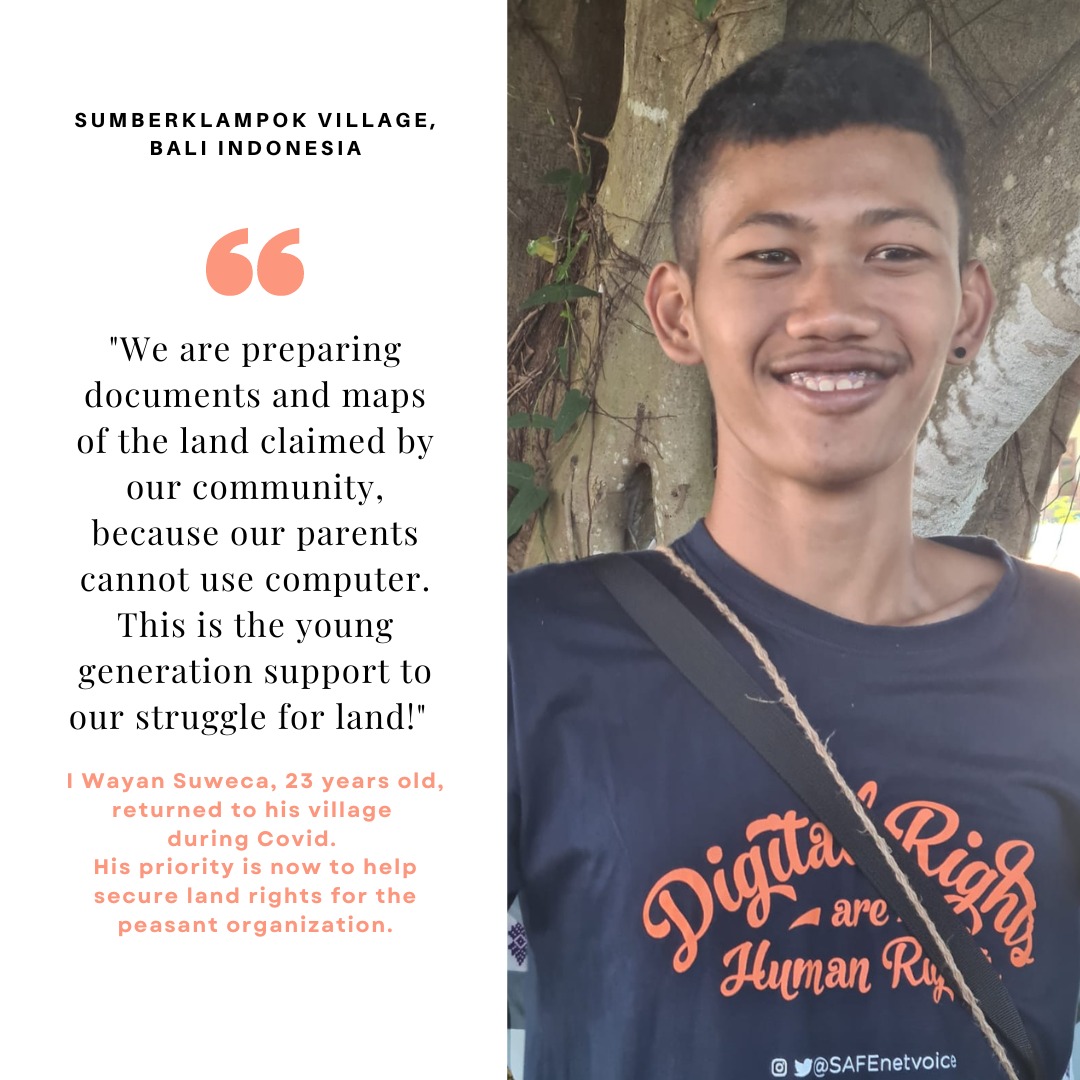
I asked Wayan Suweca, 23, a member of the Young Generation group what he plans to do now that the pandemic is over. “I want to support my parents’ struggle for their land,” he says.
“This struggle has been going on for over 20 years. Aren’t you getting tired of it?”
“How come people from outside are ready to help us, and we don’t want to take care of our own land?” he replies.
I ask him how he views his future back at home. “I still want to be active in the tourism sector. But close to here, close to our land,” Suweca says.
“Why is it important for you?” I wonder.
“It is good to be back in the village. If we need vegetables, we can pick some on our field. In the city, you have to buy everything. Even a fresh coconut!” he says, adding, “And it feels good to be with the family, we build solidarity!”
They are five friends who share the same dream: to win this struggle for the peasant land rights in their village.
Other Blog Posts
Categories: