
Tomorrow’s leaders: celebrating international youth day

Tomorrow’s leaders are all around us. They live in the communities we serve. They work in the organisations we support. They fight for the rights we all hold dear. So to commemorate this year’s international youth day we reached out to young leaders across the globe.

They spoke with us about their experiences advocating for tenure rights, gender inclusiveness and climate action. They even shared a few powerful messages for today’s leaders. Here is a glimpse of what the next generation had to say about protecting communal land rights and tackling global challenges.

“I’m a fighter, a feminist and a defender of human rights, in particular the rights of communities that are victims of land injustice, with a focus on women and young people.”

“Community is not just about people; it’s about the land that has shaped us. Our way of life is threatened as our elders pass and forests fall. Our message remains: Land is not a commodity but a living entity. Land is alive just as we are alive.” 
“I grew up in the forest and I’ve learned to secure and protect it because it’s crucial for our daily survival. We face a lot of difficulties with outsiders. We’ve remained very vigilant – me, my wife, and a few of my friends – and continue to monitor activities in the forest to make sure that there are no longer any loggers destroying our forest.”
“It is said that women and men are like the two wheels of a cart. Just as a cart cannot move at its full speed if one wheel is weak, the progress is hindered when both men and women are not active. Similarly, in our households and society, only when both women and men are actively involved, the family and society can move forward.”
“By getting involved in the community and being part of it, you play an important role in defending the rights of our territories, since our greatest wealth is our territories, and our greatest right is to fight for it.”
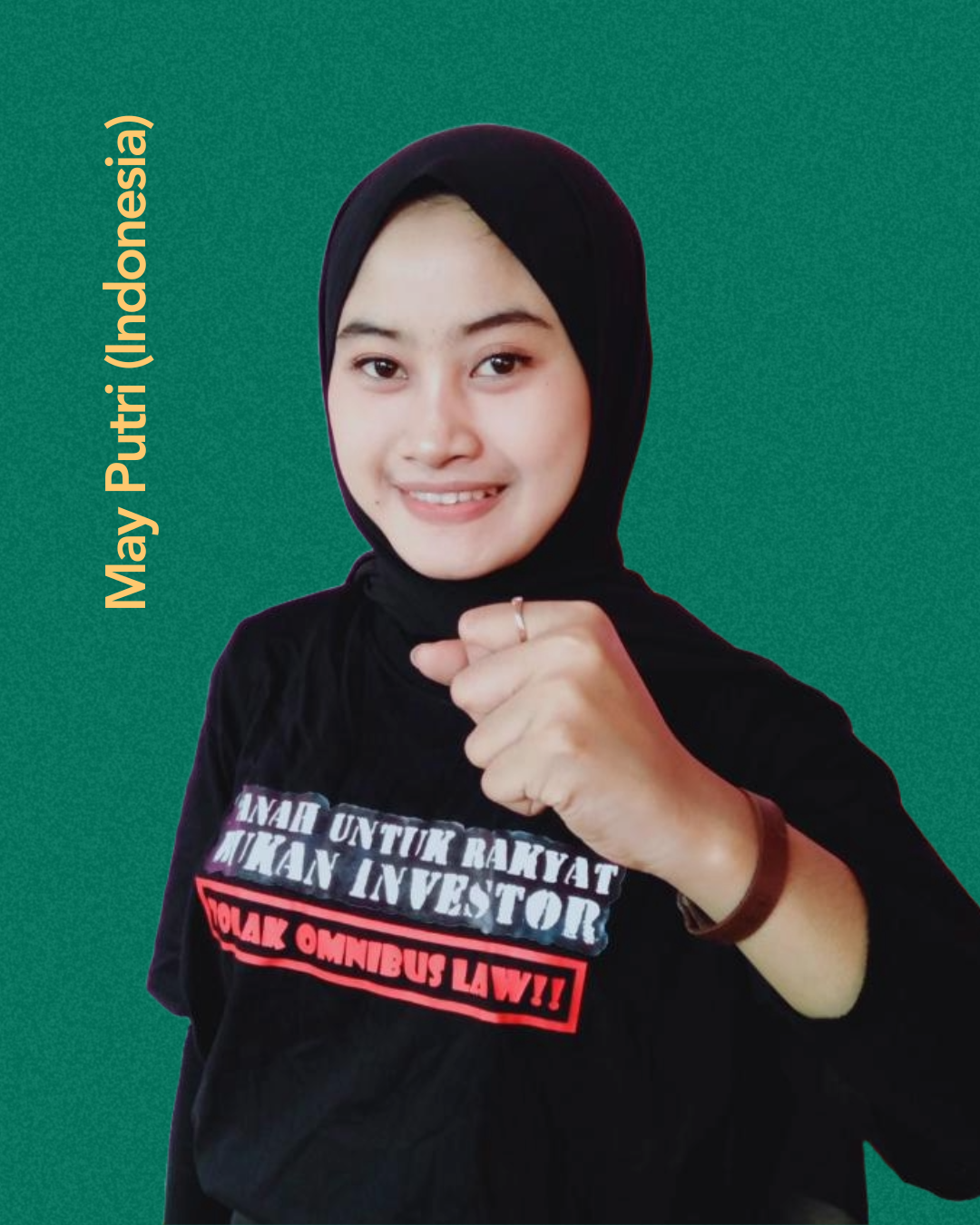
“Let’s build a collective movement and be ready to make a real contribution to the struggle for land rights and be at the forefront for change and prosperity in people’s organisations!” 
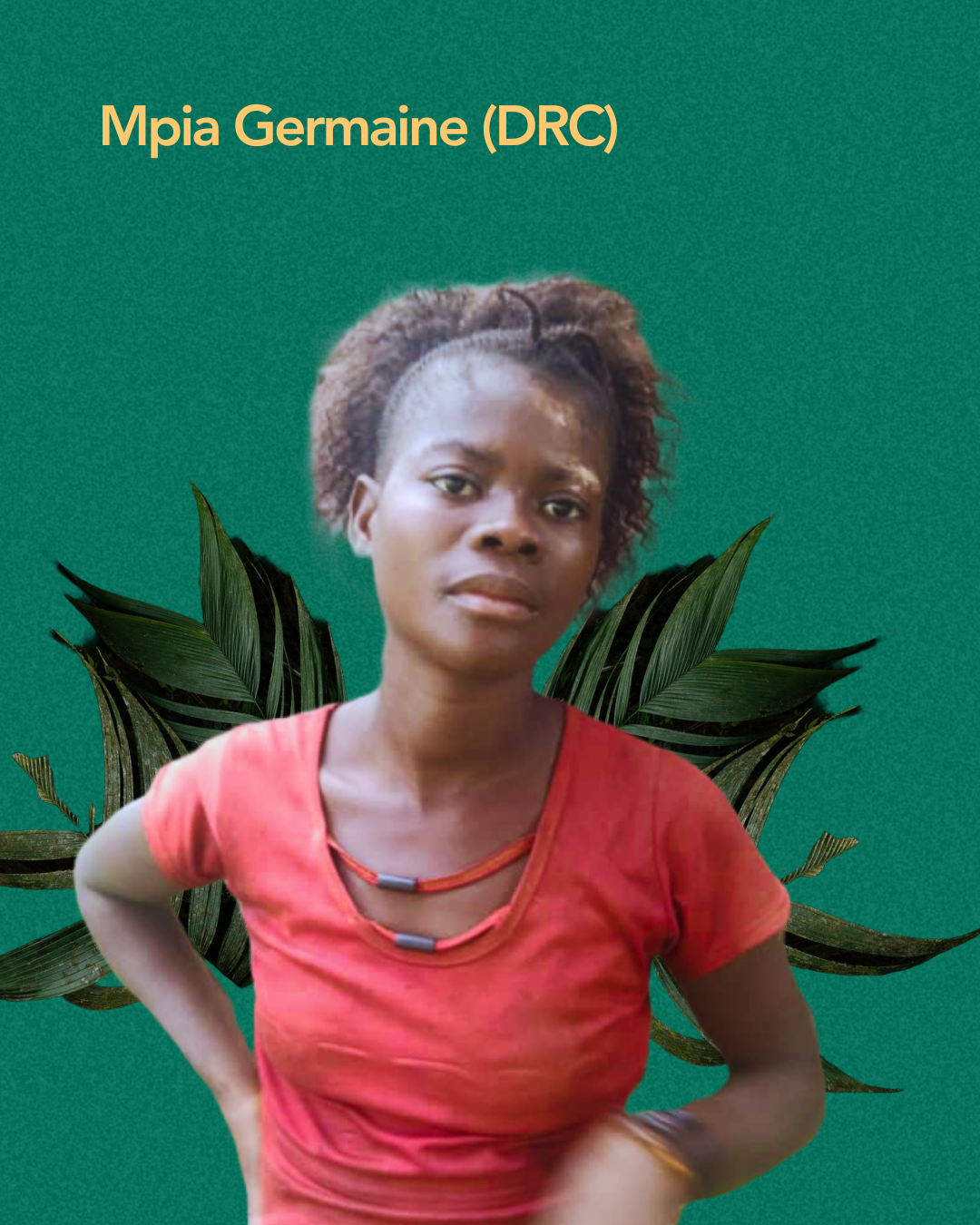
Leaders must “do everything possible to guarantee that the rights of Indigenous Pygmies are respected, advocate for the reduction of social inequalities that disadvantage the Pygmy people and urge authorities to build basic socio-economic infrastructures (schools, hospitals, roads) in our communities.”

“My message to world leaders is to take a closer look at this issue of the free Babaçu law, which needs to be much more visible and much more widespread. The law … still suffers from a lot of owners who threaten women. This is a crime.”

Articles

17 August 2026

Cameroon

The land beneath their feet: Bagyeli communities’ journey towards recognition and security of their land and forest rights

In the Ocean Department of southern Cameroon, roads wind through dense forests, long stretches of red laterite tracks, major development projects — including mining and agro-industry — and industrial plantations that seem to expand a little further each year, gradually reducing the living space available to communities.

04 August 2026

Blogs

Pourquoi les droits fonciers ne peuvent pas attendre la paix

Et si attendre la paix était l’un des plus grands obstacles à la sécurisation des droits fonciers ? Pendant des décennies, la gouvernance foncière a été largement considérée comme un élément de la reconstruction post-conflit. L’hypothèse était simple : le conflit prend fin, les institutions se redressent, les populations rentrent chez elles, et ce n’est qu’alors que les droits fonciers peuvent être rétablis. Dans de nombreuses régions du monde, cependant, cette séquence ne correspond pas à la réalité. Les conflits sont souvent prolongés, les institutions peuvent être affaiblies ou inexistantes, et les registres fonciers officiels ont parfois disparu. Pourtant, les communautés continuent de cultiver leurs terres, de gérer les forêts, de résoudre les différends et de défendre leurs territoires en s’appuyant sur les systèmes de gouvernance qui restent à leur disposition.

23 July 2026

Blogs

Why land rights can't wait for peace

What if waiting for peace is one of the biggest obstacles to securing land rights? For decades, land governance has largely been treated as part of post-conflict recovery. The assumption has been straightforward: conflict ends, institutions recover, people return home, and only then can land rights be restored. In many parts of the world, however, that sequence does not reflect reality. Conflict is often prolonged, institutions may be weakened or absent, and official land records may have disappeared. Yet communities continue farming, managing forests, resolving disputes, and defending their territories using the governance systems still available to them.

13 July 2026

Brazil

"We are the middle, the beginning and the middle." : Quilombola women in land rights and climate action

Long before a land title is granted or a policy is signed, movements are built. They are built by women and men organising communities, defending territories, passing on ancestral knowledge, protecting culture, and ensuring generations of struggle are never forgotten. Between 10 and 14 June 2026, the III Meeting of CONAQ's Quilombola Women's Collective brought hundreds of these leaders together from across Brazil, alongside representatives from Latin America and Africa. Over five days, they celebrated victories, confronted urgent challenges and strengthened a movement that continues to shape Brazil's conversations on land rights, climate justice, gender equality and historical reparation.

02 June 2026

Congo Brazzaville

Seeding land rights in northern Republic of Congo

The road into the Sangha and Likouala departments in northern Republic of Congo passes through thick forest. Yet asphalt gives way to red soil where logging trucks pass day and night, carrying off trees that stood firm for centuries before concession paperwork tried to redefine who owns the land. These forests hold more than timber—they cradle rivers, fertile soils, unique species, and carbon stock.

14 May 2026

India

Reclaiming forests, reviving lives: a global lesson from Kalika Prasad, India

In the past, protecting the forests of eastern India could make you a criminal. “We were afraid to enter the forest where we had lived all our lives,” recalls a villager. “Today, that same forest is under our care.”