
2024-06-26
Six member organisations of the CREF network are assisting ten Pygmy and Bantu communities in Walikale, Beni, and Lubero areas in North Kivu province to create Local Community Forest Concessions (CFCL) covering around 380,000 hectares of forest and getting the provincial government to recognise them. These concessions grant local communities the rights and responsibilities in perpetuity to manage and conserve forest resources within a designated area. CFCL also allow communities to sustainably utilise resources while also promoting conservation objectives.
The project area forms a part of an ecological corridor linking the Maiko and Kahuzi-Biega National Parks, the Itombwe and Tayna Nature Reserves, and the Kisimba-Ikobo Primate Reserve. Réseau CREF seeks to resolve conflicts and promote collaboration between communities and these protected areas, especially the Maiko National Park.
We spoke with staff at Réseau CREF to hear more about CFCL and the deep-rooted importance of community-based conservation.
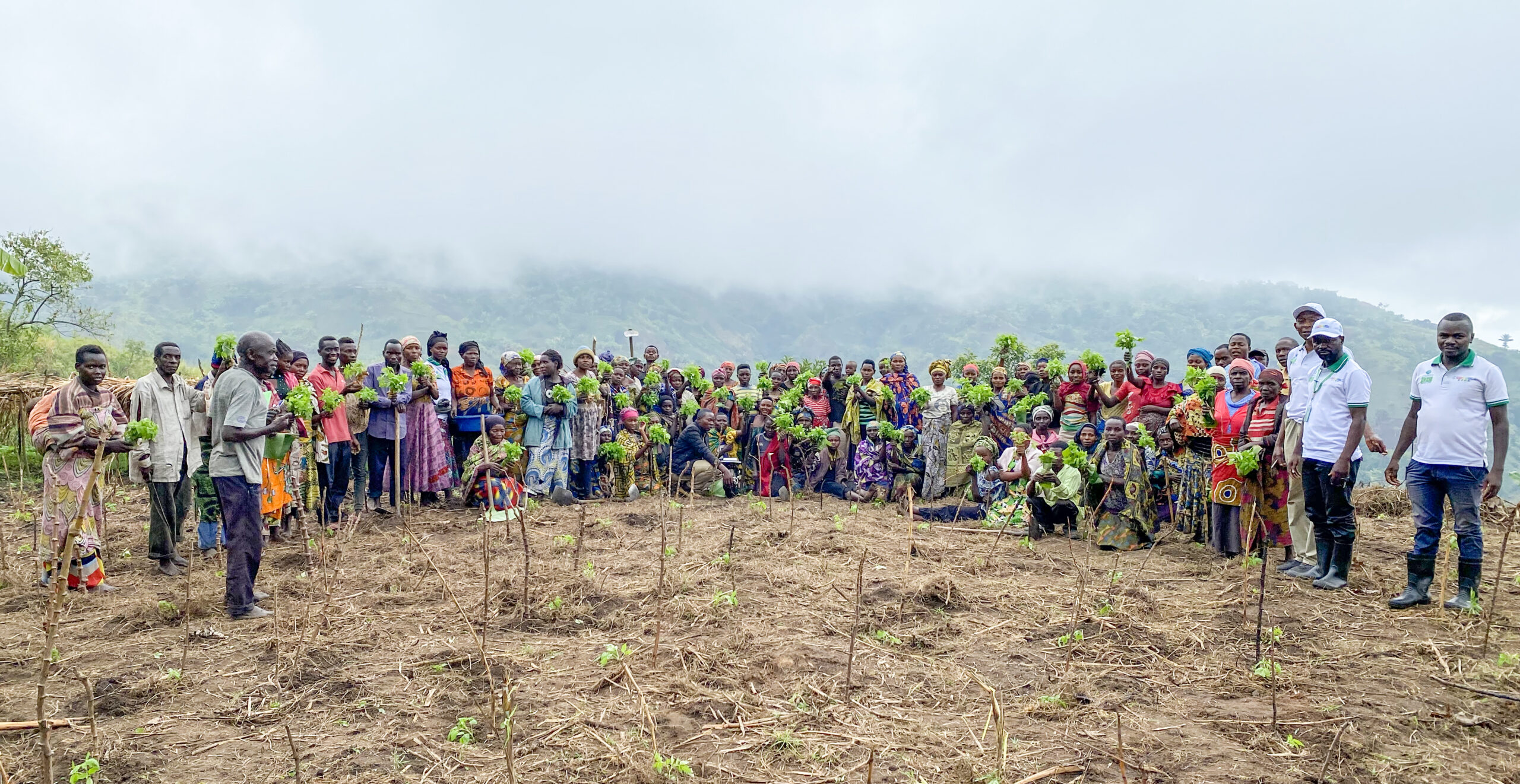
Réseau CREF
Réseau CREF (RC): In the DRC, community forestry is rapidly growing as an innovative and promising model for sustainable forest management. By giving communities greater responsibility for managing their forests and by encouraging sustainable practices, biodiversity can be preserved and a more sustainable future for the next generations can be built.
Our main observations are that local communities are more involved in the protection and sustainable management of forests. CFCLs are welcomed and embraced by local communities as the only viable way that enables them to be legally involved in the sustainable management and protection of their forests, controlling not only land use planning but allowing them to take over decision-making in the forest governance committees.
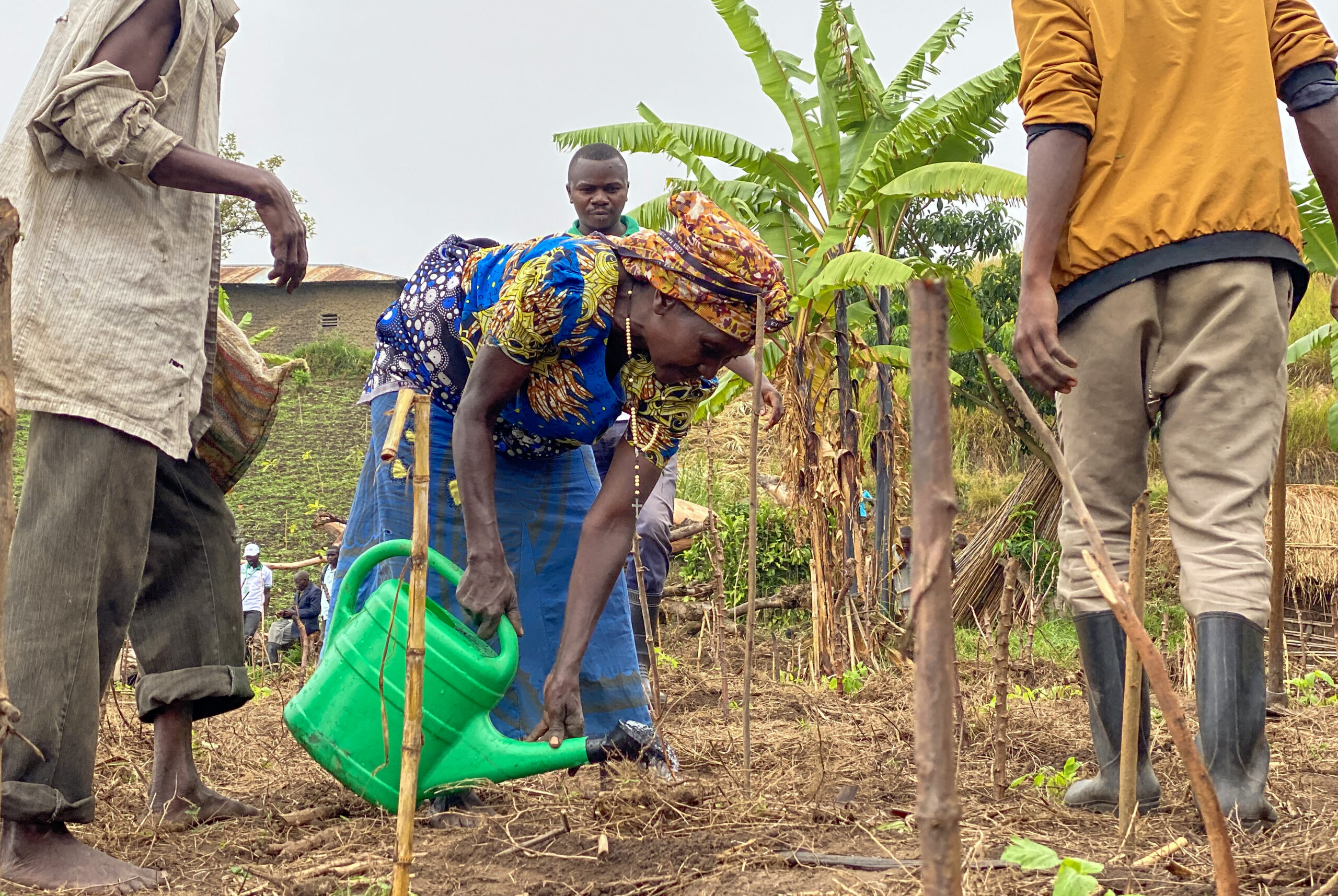
CFCLs recognise women as essential actors and contributors, as they have daily interactions with forest resources as they undertake their chores in search of food, firewood, and medicinal plants. With this daily interaction, women have accumulated knowledge and an understanding of how trees, plants, animals, and organisms interact in nature to keep forests vibrant and productive over time. In this way their active involvement and participation in the preservation and success of CFCLs is important.
With a simple, well-developed, and realistic management plan, communities can generate income, thereby contributing to poverty reduction and local development. If experiences and lessons learned can be shared and disseminated between communities, this can contribute to better forest management at the national and international levels, but a clear and transparent legal framework is necessary for a successful process.
"With a simple, well-developed, and realistic management plan, communities can generate income, thereby contributing to poverty reduction and local development."
RC: This new forest management model, which puts communities at the centre, has several advantages over the old conservation model as it reinforces community participation and empowerment. Direct involvement of local communities in the management of forest resources, reinforces their sense of responsibility and ownership and ensures that they have a better understanding of the issues involved in conservation and sustainable forest management.
This model also contributes to improving living conditions: with the multi-purpose vocation of the CFCL through the simple management plan, the activities planned by the communities will enable them to diversify their revenue streams, thanks to the sustainable exploitation of forest resources. Thus, contributing to improving the socio-economic conditions of the local communities and food and nutrition security. Lastly, it strengthens social cohesion, and it builds a sense of belonging to a community. The efforts made to work together and the opportunity to involve all members of the community in decision-making on forest management is key.
RC: Gender mainstreaming in our projects is an ongoing process which is increasing rapidly. It’s not only seen as a requirement by donors, but communities are gradually becoming aware of the importance of gender equality for economic and social development. This awareness is reinforced by the adoption of policies and laws promoting gender equality and women empowerment in the DRC, as well as the various programmes and initiatives to support communities implemented by the government, international organisations, and civil society. Significant progress has been made to date.
For example, in community forestry, the participation and involvement of women in management institutions demonstrates the communities’ determination not to sideline women. At the same time, it should be noted that there are still some discriminatory norms against women. Much work is needed to continue encouraging this integration.
Réseau CREF
RC: With over two decades of experience in complex and insecure environments, our work has enabled us to develop unique expertise in adapting and working effectively. Our approach to this project is based on carrying out detailed security, political and social risk analyses for each area to understand their likely impact and level of severity. We also conduct regular risk assessments to identify potential threats and take appropriate security measures. On top of that, we have a flexible approach, and our staff are trained in security procedures and emergency response techniques.
RC: The existence of a legal framework governing community forestry in the DRC shows that the Congolese government is willing to recognise and respect the existence of the CFCL. It should also be noted that the following efforts need to be made by the state to guarantee effective recognition and respect for CFCL in the DRC. This includes harmonising the various legal texts likely to have an impact on CFCL, including land law, mining law, agricultural law, land use planning law and forestry law. It also involves facilitating the CFCL allocation process as the process is still very costly for communities as well as supporting the management phase which involves supporting communities to ensure that their forests contribute to improving living conditions.
RC: The Lubero and Beni communities are predominantly made of agriculturalists (farmers) who are heavily dependent on forest resources for subsistence like firewood, and construction. Among them, land access is usually based on clan membership, customary rights, family ties and inheritance. They also value and respect a traditional role system, with varying degrees of involvement of traditional chiefs in forest management.
In Walikale, significant mining activity influences the dynamics of forest management of the community members who value the presence of a more active state forestry administration. Land conflicts are linked to the superimposition of customary rights and land titles granted by the state while growing influence of the land market and emergence of new stakeholders such as private investors arise.
"In the DRC, community forestry is rapidly growing as an innovative and promising model for sustainable forest management."
RC: The relationship between local communities and parks in our areas is characterised by the existence of tensions and conflicts between communities and protected area managers. Generally, this is due to the low level of involvement of communities in the management of protected areas and the distribution of the benefits generated by the latter, which creates a feeling of injustice and frustration within communities. It’s also because community access to the natural resources on which they depend for their survival happens to be in restricted protected areas. Poor communication and collaboration between communities and protected area managers ignite mistrust and mutual misunderstanding.
Yes, communities were living in the protected areas like the Maiko National Park (MNP), Virunga National Park and Kisimba-Ikobo Primate Reserve before these parks were created. Many ethnic groups lived there and depended on the parks’ natural resources for their livelihood. Hunting, fishing, harvesting, and farming were their main activities. When the protected areas were created, some local communities were moved to villages outside the protected areas, although some groups continue to live illegally within certain protected areas.
It should also be noted that for the Kisimba-Ikobo Primate Reserve, the creation procedure with the local communities was highly controversial which created tensions between the local communities and the managers of this protected area. Access to protected areas is strictly regulated. On special occasions, local communities are allowed access, but this is limited to searching for dead wood and certain non-timber forest products on fixed days. Other activities include biodiversity scientific research projects, ecotourism, cultural and religious activities.
RC: Obtaining CFCL for local communities means securing their forests against any external threat, empowerment, and involvement in decision-making in the management of their forests. It is a very important opportunity for the socio-economic development of their areas.
Articles