
2024-06-19
By Jeremy Gaunt
Food, childcare, health – and biodiversity. Indigenous women are key players in all of them, but too often are ignored in the campaigns to gain rights and to protect the environment.
A powerful group of indigenous women from Brazil, Chad and Panama spoke on June 13 of the work that they do for their communities and, by extension, for the wider world. It was a tale of learning, teaching, protecting, contributing, and struggling for rights.
“We preserve our culture, mother tongue, and also preserving our traditions, traditional medicine. We are restoring the forests,” said Yoselin Casama, a young leader from the Embera People of Panama.
She was among the speakers at the Land Dialogues webinar “Gender and Biodiversity: how indigenous and local community women safeguard nature”. It was hosted by Tenure Facility, Ford Foundation, Land Portal, and the Global Alliance for Territorial Communities, a network comprised of some of the largest indigenous associations in the world.
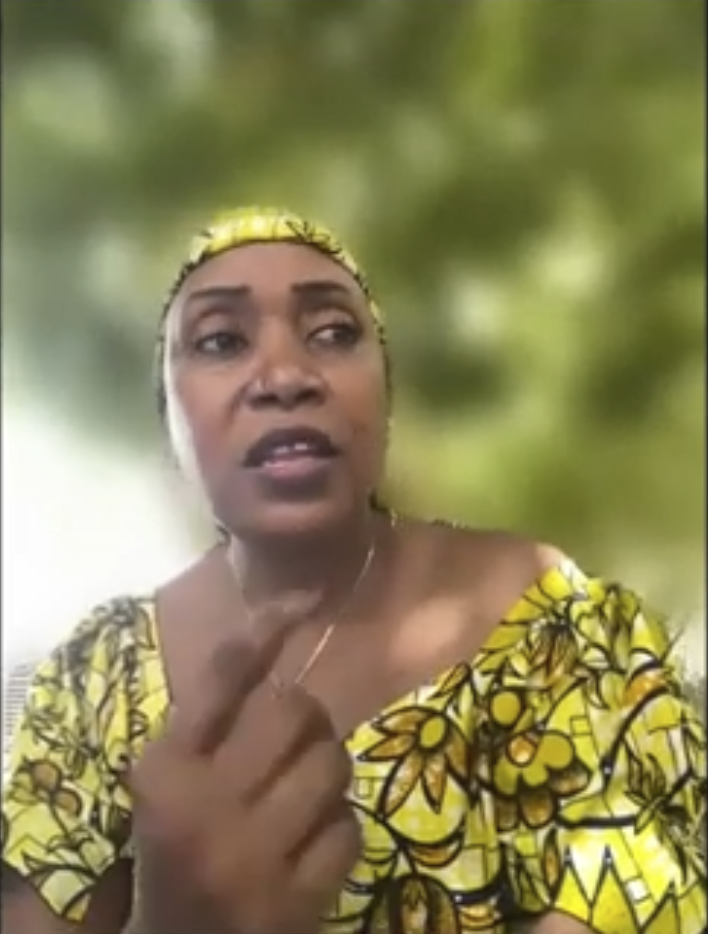
Aissatou Oumarou
Aissatou Oumarou, a member of the Mbororo Fulani indigenous community in Chad, laid out clearly how women contribute to biodiversity and the environment in general.
“The woman is the one who takes care of her family, her community. She’s the one who seeks out leaves (in the forests) to cook. She’s the one who educates children. She’s the one who also takes care of the health of these children,” said Oumarou, who is also vice coordinator of REPALEAC, a sustainable forest management network of indigenous and local populations in Central Africa.
“In terms of health, she’s going to have to go into the bush to look for the leaves, the branches, the roots, that are going to help her treat her children. And that’s part of biodiversity, but it’s also part of this very rich traditional knowledge of these women,” she said.
A key role is also passing on traditional knowledge to new generations, as outlined by both Oumarou and Gloria Samaná, Casama’s grandmother and an elder of Panama’s Embera People.
“We teach women in the new generation or the next generation, we show how to transmit traditional knowledge,” Samaná said. “We explain about traditional medicine, our cultural traditions…. The way we explain traditional medicine is explaining what each leaf or what each plant is used for, or what it does, so they can understand more about traditional medicine.”
"We preserve our culture, mother tongue, and also preserving our traditions, traditional medicine. We are restoring the forests."
Such teaching aids in restoring or protecting biodiversity. Indigenous Peoples’ role in such protection will be on the agenda in October in Cali, Colombia, when the 16th United Nations Biodiversity Conference takes place.
The 2022 conference, in Montreal, Canada, recognised the important roles and contributions of Indigenous Peoples and local communities as custodians of biodiversity and environmental protection. And it went further:
“(Decisions) must ensure (indigenous) rights, knowledge, including traditional knowledge associated with biodiversity, innovations, worldviews, values and practices of Indigenous Peoples and local communities are respected, documented, preserved with their free, prior and informed consent, including through their full and effective participation in decision-making.”
Despite such progress, women’s roles are not properly recognised, and women still face discrimination at both community and international level.
Cristiane Pankararu, an indigenous Brazilian activist and co-founder of ANMIGA, the National Articulation of Ancestral Indigenous Warriors Women, described her reaction to being told what to do by men and outside organisations.
“Being a woman is difficult. We still go through tutorship and censorship sometimes, and when I feel that I am being tutored, I want to leave. They want to tell me how long to stay, where to stand, what to say. I don’t need that. I know who I am. I know what I am defending, and I refuse to be in that place of accepting a vertical, imposed situation,” she said.
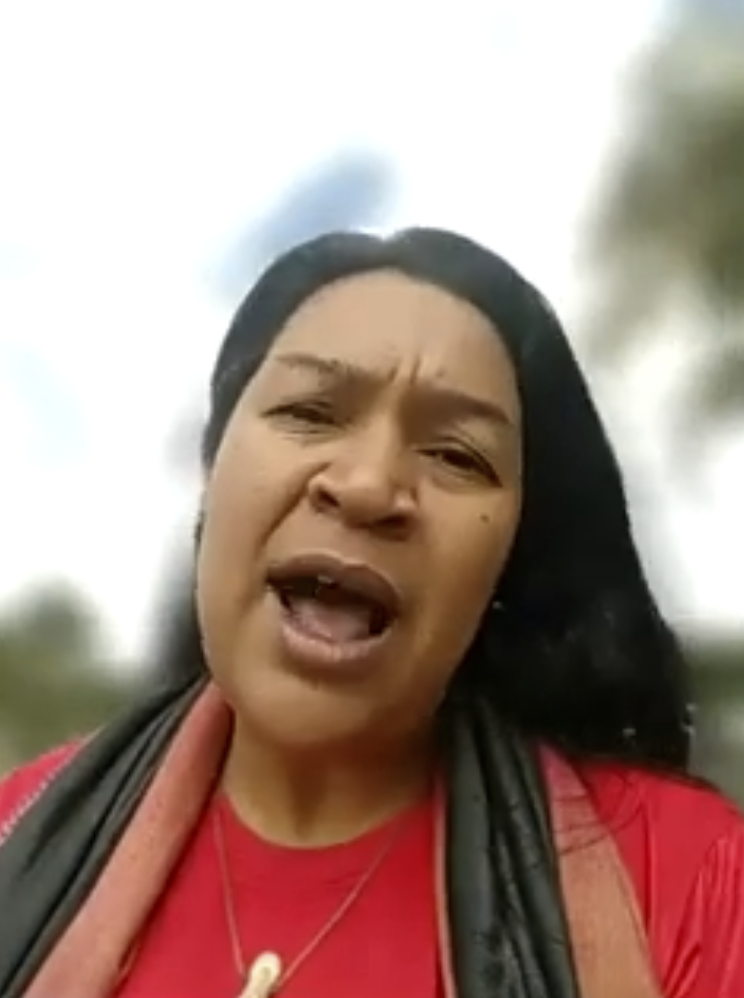
Cristiane Pankararu
Pankararu, who was working to bring women together to prepare for the Cali biodiversity meeting, said it was essential to find a unified voice among the many.
“We must always build our voices collectively and participatively, because we are dealing with different sectors, different actors – private sector, mining, forest fires, illegal logging, kidnapping of women and children, pesticides, political parties, policies, economies that do not favour us,” she said.
Casama, the young activist from Panama, said the next generation is fighting to reverse things.
“Young Leaders and girls are trying to be more empowered, increasingly empowered. We are trying to see how we can help our community and how we can connect better with Mother Nature,” she said.
Articles