
2024-01-03
For more than 30 years, Vasundhara has made a name for itself supporting community forest groups and conservation efforts in Odisha, an eastern state of India that is rich in ecological and cultural diversity.
It has also become a leader in supporting the land tenure rights of Indigenous Peoples and local communities. Along with the Indian School of Business (ISB) and Society for Rural Urban and Tribal Initiative (SRUTI), Vasundhara is a Tenure Facility partner working to assist more than 19,000 communities to use the Forest Rights Act (FRA) to secure community forest resource rights over 4.6 million hectares in Odisha and several other Indian states.
Aurobindo Rout, Vasundhara’s programme manager, says capacity building is a main element of the organisation’s efforts to help indigenous communities become more aware of their rights under the FRA. The pioneering law was enacted in 2006 with the involvement of civil society organisations.
“We are building a movement from the village to the block, from the district to the state,” he explained. “Some villagers don’t know or understand their rights and they are very motivated to learn about their rights,” he added. “When we help them, they are able to exercise their rights to their lands.”
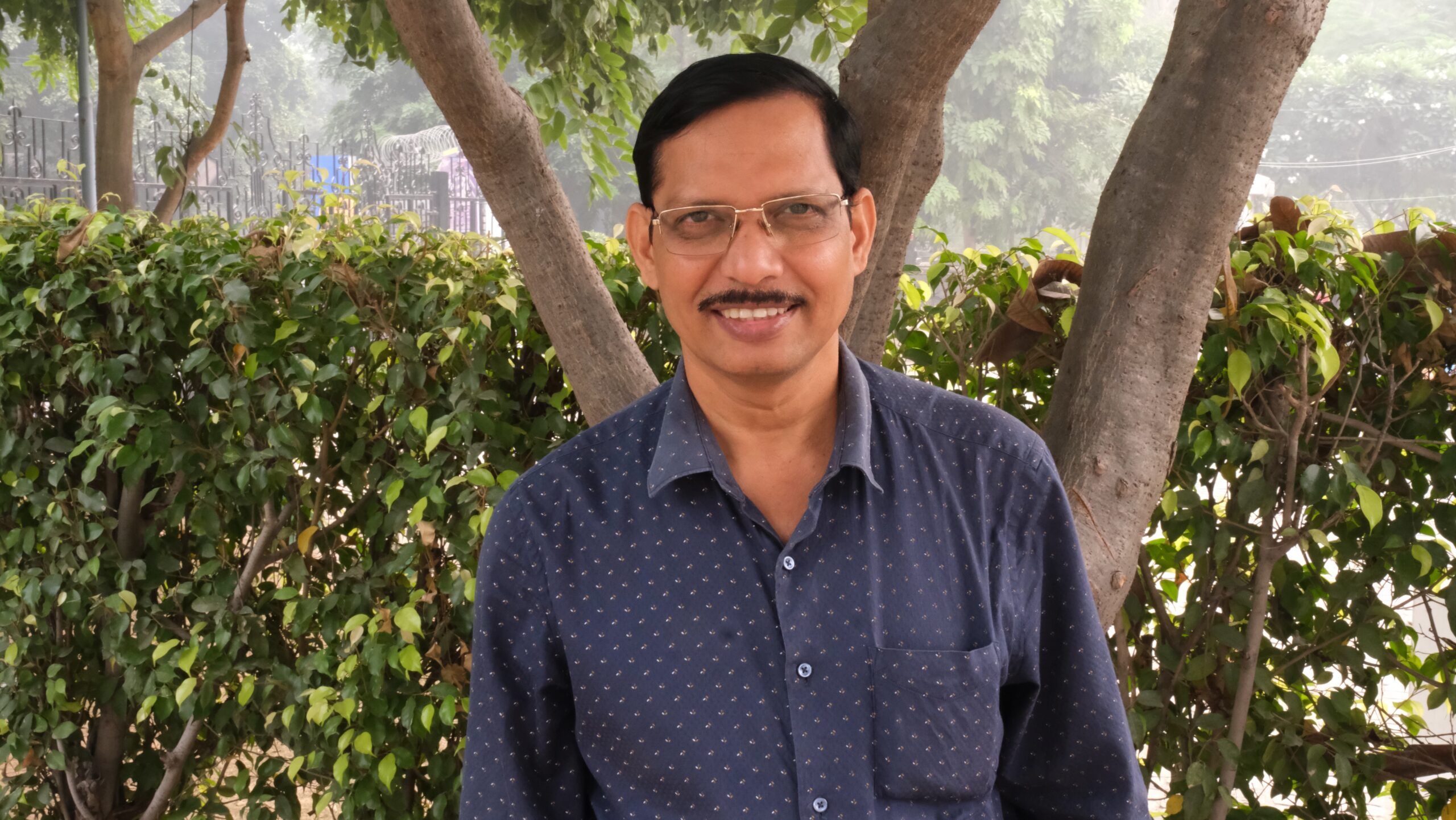
Programme manager Aurobindo Rout
Vasundhara has strong relations with the state government in Odisha and this helps facilitate land claims. This has resulted in more than 50 government officers, along with numerous field assistants, programme trainers, and thematic programme officers being trained on the FRA and claims-making process. Additionally, more than 300 Gram Sabha Village Assembly members have been trained in claims-filing processes in Mayurbhanj district.
Rout says up to 70 to 80% of the submitted claims for community rights in the state are being approved. Typically, the certification process involves ensuring that there are no conflicts over claims and boundaries. Vasundhara helps facilitate this process.
"We are building a movement from the village to the block, from the district to the state."
Achieving objectives
“With the support of Tenure Facility, we are able to achieve many of our objectives,” he said, noting the importance of tenure rights and the sustainable use of land in the indigenous communities. “The objectives of Vasundhara and Tenure Facility are very much the same.”
Aside from the tenure rights that are supported by Tenure Facility, Vasundhara focuses on economic and ecological security, as well as women’s rights to help strengthen the communities where it works. For instance, the organisation helps non-timber forest producers get fruit, flowers, spices and medicinal products to markets in Odisha state.
Vasundhara, ISB and SRUTI provide training about natural resource management plans, enterprise development, legal issues and market development in some of India’s principal forest areas.
The three Tenure Facility partners were also among the organisers of the International Learning Exchange (ILEX) in early November on the campus of Delhi University. Participants from 18 Indian states and around 30 countries engaged in discussions about threats to indigenous communities during the three-day ILEX. Other organisers were the Policy Development Advisory Group, the School of Planning and Architecture in New Delhi, and the AJK Mass Communication Research Centre. Tenure Facility was a finance partner of the ILEX.
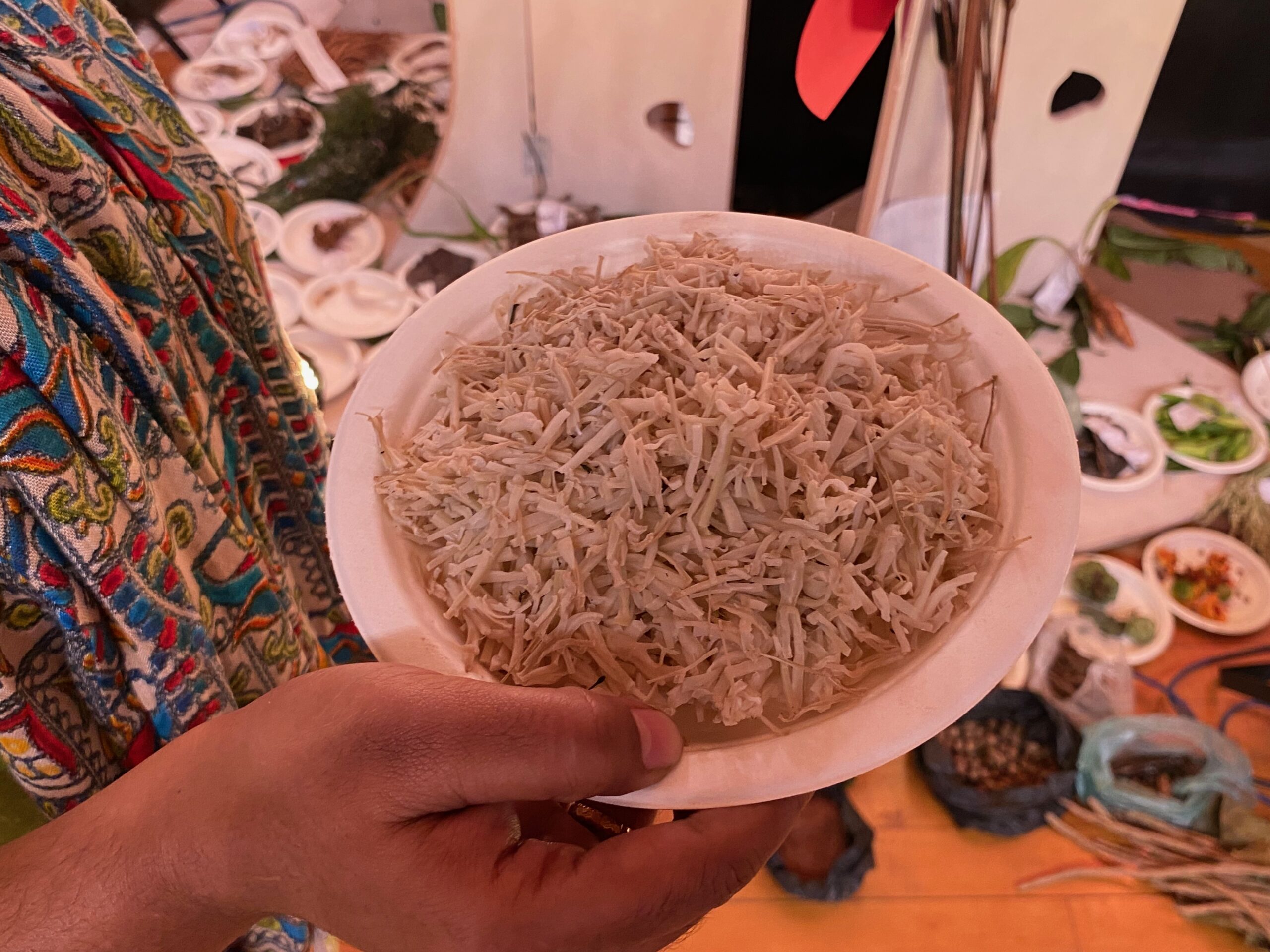
Non-timber forest products were on display at the International Learning Exchange in Delhi.
Writing as a hobby
Speaking on the side-lines of ILEX, Rout was passionate about working with a team of around 30 Vasundhara staff members and indigenous communities in Odisha. But his workday does not end there. Rout is a regular contributor to newspapers, writing about the rights of Indigenous Peoples and women, agriculture and civic movements.
“Leading a team all over Odisha and finding time to write is very difficult,” he confesses with a smile. “But writing is my hobby and social work has been my life aim. So I find the time.”
Articles