Raquel Cunampio (Panama)
Illustrated by Astrid Caballeros "Lotus" (Guatemala)

2021-11-08
The Climate Crossroads Exhibit was launched to create a “Storytelling Sanctuary” to share the work and demands of 10 Indigenous leaders. The exhibition highlighted the lack of Indigenous participants involved in COP26, despite Indigenous Peoples and local communities bring central to the climate crisis.
“With the Climate Crossroads Exhibit we are bringing attention to how Indigenous Peoples’ ancestral knowledge must be central to how we address climate action. These 10 Indigenous women and youth leaders, who come from as far as the Brazilian Amazon to the jungles of Borneo, exemplify the innovation and depth of experience frontline communities have and they are demanding that their culture and land rights be respected and included in all levels of decision making,” explained Tara DePorte, executive director and founder of the Human Impacts Institute
DePorte continued, “Because of the inequities in both who have access to the COP26 process, as well as the exacerbation of global inequities due to lack of vaccine access and travel restrictions due to the ongoing pandemic, Indigenous Peoples will be drastically underrepresented at the COP26 global negotiations. We are committed to using our immense privilege of access to make sure their voices, ideas, and demands are present in the halls and the streets. It is not us telling their story; this is about passing the mic and bringing their stories to the delegates and leaders at COP26 because they must be heard.”
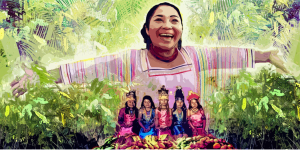
Elvia Dagua Guatatuca (Ecuador) Illustrated by Bolanle Adeboye (Nigeria)
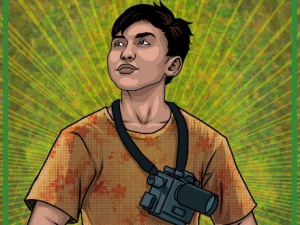
Kynan Tegar (Indonesia) Illustrated by Shaun Beyale (Navajo Nation)
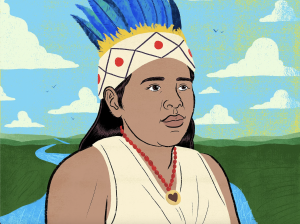
Ruth Vanessa Racua Troncoso (Peru) Illustrated by Daniel Fishel (USA)
The Climate Crosswords Exhibit highlighted these Indigenous leaders by showing the diversity of the immense contribution Indigenous women and youth are having to systems of education, conservation, policy, communication, and so much more. The stories magnify the work of Indigenous leaders who are developing innovative and integrative ways to define our knowledge of place, preservation, and paths forward. These leaders come from communities where biodiversity and ancestral land are most threatened, making the connection between land tenure and the conservation of our cultures and global climate.
“We are excited to be collaborating with the Human Impacts Institute and Ford Foundation, multiplying the efforts to share the value of ancestral Indigenous and local communities’ knowledge among the international community, major donors, and international media,” added Paula Alvarado, chief strategic communications and outreach officer, The Tenure Facility. “We hope that the Climate Crossroads Exhibit will catalyze interest in ancestral wisdom and contribute to ongoing efforts to integrate this perspective in solutions addressing the climate crisis.”
For more details on the Climate Crossroads Exhibit, click here
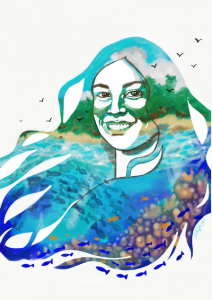
Vehia Wheeler (Mā’ohi Nui) Illustrated by Sarah Ayaqi Whalen - Lunn (Inupiaq)
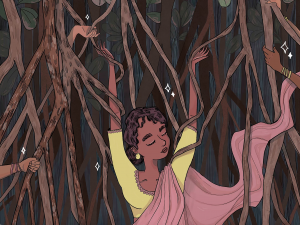
Lipi Rahman (Bangladesh) Illustrated by Inuri Maheshika (Sri Lanka)
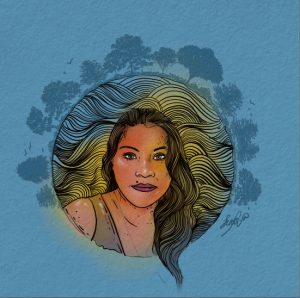
Severiana Domínguez González (Mexico) Illustrated by Sinomonde Ngwane (South Africa)
The Human Impacts Institute’s Climate Crossroads Exhibit is made possible with the support of the Ford Foundation in partnership with The Tenure Facility, focused on securing land and forest rights for Indigenous Peoples and local communities.
MEDIA CONTACT
Jennifer A. Maguire
Jen@maguirepr.com
917-596-5136
Articles