
2026-05-14
By Dr. Bijaya Kumar Nayak
In the past, protecting the forests of eastern India could make you a criminal.
“We were afraid to enter the forest where we had lived all our lives,” recalls a villager. “Today, that same forest is under our care.”
This shift—from fear to stewardship—has unfolded in Kalika Prasad, a small tribal village in Odisha’s Mayurbhanj district, close to the forests of Similipal Biosphere Reserve, one of India’s most ecologically significant landscapes. The village is part of a wider effort,supported by Tenure Facility partner Vasundhara in India, demonstrating how securing community land rights can deliver lasting conservation and livelihood outcomes.
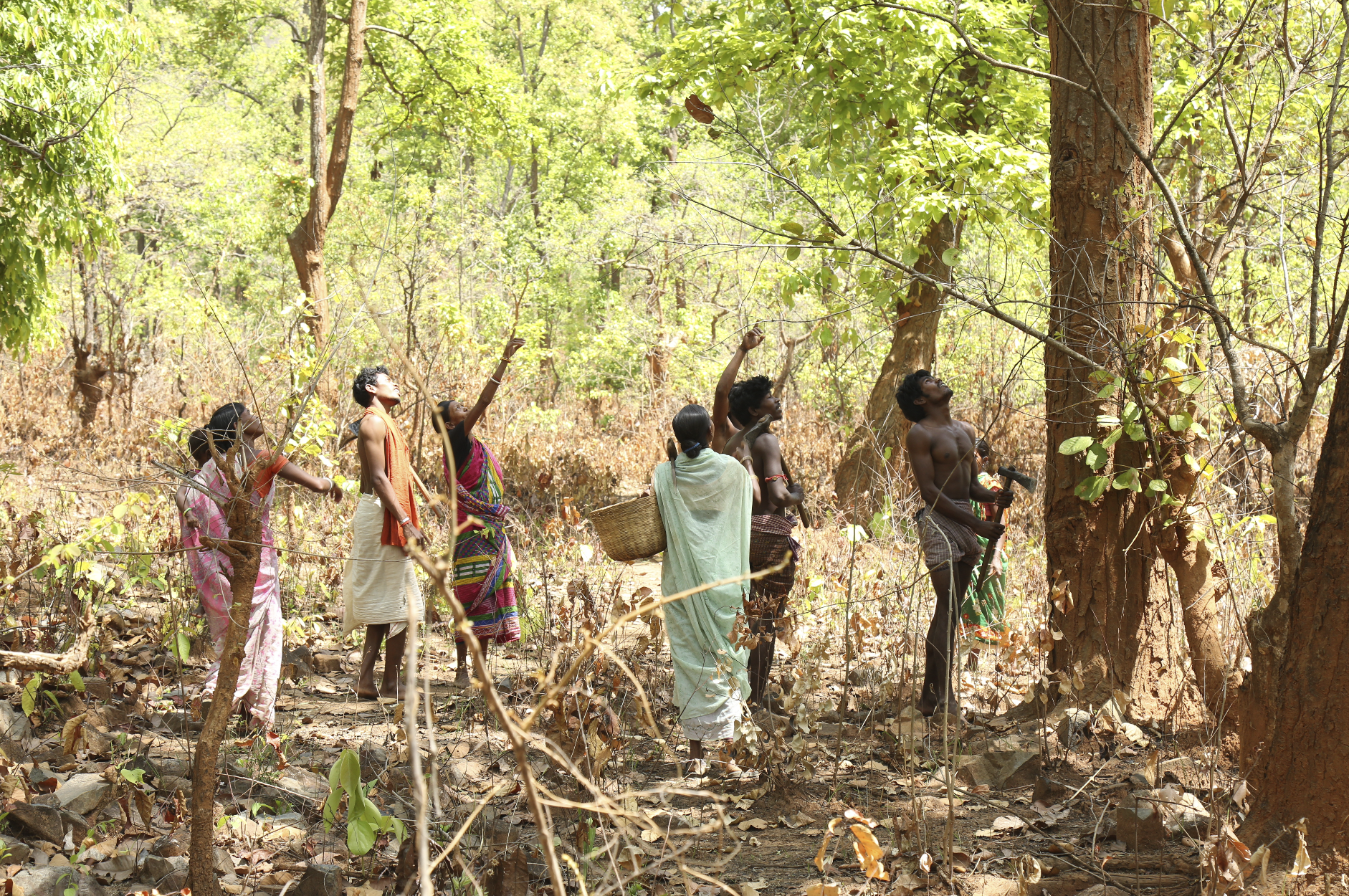
Kalika Prasad village members, Odisha, India
Kalika Prasad lies along dense sal forests, hillocks, and seasonal streams, in a region known for high biodiversity but long-standing tensions around forest governance and Indigenous rights. Home to just over 500 people, the village depends heavily on forests for food, fuel, culture, and income.
For generations, the community lived in close relationship with the forest. But after the country’s independence, state-led forest management systems increasingly excluded local people. Entry into forests was restricted, and villagers were treated as encroachers on their own land. They were criminalised for traditional practices, such as hunting wild animals or gathering non-timber forest products and medicinal plants, which are tied to their livelihoods and well-being. These experiences are now widely recognised—including in the Forest Rights Act (2006), which acknowledges the long-standing injustice faced by forest-dwelling communities whose customary rights were overlooked for decades. Meanwhile, illegal logging, forest fires, and ecological degradation intensified.
The forest remained central to village life—but without rights, security, or voice.

Community members from Kalika Prasad village and representatives from other Indian School of Business-supported communities meeting with the Tenure Facility team in Odisha, India.
With rights came responsibility. The Gram Sabha formed a community forest resource management committee to oversee forest protection and use. This committee banned hunting. It stopped illegal felling, defending its territory from outsiders and timber mafias.And it introduced fire prevention systems.
The results are visible. Forest regeneration has begun. Native plant species and wildlife are returning. Traditional ecological knowledge—once fading—is now being passed to younger generations.
"What we protect today will sustain our children tomorrow"
Secure forest rights also unlocked economic opportunity—especially for women. Twenty-two women from the village formed a producer group to collectively harvest and market non-timber forest products such as sal leaf, used across India for biodegradable food plates; mahua, a forest flower traditionally processed into food products and beverages; and karanja, a native tree whose seeds are used to produce oil for soap, biofuel, and medicinal purposes.
Now formally registered, the group has improved household incomes, access to markets, and women’s socio-economic conditions. In one season alone, a member earned INR 70,000 (approximately USD 840) in net profit from karanja seed sales—an amount equivalent to several months of rural household income. She now plans to invest in local value addition through a small-scale oil extraction unit.
This is where impact converges: forests conserved not by excluding communities but by fostering livelihoods rooted in sustainability.

A community member from Kalika Prasad village in Odisha, India.
Kalika Prasad is small, but its lesson is global. When communities have secure tenure and strong local institutions, conservation works better. Forests recover. Livelihoods strengthen. Governance becomes more accountable.
For Tenure Facility and its partners in India, this village shows what is possible when long-term support for land rights is paired with community leadership. In an era of climate crisis and biodiversity loss, investing in tenure security is one of the most effective conservation strategies at hand. Here, reclaiming forests has truly meant reviving lives.
Articles