
2026-06-02
Securing land and future for Indigenous Peoples and local communities
The road into the Sangha and Likouala departments in northern Republic of Congo passes through thick forest. Yet asphalt gives way to red soil where logging trucks pass day and night, carrying off trees that stood firm for centuries before concession paperwork tried to redefine who owns the land. These forests hold more than timber—they cradle rivers, fertile soils, unique species, and carbon stock. Most importantly, they are home to Indigenous Peoples and traditional communities who have lived in harmony with the land for generations, despite government decisions rarely taking this into account.
In October 2025, a Tenure Facility team visited several Indigenous and local communities in the region with our partner, the National Network of Indigenous Peoples of Congo (RENAPAC). The visit was a moment of listening and reflection as partners explore opportunities to strengthen customary land rights.
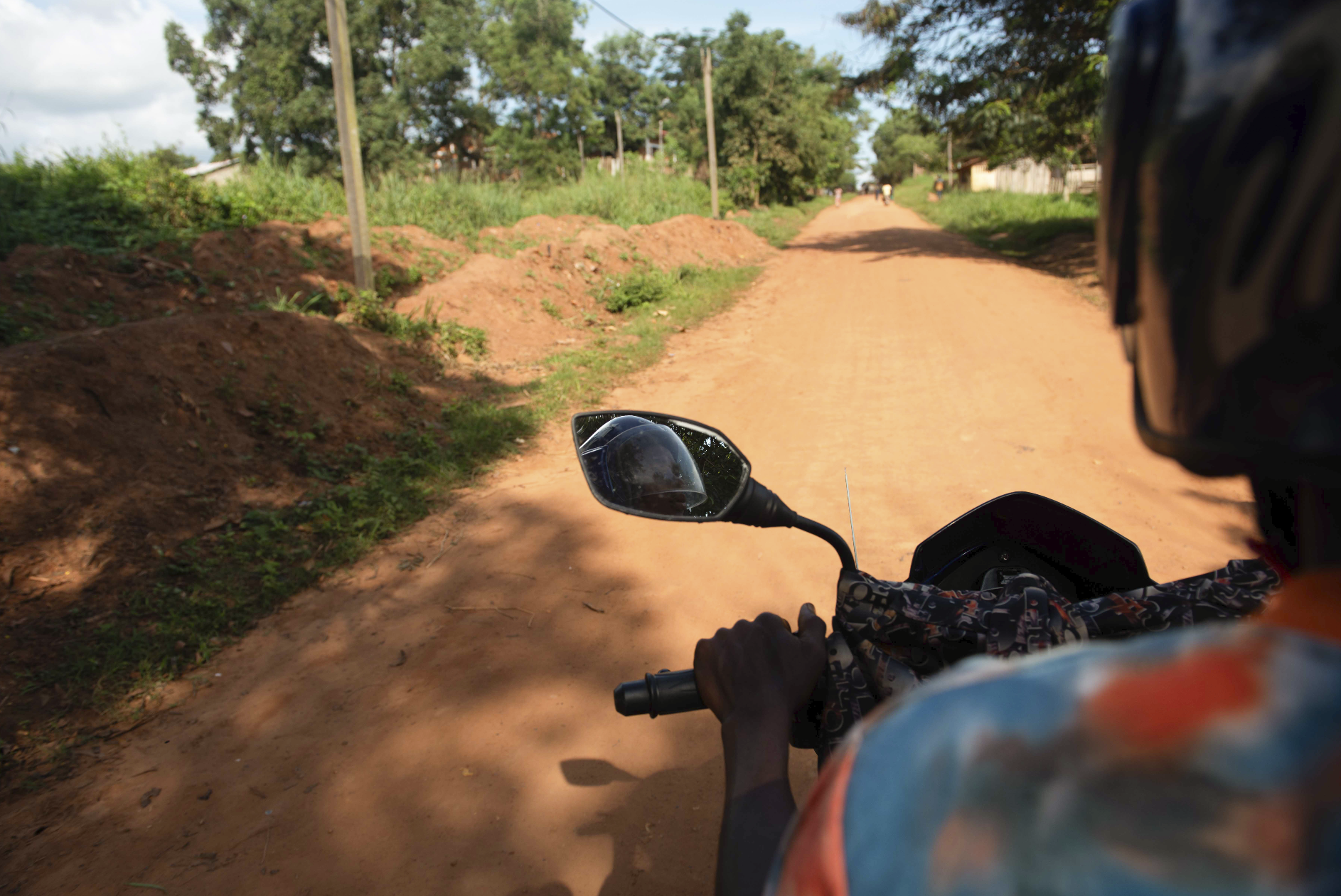
Along the roads of northern Republic of Congo
Our first community visit took us to Mbandza, a remote forest village in the Likoula department, where RENAPAC has been working with local communities on land tenure issues. Nearby, Indigenous Baka communities also depend on the surrounding forests. While both communities face challenges in securing recognition of their rights, the Baka often experience an additional layer of marginalisation and discrimination.
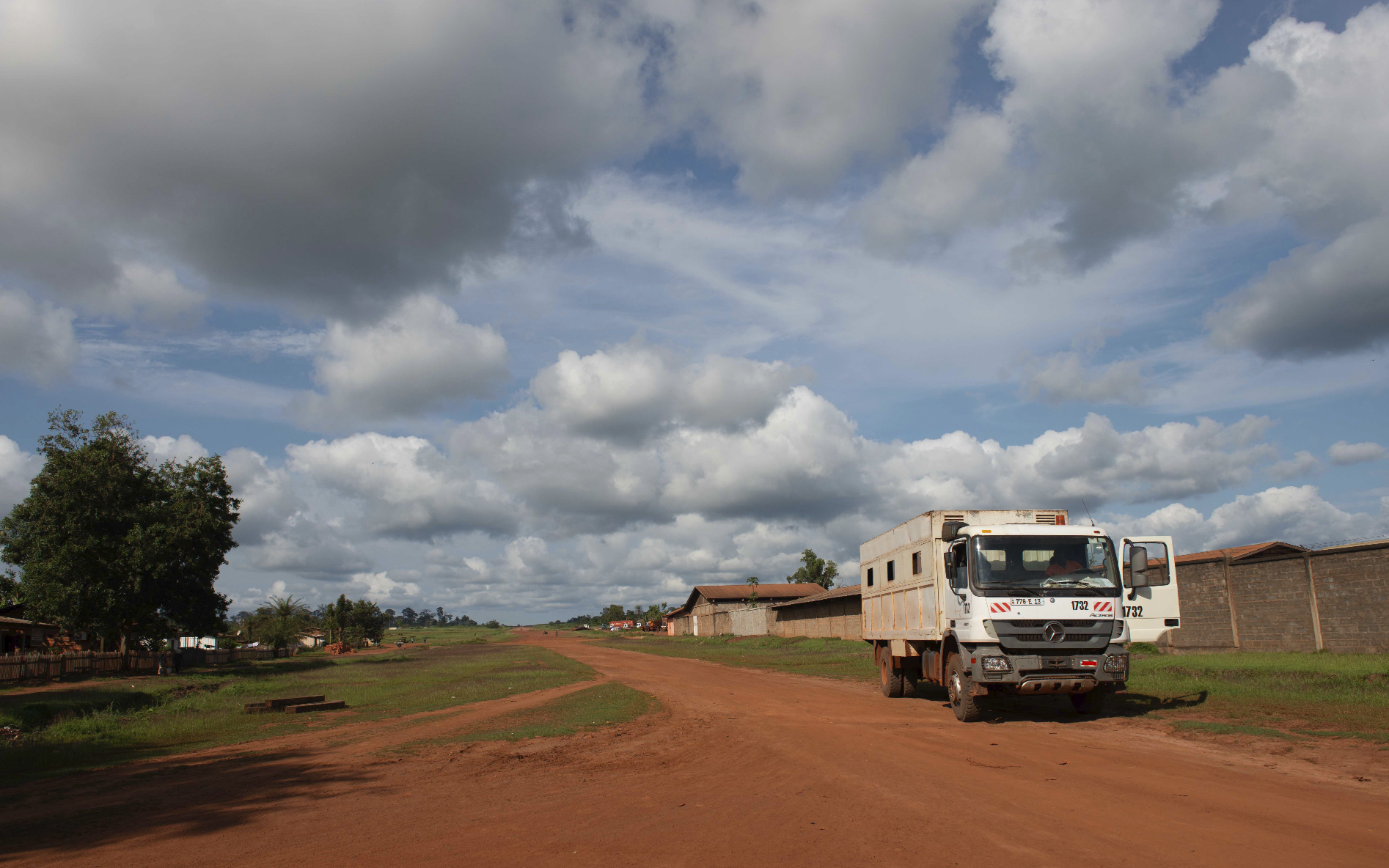
Main entrance to Olam Agri in Pokola, northern Congo.
Under a wooden shelter, Chief Kassa Dieudonne welcomed us. Children lingered in the background; women sat quietly in the shade.
When asked what secure access to land means for his community, he replied clearly: “Land rights mean freedom.”
Community members have watched outside actors—logging companies, mining ventures, conservation projects, nongovernmental organisations—come and go for decades. Among them is Congolaise Industrielle des Bois (CIB), an industrial logging company and subsidiary of multinational Olam Agri. While CIB provides jobs, infrastructure, and a degree of security to thousands of workers and families, its business remains grounded in resource extraction. For many local people, it represents both an opportunity and a reminder of the unequal terms under which resources are taken.
The government and logging companies say forestry governance has improved, citing internationally recognised benefit-sharing and consultation frameworks, though communities say these rarely shift control on the ground.
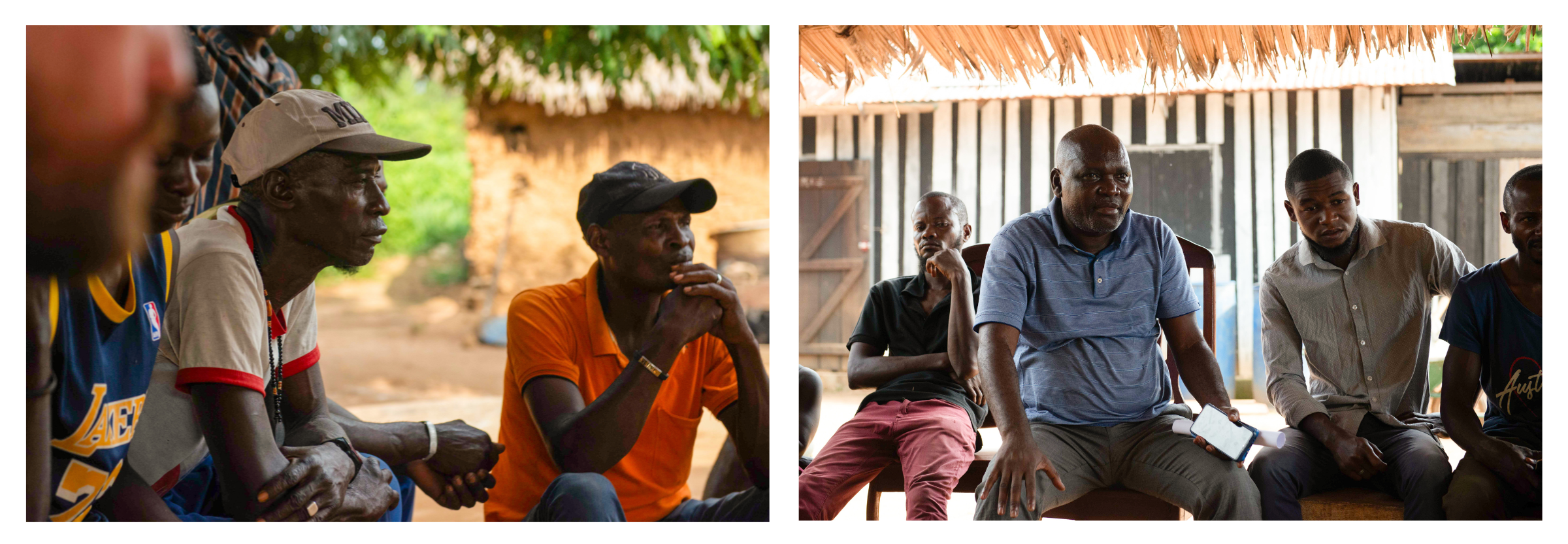
RENAPAC-supported community meeting in Mbandza, northern Congo.
During our visit, community members told us that the promised “development”—often framed around infrastructure and basic services—does not always arrive. Behind our meeting area stood a school built years ago, which remains unused and has been vandalised, simply because no teachers come.
Indigenous and local communities’ customary land ownership remains largely unacknowledged. These communities depend on the land to sustain their lives, but their rights to govern it are rarely recognised by the government.
“I am tired and hurt,” a man said, finally speaking up. “There is a lot of talk and no action.”
He explained that for years his community has participated in meetings, consultations, and promises of development linked to logging and conservation projects—yet little has changed. Land boundaries were drawn without their consent, access to forest resources has narrowed, and their livelihoods remain insecure.
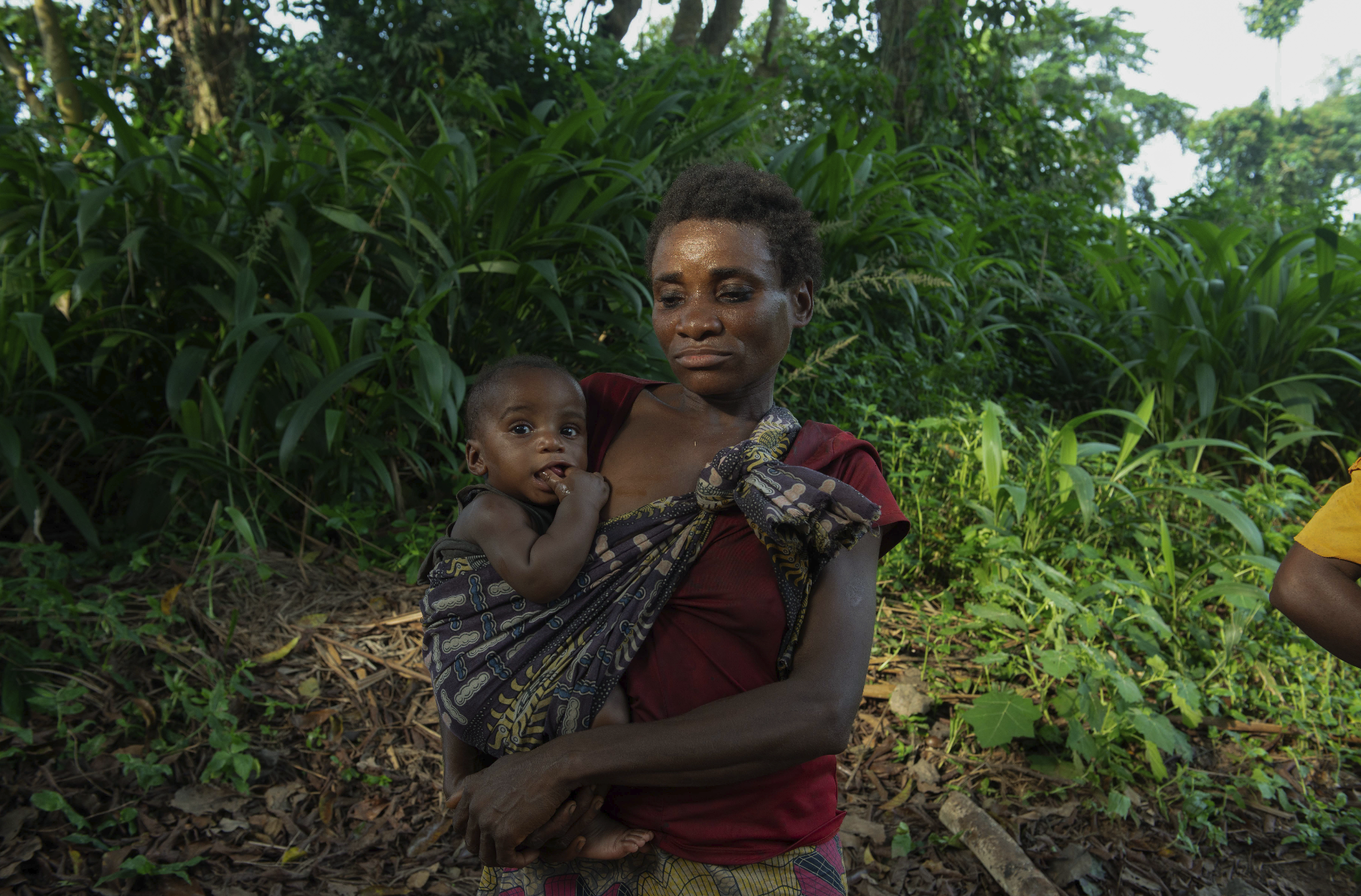
A Baka community member holding her son near Mbandza, northern Congo.
One young farmer explained how his community wants to turn land rights into sustainable livelihoods by cultivating cocoa: “Land rights are a gift from God,” he said. “We need cocoa plantations to improve our lives. We already have buyers.”
The community’s request is simple: they want tenure security, recognition of their customary rights, and the ability to sustainably manage the land they have relied on for generations.
After meeting Mbandza’s village chief, we met one of the nearby Baka communities, whose forest access is also regulated by industrial logging concessions. Once again, the dynamics of exclusion and marginalisation were clear: boundaries drawn without dialogue, poverty entrenched, Indigenous knowledge overlooked.
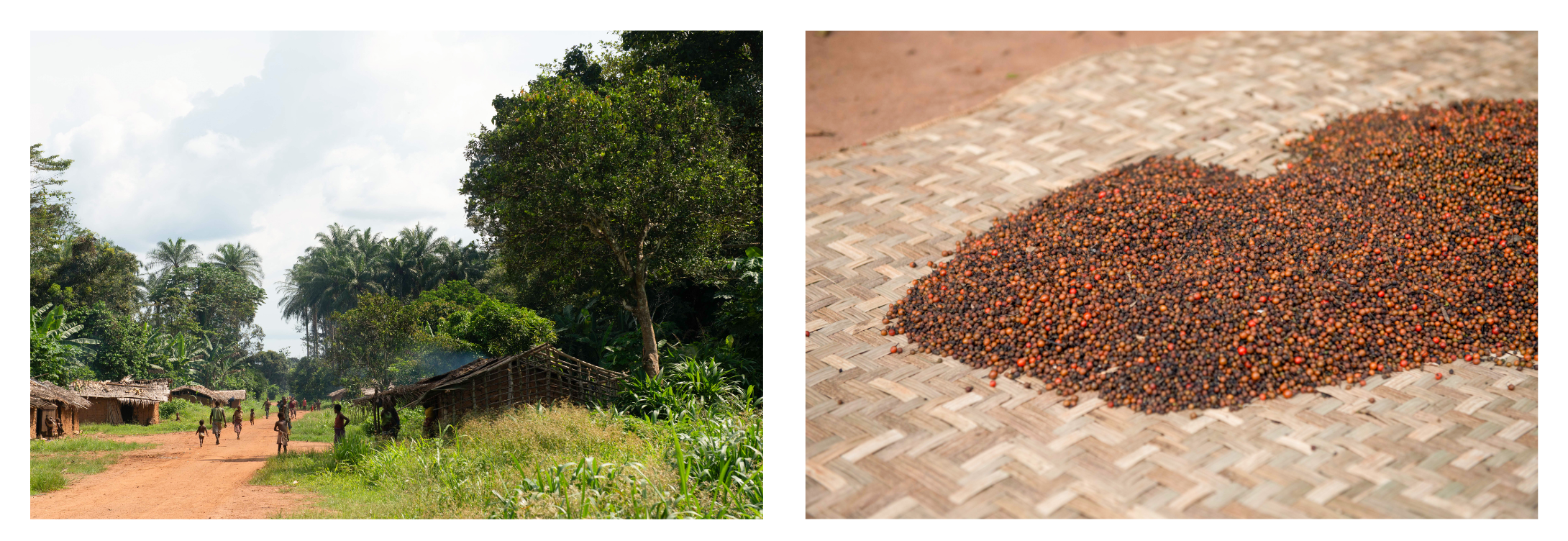
Nearby Mbandza village, Northern Congo
Before logging concessions were granted on their ancestral land, the Baka had lived in harmony with this forest for generations. Their lives are deeply intertwined with its rhythms—through huntingand the harvesting of forest foods, fibres, and medicinal plants. Research in the Congo Basin shows that Baka forest experts can identify hundreds of tree species and understand how plants, wildlife, and seasonal cycles interact, knowledge that scientists increasingly recognise as essential for understanding and conserving tropical forest biodiversity.
Their traditional practices—such as moving between forest camps and harvesting resources according to seasonal cycles—help sustain wildlife populations and maintain the ecological balance of the forest.
Yet today, access to that same forest is regulated by industrial logging concessions.
“Our grandparents left us this forest,” a woman says. “We didn’t know we were inside a logging concession.”
“How can we plant if the land is not ours?” asks another community member.
In this part of Africa, resource extraction moves faster than recognition of community forest rights.
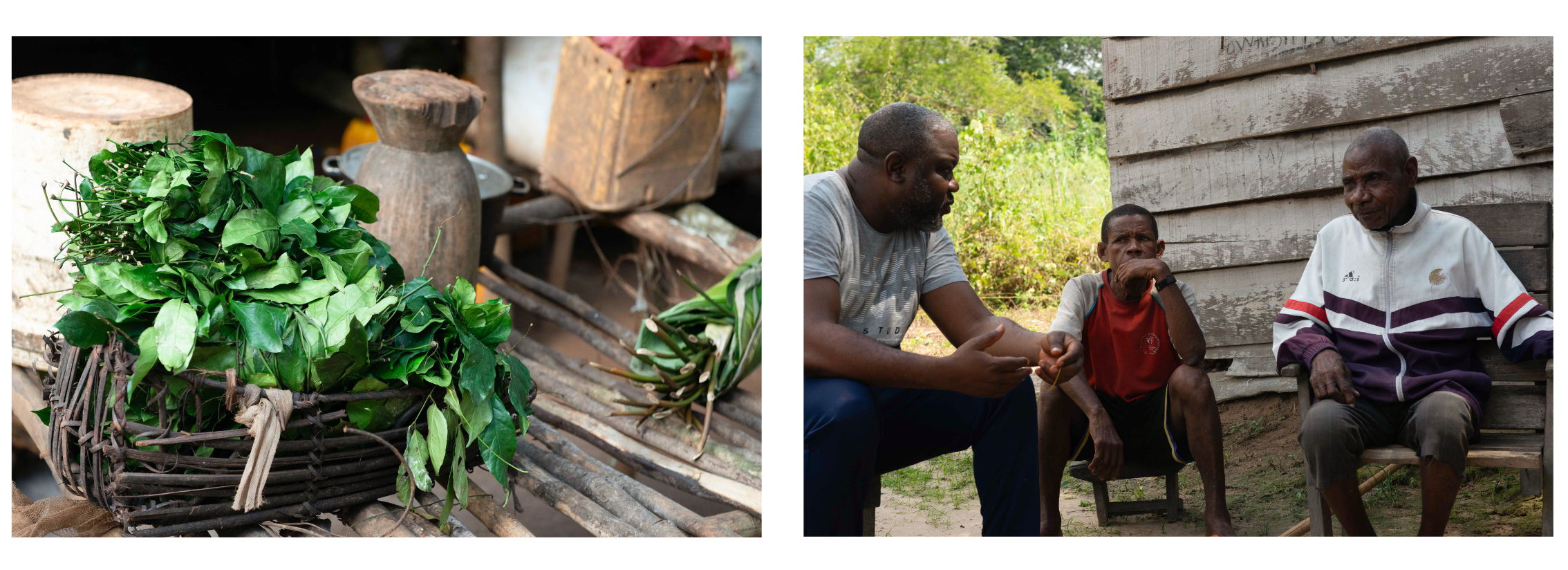
Baka community members living within and adjacent to the WCS nature reserve in Bomassa, northern Congo.
Further north, the mixed Bantu and Baka community of Bomassa sits on the edge of the Nouabalé-Ndoki National Park—a sanctuary for forest elephants, gorillas, and some of the world’s richest biodiversity—which is managed by Wildlife Conservation Society (WCS). But the same boundaries drawn by the government and WCS to protect wildlife have excluded the communities who live beside them.
There is a clinic. A school. Some seasonal work. But elephants raid crops. Decisions about what used to be the community’s ancestral land are made far away. Access to the forest now comes with rules the community did not write.
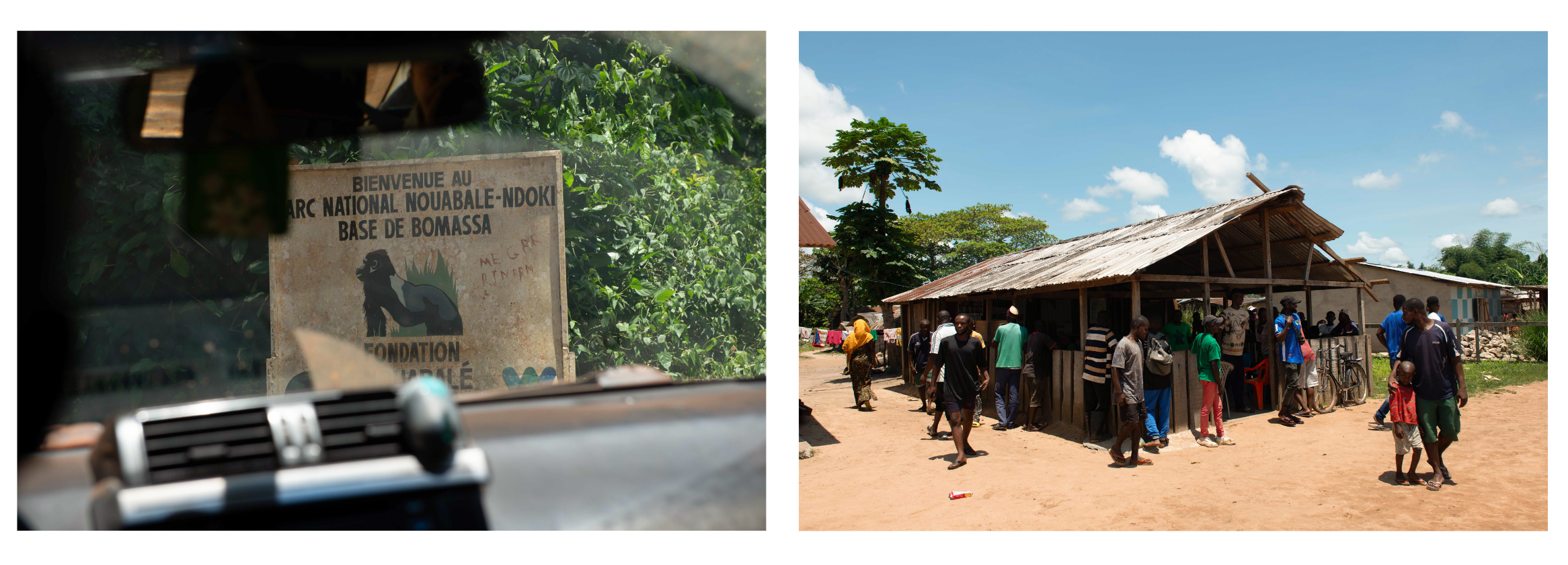
WCS reserve entrance sign and community meeting area in Bomassa, northern Congo.
Bomassa’s experience is not unique. Across the Republic of Congo—as in much of the Congo Basin—protected areas have historically been established through top-down approaches that prioritised biodiversity protection while limiting Indigenous Peoples’ and local communities’ access to ancestral lands, often without meaningful consultation or shared governance.
“We need a committee to walk hand in hand with WCS to monitor funds and rights,” says Francis, a Bomassa community member. “Not behind. Not outside. Together.”
Downriver, Rayssa, the elderly chief’s daughter, remembers when CIB arrived: “When they came it was good. Now they have abandoned us. They gave us cooking oil and clothes. Then they stopped.”
“We were happy and free before CIB came. Now we are restricted,” she shared.
Communities are not a threat to conservation—they are its foundation. As the forest’s first custodians, Indigenous Peoples and local communities are best placed to protect and sustainably manage the lands that shape their lives.
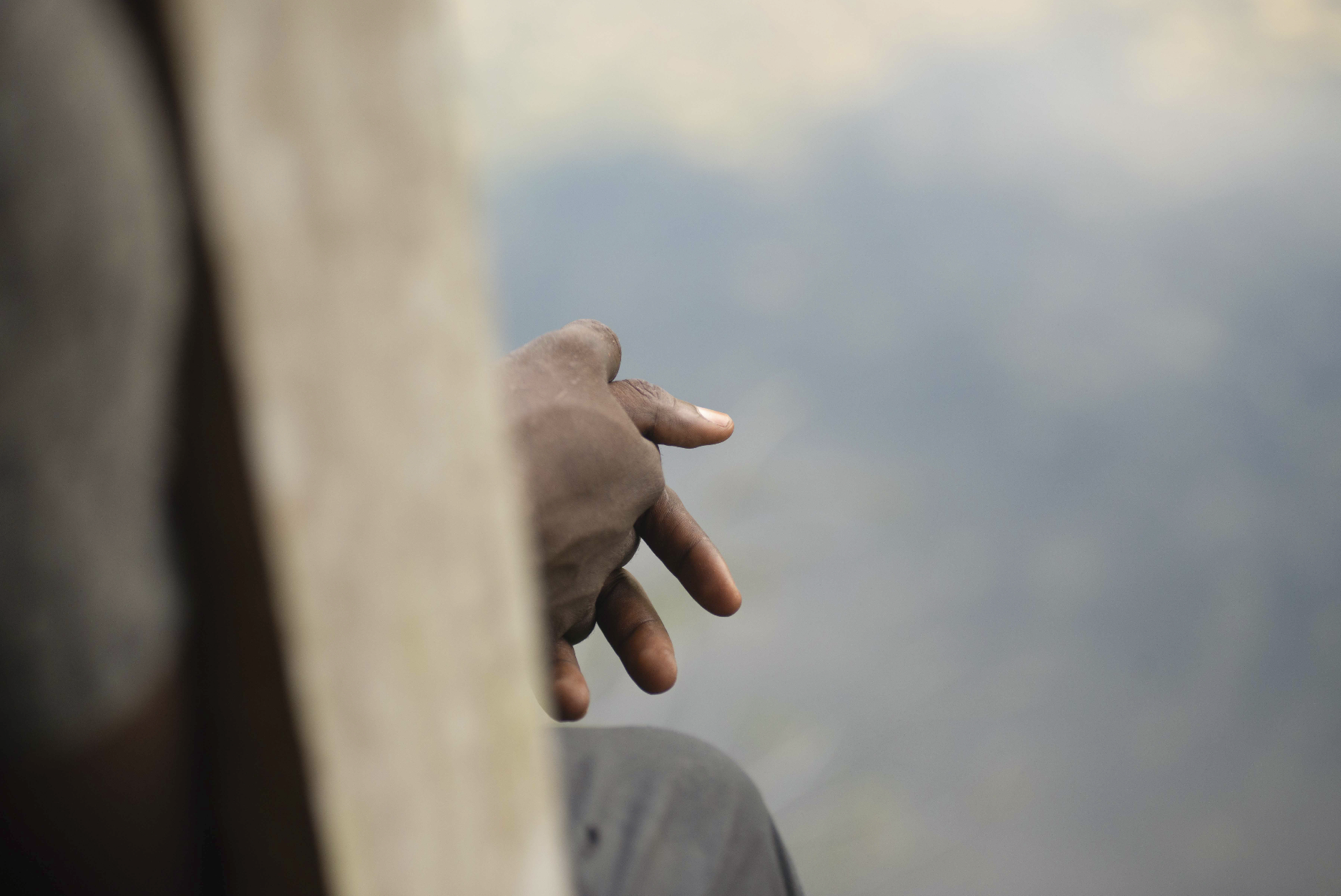
Hands of an Indigenous park guide in the WCS-managed Noubalé-Ndoki National Park, northern Congo.
RENAPAC, and its network organisations, with support from Tenure Facility, are currently developing a proposed initiative, aimed at strengthening the collective tenure rights of Indigenous Peoples and local communities across six departments of the Republic of Congo, Sangha, Likouala, Lékoumou, Niari, Pool, and Plateaux.
The Republic of Congo has a robust legal framework to do so: the 2011 Indigenous Peoples Law guarantees equal rights and access to ancestral lands, the 2018 Land Law provides a mechanism to recognise communities’ land tenure, and the 2020 Forest Code introduced community forest governance and benefit sharing. On paper, rights exist. Yet, in practice, communities still struggle to secure even the most essential access to their forests, facing complex procedures, overlapping logging concessions, and powerful industrial actors.
RENAPAC’s project aims to bridge that gap between recognising rights on paper and realising them on the ground.
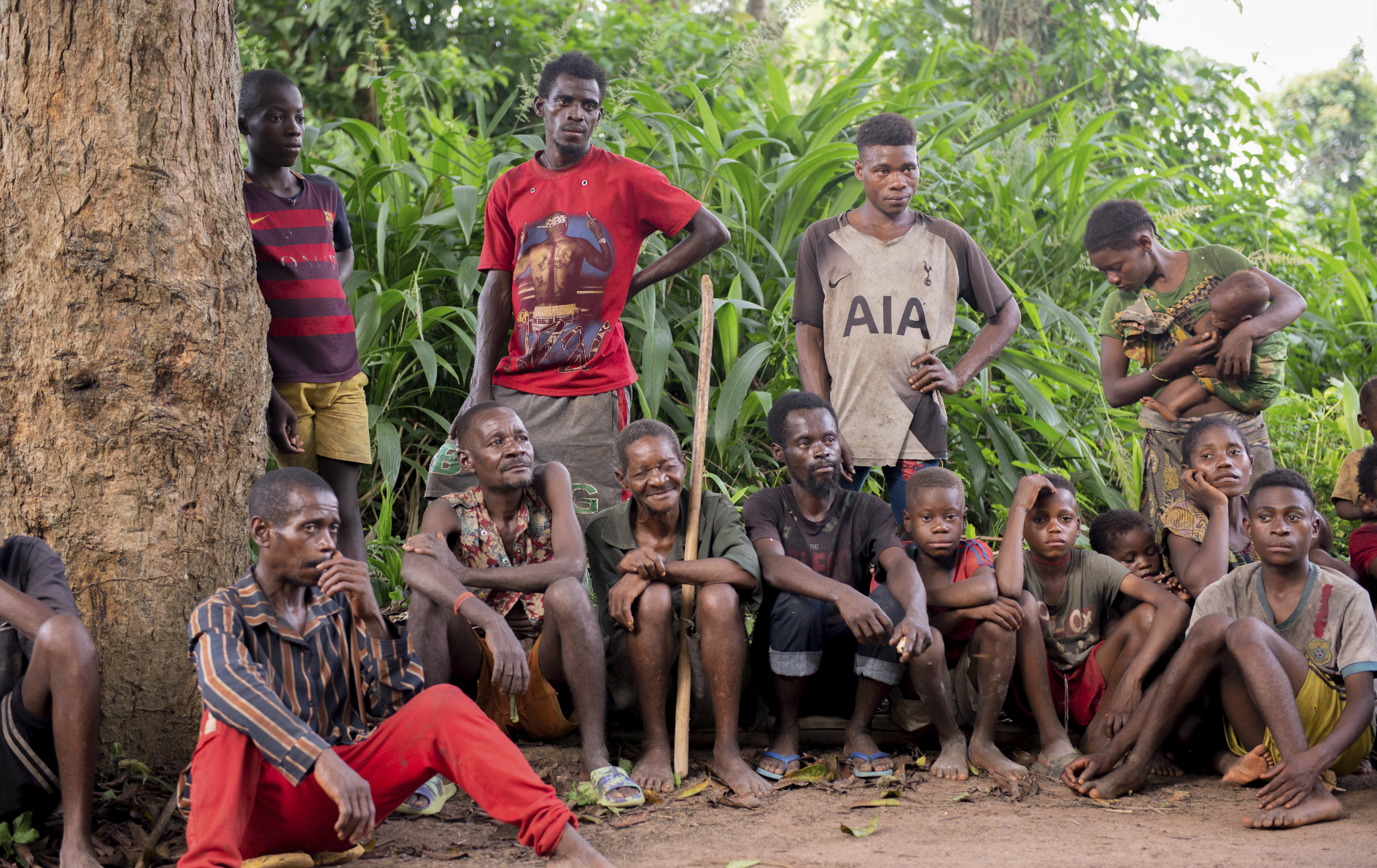
Baka community members participating in a community meeting near Mbandza, northern Congo.
Over five years, the project would aim to:
If implemented, the initiative would seek to ensure that communities can continue living from and caring for their lands without fear of displacement.
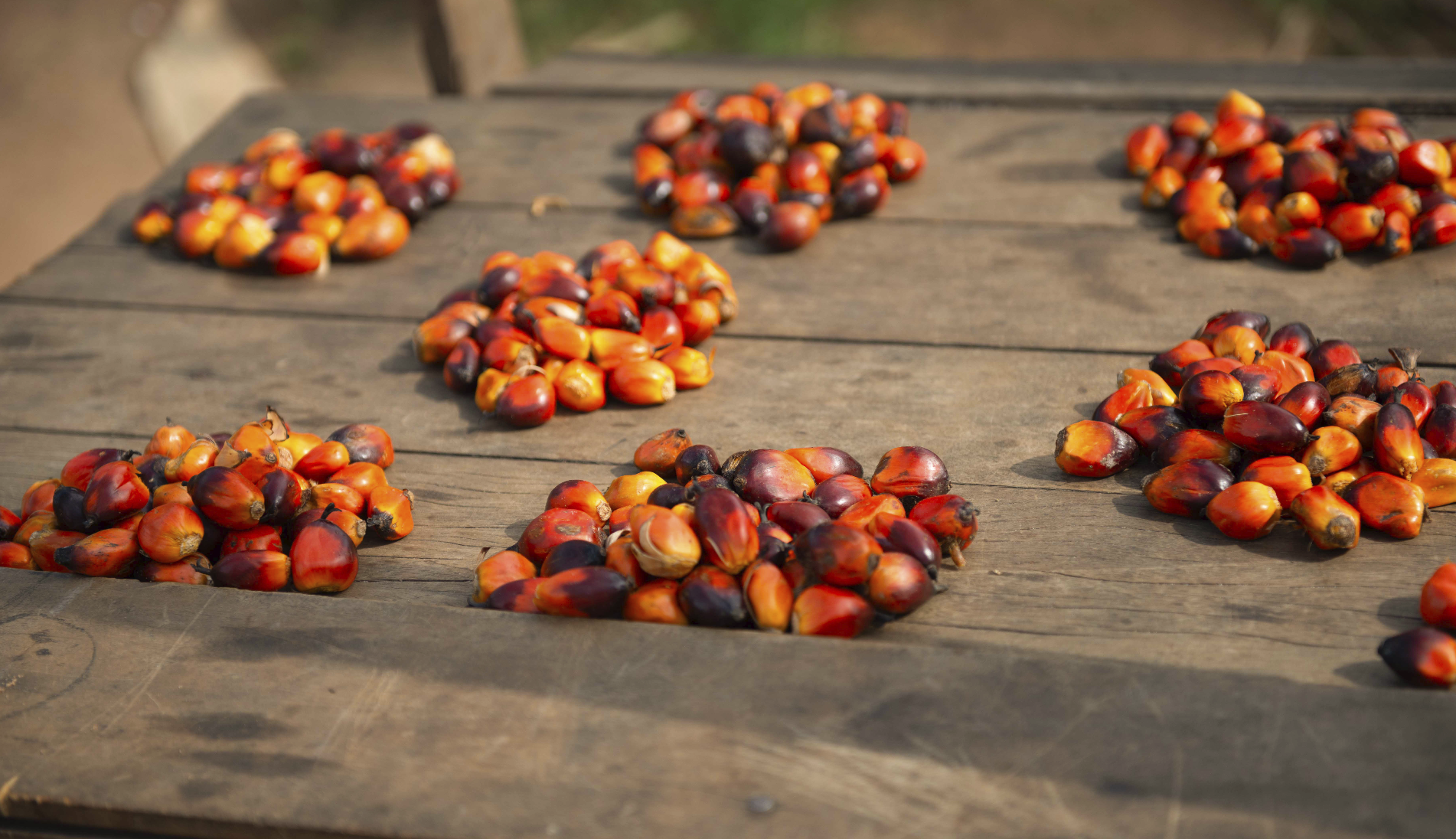
Locally harvested nuts for sale at a market in Pokola, northern Congo.
After meeting Rayssa, her father, and others in the community, we followed a narrow trail with a WCS guide. The forest eventually opens into Wali Bai—a wide mineral clearing, formed naturally by mineral-rich soils and groundwater, where wildlife gathers to drink and feed. The Central African Republic is visible across the water. Here, borders exist only on paper.
As the light faded, we returned to the riverbank and boarded a small boat back to Ouesso, the capital of Sangha. The Sangha River carried us through a largely unchanged landscape, the forest stretching unbroken on both sides.
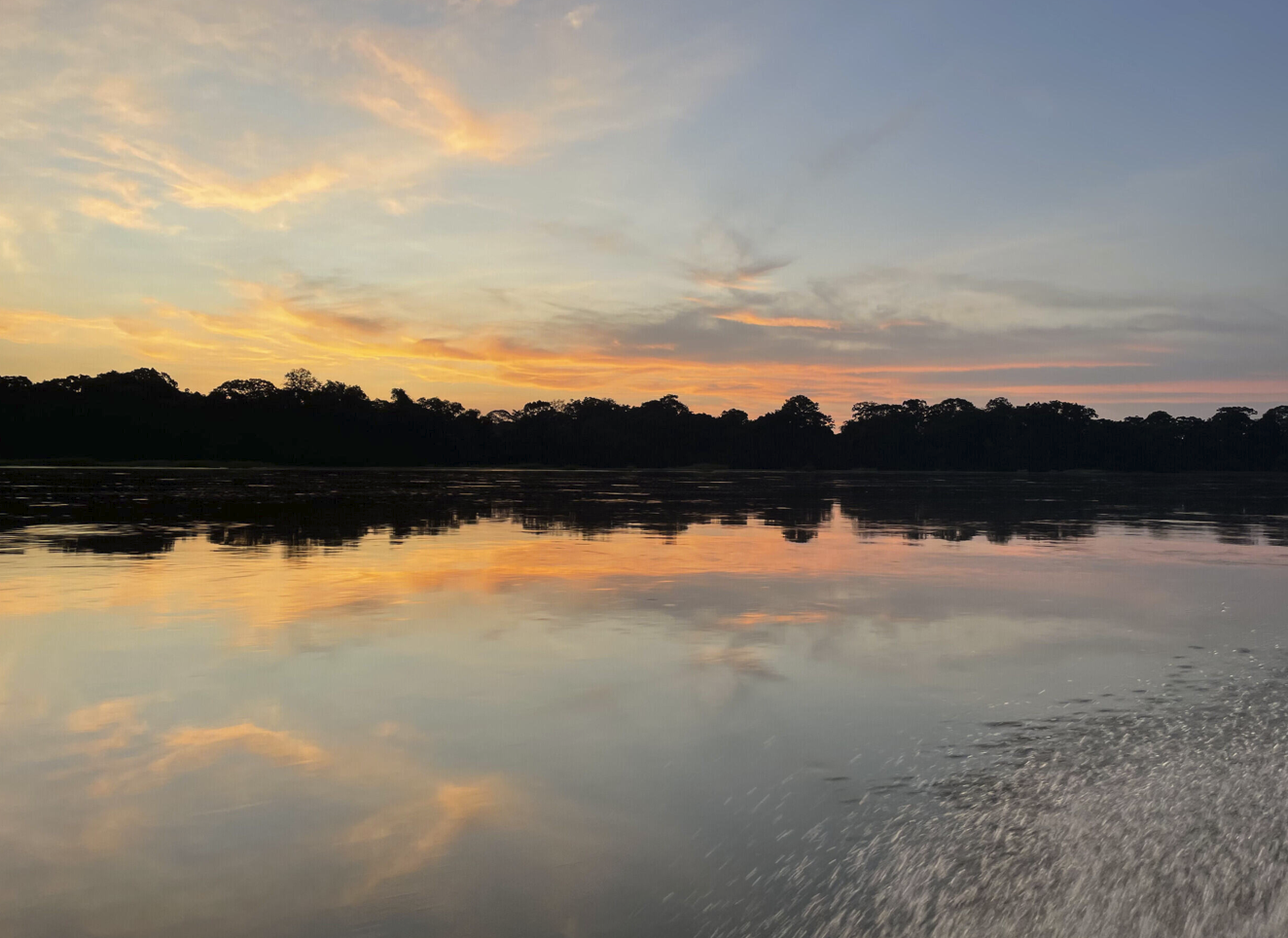
Journeying down the Sangha River from Bomassa to Ouesso, northern Congo.
The contrast is sharp: a protected area where the forest thrives, and nearby communities whose relationship with that same forest has been restricted. Listening to them makes clear that conservation and community rights cannot be treated separately.
We came north to listen, to observe, to understand the tensions and the hope that define this land. To support RENAPAC and learn from the people who know how to steward their land sustainably yet remain the most affected by decisions taken without them.
Projects rarely begin with infrastructure. They begin with the understanding that community presence is essential to conservation, not a threat to it. They begin with voices being heard and rights formally recognised. What RENAPAC and its network are working towards is more than a project. It is a vision of a future in which communities have the recognition, rights and support needed to continue stewarding the lands they have long called home.
Articles