
Securing Indigenous land rights in Indonesia is a climate imperative

Read IPRI's full article here

Indonesia is home to the world’s most biodiverse forests. Indigenous Peoples, who make up around 40% of the country’s population, have safeguarded these forests for generations through their customary laws, traditions, and collective governance. 

But these guardians face relentless threats: dispossession, denial of rights, and the erosion of their territories. When their rights are under attack, forests fall, cultures weaken, and a crucial buffer against climate change is lost.

Still, Indigenous resistance is powerful. Communities such as the Dayak Iban of Sungai Utik, the Ammatoa Kajang of South Sulawesi, and the Kasepuhan Karang in Banten have won important victories in securing recognition of their ancestral forests and traditions. In Papua and the Aru Islands, Indigenous groups have successfully resisted destructive mega-projects. These wins are vital—and their impact extends on a global scale.
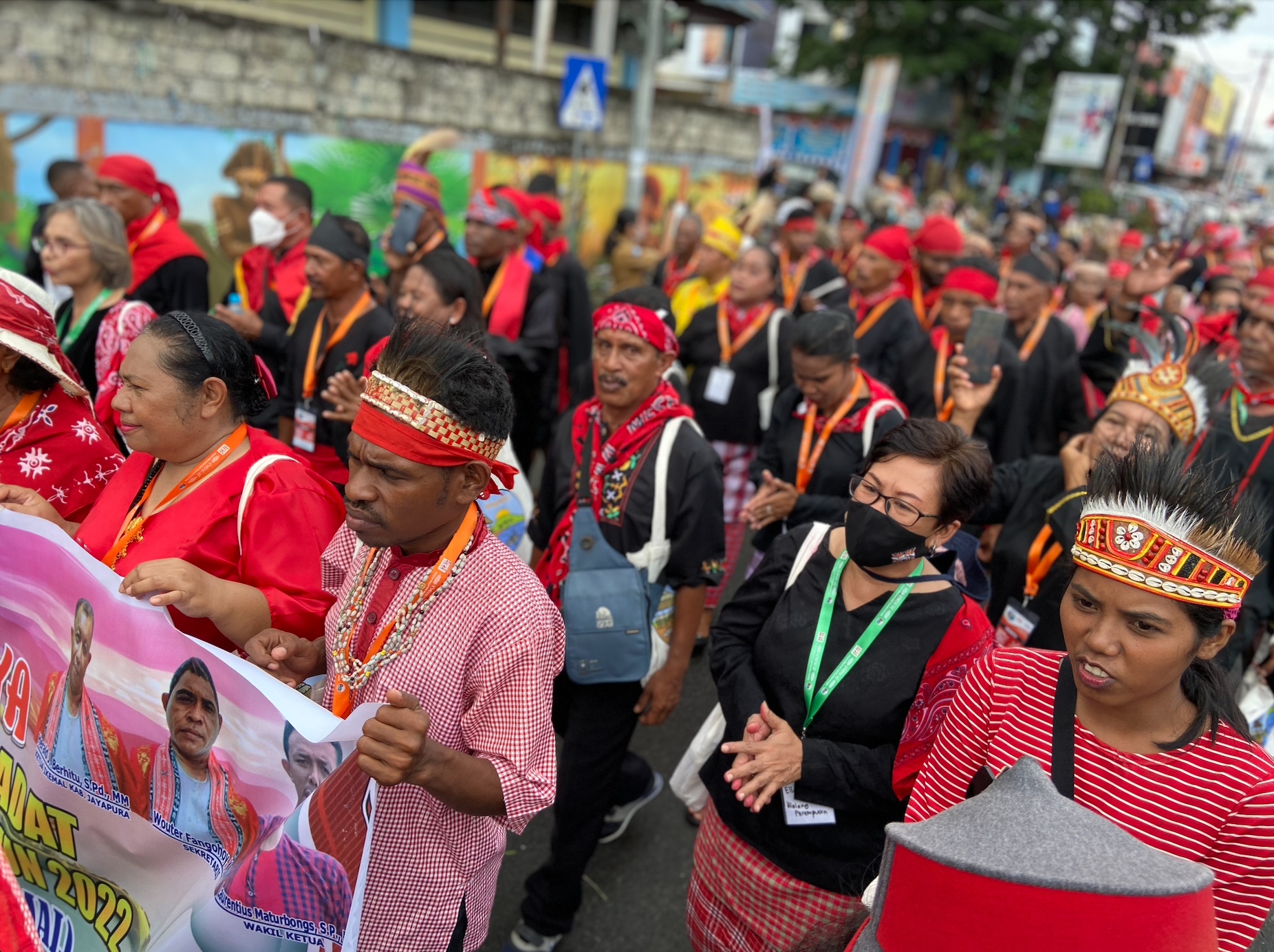
Indigenous Peoples Marching - AMAN 6th Conference 2022

But threats are rising fast. Nickel mining in Papua and Maluku is displacing communities, poisoning ecosystems, and endangering even uncontacted groups like the O’ Hongana Manyawa. Palm oil, mega-infrastructure like Indonesia’s new capital project, and poorly regulated green energy initiatives pile on more pressure. Meanwhile, the criminalisation of Indigenous leaders and defenders is widespread, with hundreds facing arrests, lawsuits, and violence.

Still, communities resist. But lasting change needs more than resistance—it needs structural reform and direct financing. A breakthrough is finally on the table: the long-delayed Indigenous Peoples Bill, now set for Indonesia’s 2025 legislative agenda. Its passage would be a historic milestone—formally recognising Indigenous rights, strengthening forest protection, and laying the groundwork for a fairer, more sustainable future.

For a deeper dive, read Fast-Tracking Indigenous Land Rights Is a Climate Imperative: Protecting Indonesia’s Forests Amid Rising Threats by Rukka Sombolinggi, Secretary General of AMAN, and our Board member Joan Carling. Details below.


Read the full article here

Articles

24 August 2026

Cameroon

La terre sous leurs pieds : le cheminement des communautés Bagyeli vers la reconnaissance de leurs droits fonciers

Dans le département de l’Océan, au sud du Cameroun, les routes serpentent entre des forêts denses, de longues pistes de latérite rouge et des plantations industrielles qui semblent s’étendre un peu plus chaque année.

17 August 2026

Cameroon

The land beneath their feet: Bagyeli communities’ journey towards recognition and security of their land and forest rights

In the Ocean Department of southern Cameroon, roads wind through dense forests, long stretches of red laterite tracks, major development projects — including mining and agro-industry — and industrial plantations that seem to expand a little further each year, gradually reducing the living space available to communities.

04 August 2026

Blogs

Pourquoi les droits fonciers ne peuvent pas attendre la paix

Et si attendre la paix était l’un des plus grands obstacles à la sécurisation des droits fonciers ? Pendant des décennies, la gouvernance foncière a été largement considérée comme un élément de la reconstruction post-conflit. L’hypothèse était simple : le conflit prend fin, les institutions se redressent, les populations rentrent chez elles, et ce n’est qu’alors que les droits fonciers peuvent être rétablis. Dans de nombreuses régions du monde, cependant, cette séquence ne correspond pas à la réalité. Les conflits sont souvent prolongés, les institutions peuvent être affaiblies ou inexistantes, et les registres fonciers officiels ont parfois disparu. Pourtant, les communautés continuent de cultiver leurs terres, de gérer les forêts, de résoudre les différends et de défendre leurs territoires en s’appuyant sur les systèmes de gouvernance qui restent à leur disposition.

23 July 2026

Blogs

Why land rights can't wait for peace

What if waiting for peace is one of the biggest obstacles to securing land rights? For decades, land governance has largely been treated as part of post-conflict recovery. The assumption has been straightforward: conflict ends, institutions recover, people return home, and only then can land rights be restored. In many parts of the world, however, that sequence does not reflect reality. Conflict is often prolonged, institutions may be weakened or absent, and official land records may have disappeared. Yet communities continue farming, managing forests, resolving disputes, and defending their territories using the governance systems still available to them.

13 July 2026

Brazil

"We are the middle, the beginning and the middle." : Quilombola women in land rights and climate action

Long before a land title is granted or a policy is signed, movements are built. They are built by women and men organising communities, defending territories, passing on ancestral knowledge, protecting culture, and ensuring generations of struggle are never forgotten. Between 10 and 14 June 2026, the III Meeting of CONAQ's Quilombola Women's Collective brought hundreds of these leaders together from across Brazil, alongside representatives from Latin America and Africa. Over five days, they celebrated victories, confronted urgent challenges and strengthened a movement that continues to shape Brazil's conversations on land rights, climate justice, gender equality and historical reparation.

02 June 2026

Congo Brazzaville

Seeding land rights in northern Republic of Congo

The road into the Sangha and Likouala departments in northern Republic of Congo passes through thick forest. Yet asphalt gives way to red soil where logging trucks pass day and night, carrying off trees that stood firm for centuries before concession paperwork tried to redefine who owns the land. These forests hold more than timber—they cradle rivers, fertile soils, unique species, and carbon stock.