
2026-04-10
Text adapted and summarised from an article originally written by Pablo Mis, Julian Cho Society.
For generations, the Maya People of southern Belize have cared for their lands through systems rooted in reciprocity, collective governance, and deep relationships with the forest. Today, that stewardship has reached a new frontier: global climate finance.
In a landmark moment for Indigenous-led climate action, the Julian Cho Society (JCS), an Indigenous organisation representing Maya Q’eqchi’ and Maya Mopan communities, has submited a concept note to the Green Climate Fund (GCF). The concept has now been endorsed for full proposal development, marking a significant step toward Indigenous direct access to international climate finance. If the proposal is approved, JCS’s initiative would be the first Indigenous-led project financed directly by the Green Climate Fund.
This milestone demonstrates what becomes possible when Indigenous organisations are recognised not as beneficiaries, but as designers, decision-makers and leaders of climate solutions.
The Maya People of Belize live in their ancestral lands in the country’s southernmost region, a territory of lush forests and crystal blue rivers. Historically, this region has been among the most excluded ones in the country. Despite this region being largely forgotten it is where a vibrant system of Indigenous communities and governance continues to thrive.
The region homes 41 Maya Q’eqchi’ and Mopan communities, spanning over one million acres of forest. In here this communities exercise autonomy over their internal affairs, including land management and development decisions. While each community has autodetermination they are all united through a traditional governance system coordinated by the Toledo Alcaldes Association (TAA).
It is important to note that Maya governance is rooted in collectiveness. Community life is anchored in solidarity, collective action and future‑looking visioning, embodied in Maya concepts such as aj ralchooch, komonil, and ab’ink—values that emphasise reciprocity and shared responsibility.
The Maya People of sourthern Belize coordinated by TAA and JCS have also worked for decades to advance tenure and land rights in their communities as well as sustainable development.
Tenure Facility has been honored to support their since 2020.
"If the proposal is approved, JCS’s initiative would be the first Indigenous-led project financed directly by the Green Climate Fund."
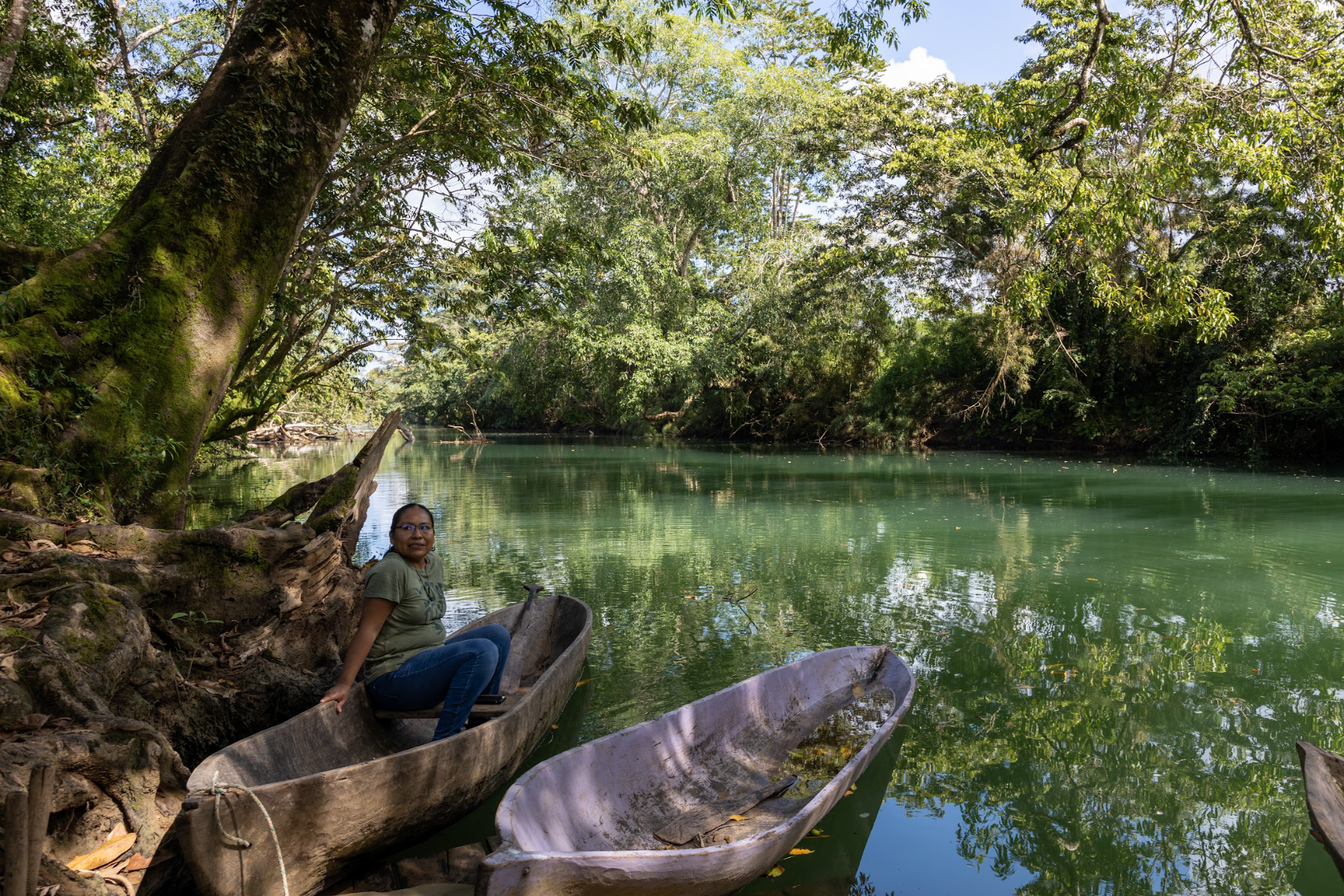
River in Maya territory - Southern Belize
In order to continue advancing their land rights, and sustainable development projects JCS and TAA have continiously looked for climate finance support. Therefore, the Maya People’s engagement with global climate finance did not begin with the Green Climate Fund. It begun on more than forty years of intentional work that helped strengthen territorial foundations.
Over this period, the Maya have:
Delivering on this vision has required sustained investment in internal capacity, engagement in national policy processes, and the building of alliances with partners willing to invest boldly in Indigenous rights
Few climate finance mechanisms are designed to invest directly and at scale to Indigenous organisations and territories. Recognising this gap, the Maya identified the Green Climate Fund, whose values prioritise supporting those advancing climate solutions on the frontlines, as a potentially transformative mechanism.
Representing communities stewarding over 400,000 acres of tropical rainforest, JCS has prepared a US$40 million proposal focused on climate adaptation, forest protection and food security to the GCF. The project called Maya‑Led Pathways for Climate Resilience, prioritises the resilience of Maya food systems while protecting forests that are central to both livelihoods and climate stability.
The submission process was not at all simple.
The process began with dialogue. JCS approached Belize’s National Designated Authority (NDA) with a pre‑concept note, initiating a series of conversations to align Maya‑led climate priorities with Belize’s national climate commitments, including its Nationally Determined Contribution (NDC). This engagement marked a turning point: an opportunity to connect Indigenous climate action with national policy frameworks more explicitly.
A GCF accredited entity, the Caribbean Community Climate Change Centre, was then identified to accompany proposal development. Working through this partnership, while retaining Maya leadership, the proposal has advanced steadily.
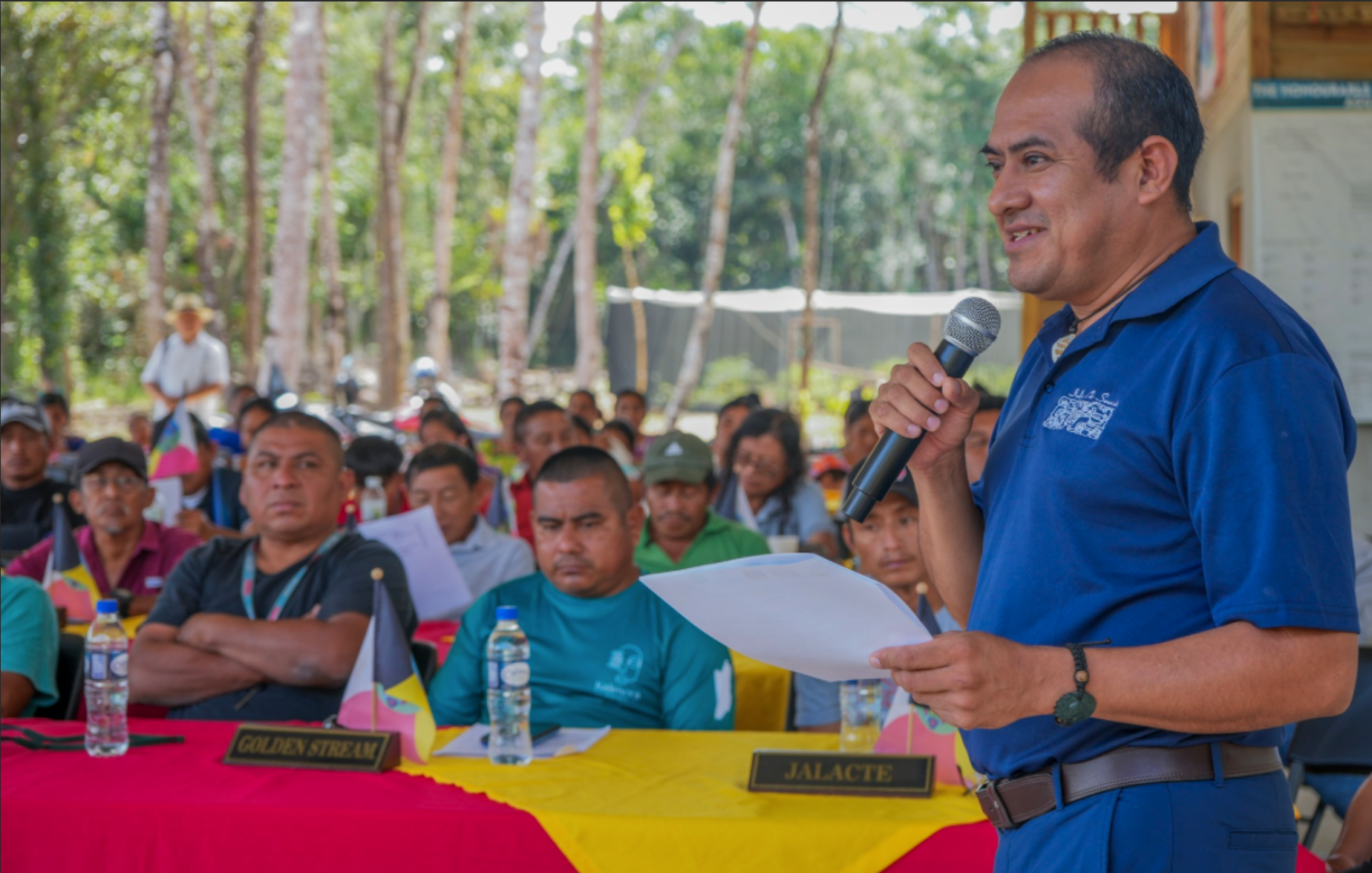
Pablo Mis, JCS executive director in a Maya assembly
In January 2026, the Government of Belize issued a no‑objection letter, a formal declaration that it has no objection to the project. This was a crucial step in the process. The GCF’s Latin America and Caribbean Regional Office subsequently endorsed the concept note, allowing the project to proceed to full proposal development.
If approved, the proposal would become the first Indigenous‑led project financed by the Green Climate Fund.
This process and progress reflects years of preparation, years of JCS work and bold initial investments to the process.
For instance, with Tenure Facility support, as well as other donors such as OAK in institutional strengthening and proposal preparation, JCS has built the governance systems, financial controls and organisational capacity required to engage with complex global financing mechanisms without compromising Indigenous leadership.
In this decades long process many learning have been earned.
Reflecting on the process JCS has gathered some important lessons learned that could serve other Indigenous organisations going through or planning to go through a similar process. These are:
1. Territorial readiness is essential. Indigenous territories need enabling conditions—strong governance, shared visions, trusted partnerships and financial systems—to remain in the driver’s seat of climate investment and to absorb funding at scale. This readiness does not emerge overnight; for the Maya, it has been built intentionally over more than a decade. It is important to get funding and support from climate institutions in this radiness process too.
2. Conjunctures are not enough. Progress often depends on windows of opportunity: supportive governments, committed NDA officials, or institutional interest within multilateral funds. But these conditions can change. Without structural reforms, Indigenous access to finance remains fragile and contingent.
"Together, I hope that the experience of the Maya People and Belize can offer concrete, actionable areas that can contribute to defining the funding arrangements that Indigenous Peoples want to see within the GCF."
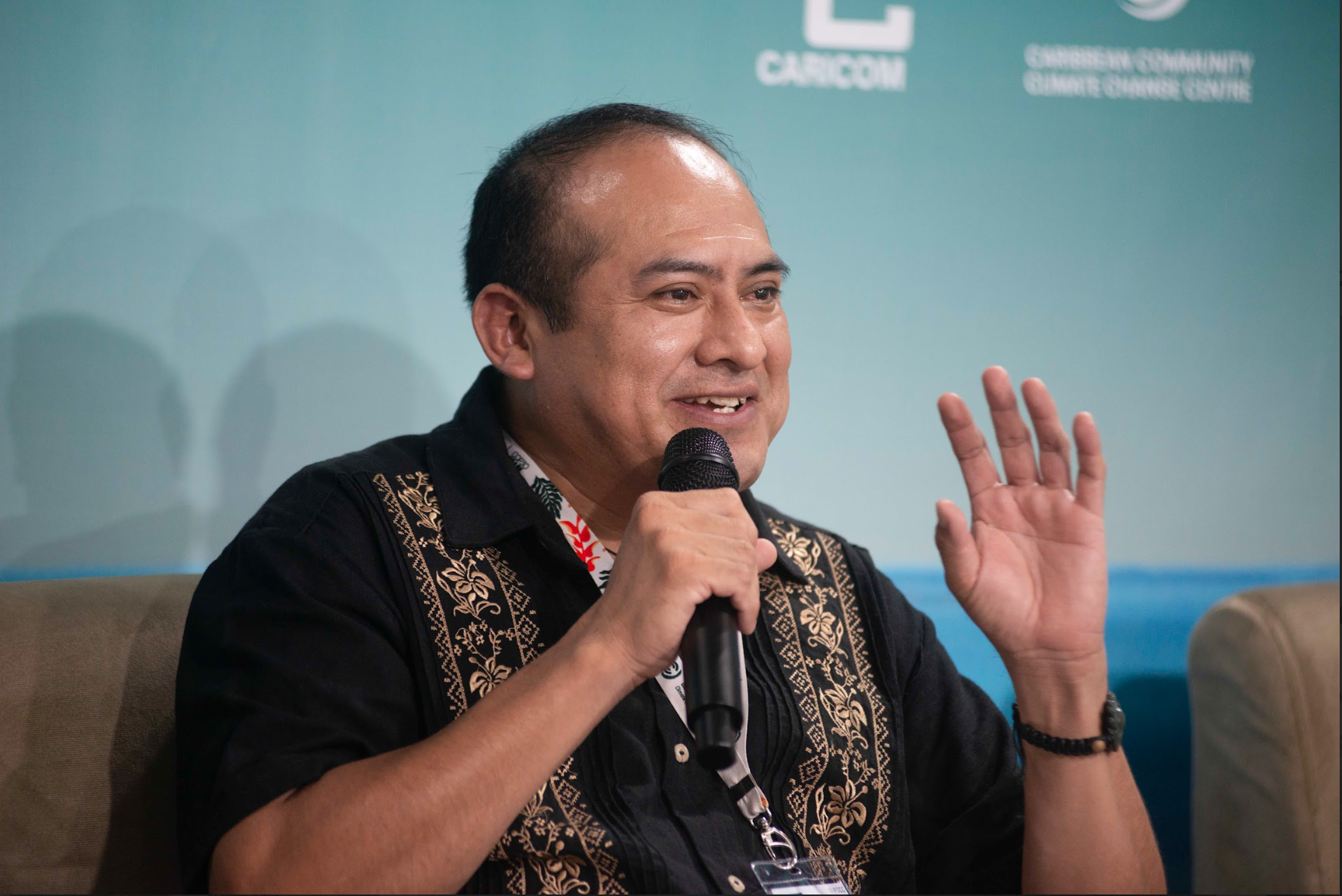
The Maya journey raises fundamental questions for the future of climate finance.
Pablo Mis reflected – How can readiness funding reach Indigenous territories earlier and more directly? Can country ownership frameworks explicitly include Indigenous climate priorities? And how might approval processes be redesigned to involve national Indigenous representatives?
These are open questions. Questions all actors in the climate finance space should reflect on and contribute to solve.
One this is however clear as explained by Mis, “there is a need to move from fortuitous moments to systematic change.”
In addition, he added:
“Together, I hope that the experience of the Maya People and Belize can offer concrete, actionable areas that can contribute to defining the funding arrangements that Indigenous Peoples want to see within the GCF.”
Articles