
2026-08-17
By independent journalist Jeannot Ema’a
In the Ocean Department of southern Cameroon, roads wind through dense forests, long stretches of red laterite tracks, major development projects — including mining and agro-industry — and industrial plantations that seem to expand a little further each year, gradually reducing the living space available to communities.
During a recent field mission, members of a Tenure Facility team visited several Bagyeli communities. In Nkolakae, Angoa-Vouri and Loundabélé, conversations repeatedly returned to the same concern: securing the land beneath their feet, not only for themselves, but for future generations.
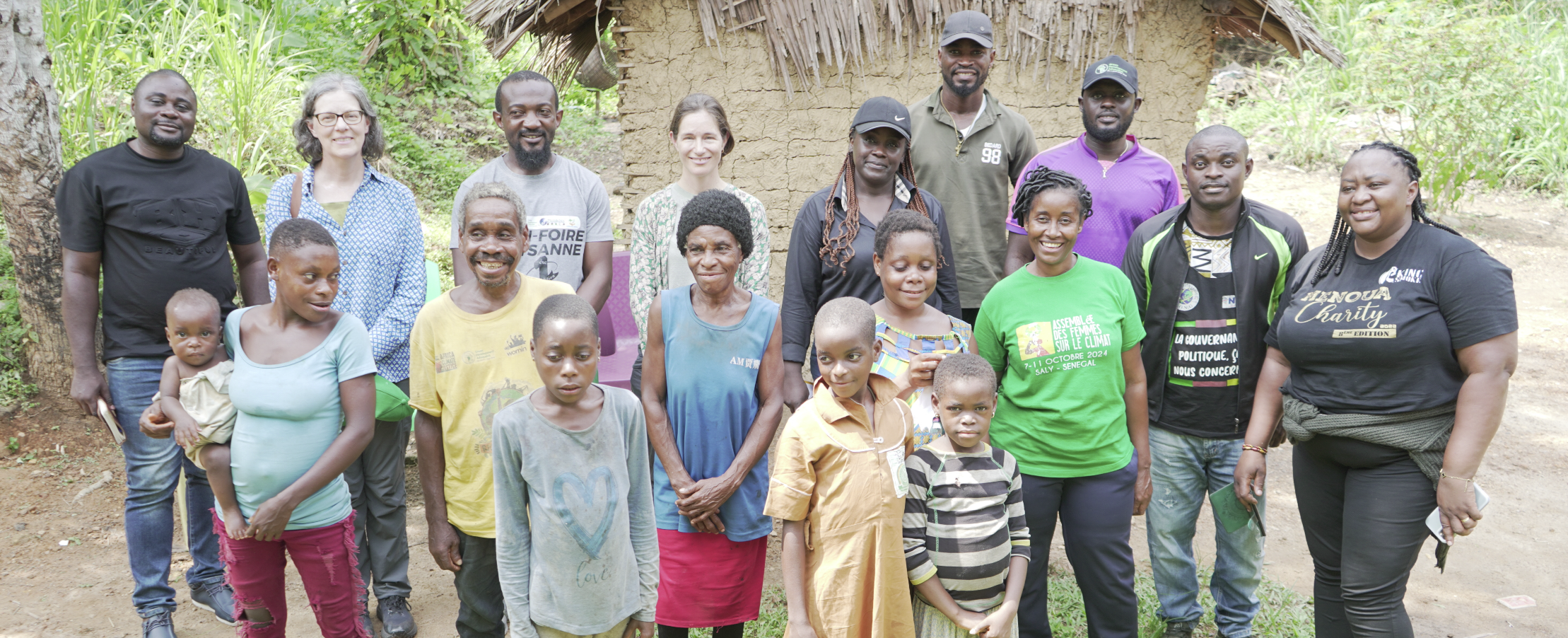
Meeting with the Bagyeli community of Djabilobé, Cameroon
At the heart of these rapidly changing landscapes live the Bagyeli, an Indigenous People of the forests of southern Cameroon, whose traditional ways of life are based on hunting, gathering, fishing and a deep knowledge of the tropical forest.
For generations, this knowledge has guided how forests and natural resources are used, protected and passed on. Today, many Bagyeli communities face difficulties accessing their ancestral forests as they once did, due to evictions and growing pressure on forest resources.
For Bagyeli communities, land rights go far beyond simply possessing a territory. They determine families’ ability to cultivate their land over the long term, pass it on to future generations, preserve their livelihoods and cultural knowledge, and maintain their close relationship with the forests they have helped protect for decades.
“The land means everything to us,” explains Evina Joseph, leader of the Bagyeli community of Nkolakae. “This is where our parents are buried; this is where we cultivate our fields. Without access to the land, everything is abandoned.”
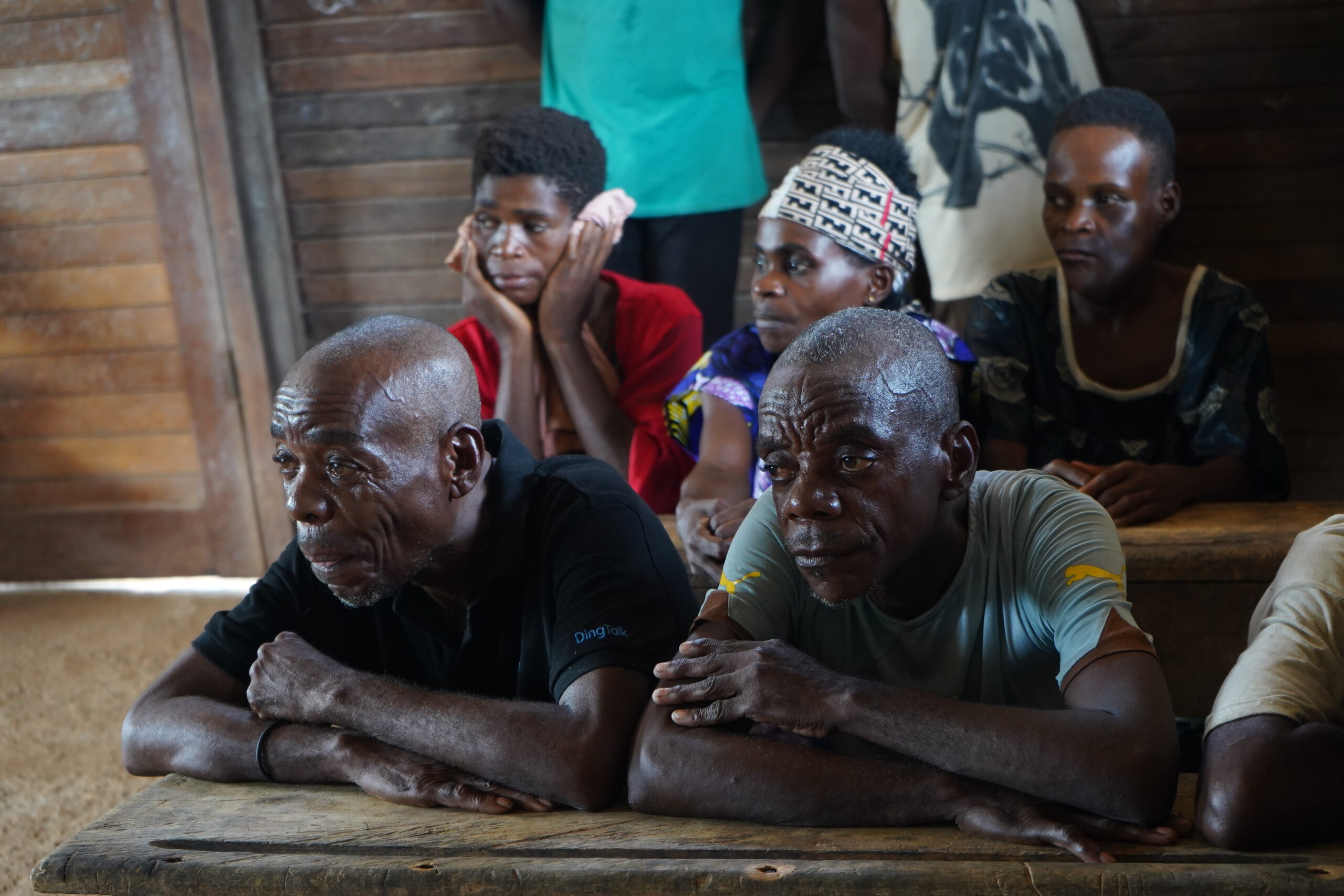
Meeting with members of the Bagyeli community in Lolabé, Cameroon
Long before Cameroon gained independence in 1960, Bagyeli communities lived semi-nomadic lives in the forests around Kribi and Akom II. From the 1960s onwards, government sedentarisation policies encouraged — and in many cases strongly pressured — Bagyeli communities to settle permanently along roads and near neighbouring Bantu villages, with the stated aim of facilitating access to education, healthcare and public services. At the same time, logging, agricultural expansion and infrastructure development reduced access to their traditional forest territories, medicinal resources, sacred sites and traditional knowledge, accelerating this transition. Yet these changes were rarely accompanied by official recognition of their customary land rights.
For decades, many Bagyeli communities have lived alongside neighbouring Bantu communities after public policies encouraged them to settle outside the forest. In many areas, Bagyeli families were able to establish themselves with the agreement of neighbouring communities and traditional authorities. However, without formal recognition of their own land rights, they remain vulnerable to competing claims and displacement.
“Our grandparents settled here several decades ago. We have cultivated this land for as long as we can remember,” says Manzo’o Ronise, from the Angoa-Vouri community in the municipality of Lokoundjé. “Today, the Bantu want to drive us out. They took the forest, and now they want our village too.”
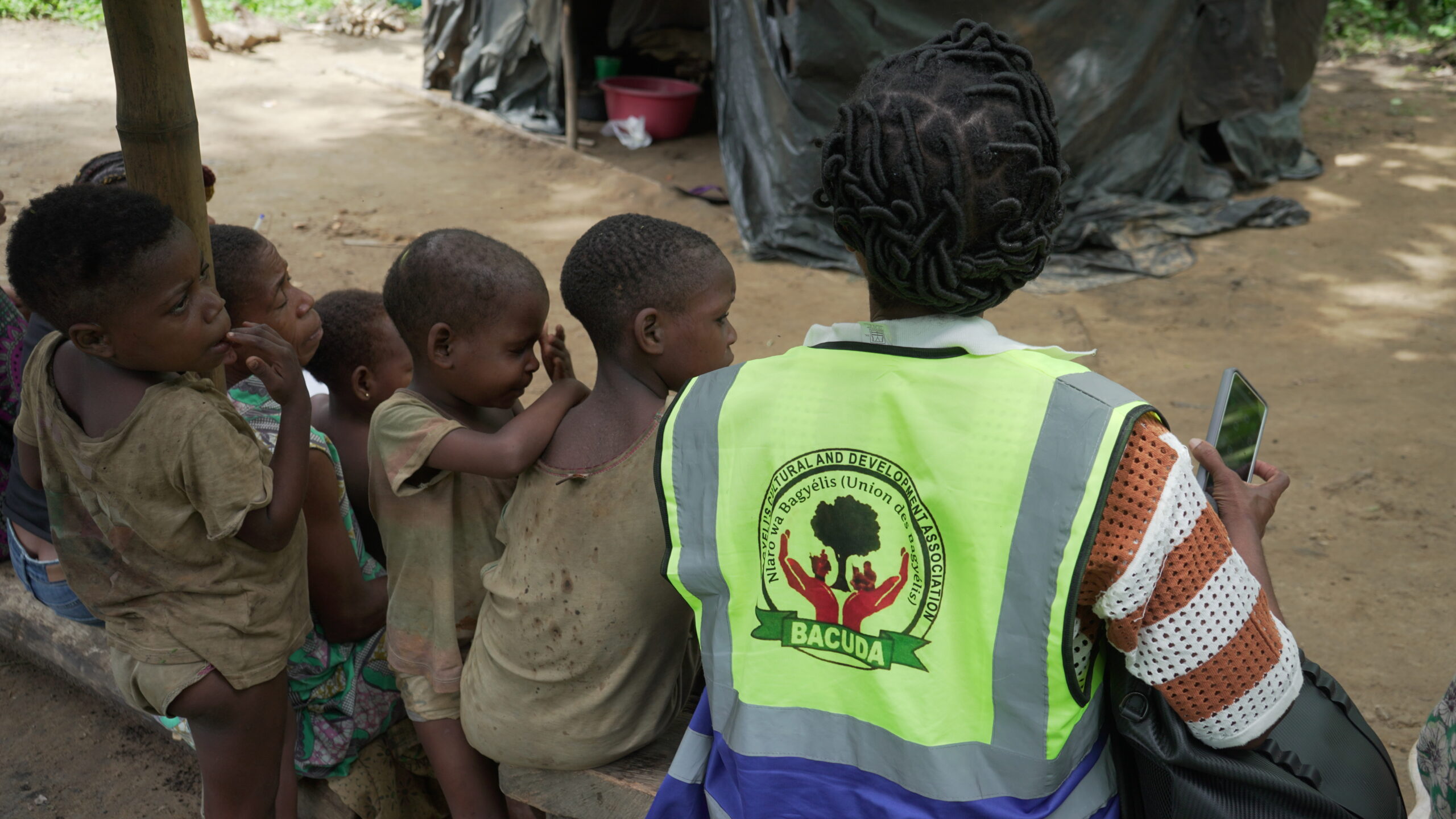
BACUDA with children from the Nloundabélé community, Cameroon
As land becomes increasingly scarce, longstanding relationships between Bagyeli and Bantu communities are being put under growing strain. At the same time, agro-industrial expansion, mining projects, infrastructure development and restrictions associated with certain protected areas are placing additional pressure on territories that are already heavily contested.
The consequences are widely documented. Research by Rainforest Foundation UK and Forest Peoples Programme shows that industrial expansion in southern Cameroon has reduced access to customary lands and essential forest resources, often without effective consultation or consent from the communities concerned. More broadly, research by IFAD and FAO demonstrates that secure land tenure supports sustainable agriculture, stronger livelihoods and better environmental outcomes.
For communities living without secure land rights, insecurity extends far beyond the risk of eviction. It also shapes how families invest in agriculture, build their homes, organise their economic activities and imagine their future.
“If the chief dies without having secured the land, we will have nowhere left to live,” explains Malebé Marthe, from Nkolakae. “It is impossible to return to live in the national park.”
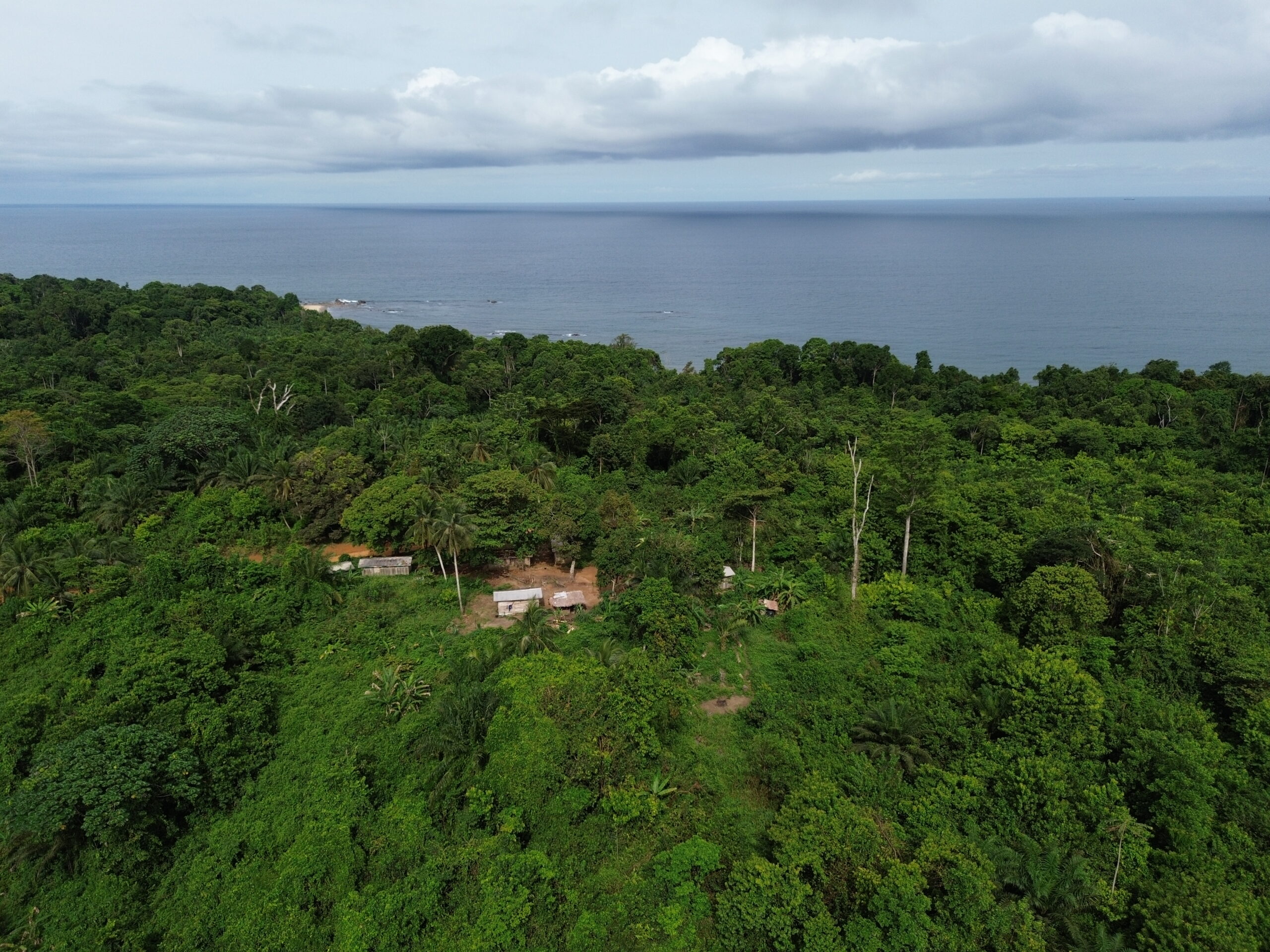
Aerial view of the Bagyeli settlements in Lolabé, Cameroon.
In response to these challenges, BACUDA, in partnership with the Baka association ASBABUK in eastern Cameroon and with support from Green Development Advocates (GDA), is working with communities and government authorities to strengthen processes for the recognition and securing of land and forest rights. Through participatory and inclusive mapping, legal support and community capacity strengthening, these organisations are helping communities move from generations of insecure customary occupation towards more lasting recognition of their rights.
For many Bagyeli families, these efforts represent far more than administrative procedures. They offer the prospect of stability after generations of uncertainty.
“Securing the land is vital,” says Bwambo Suzanne, an elder from the Loundabélé community. “If I am no longer here, my family will still have a peaceful place to live.”
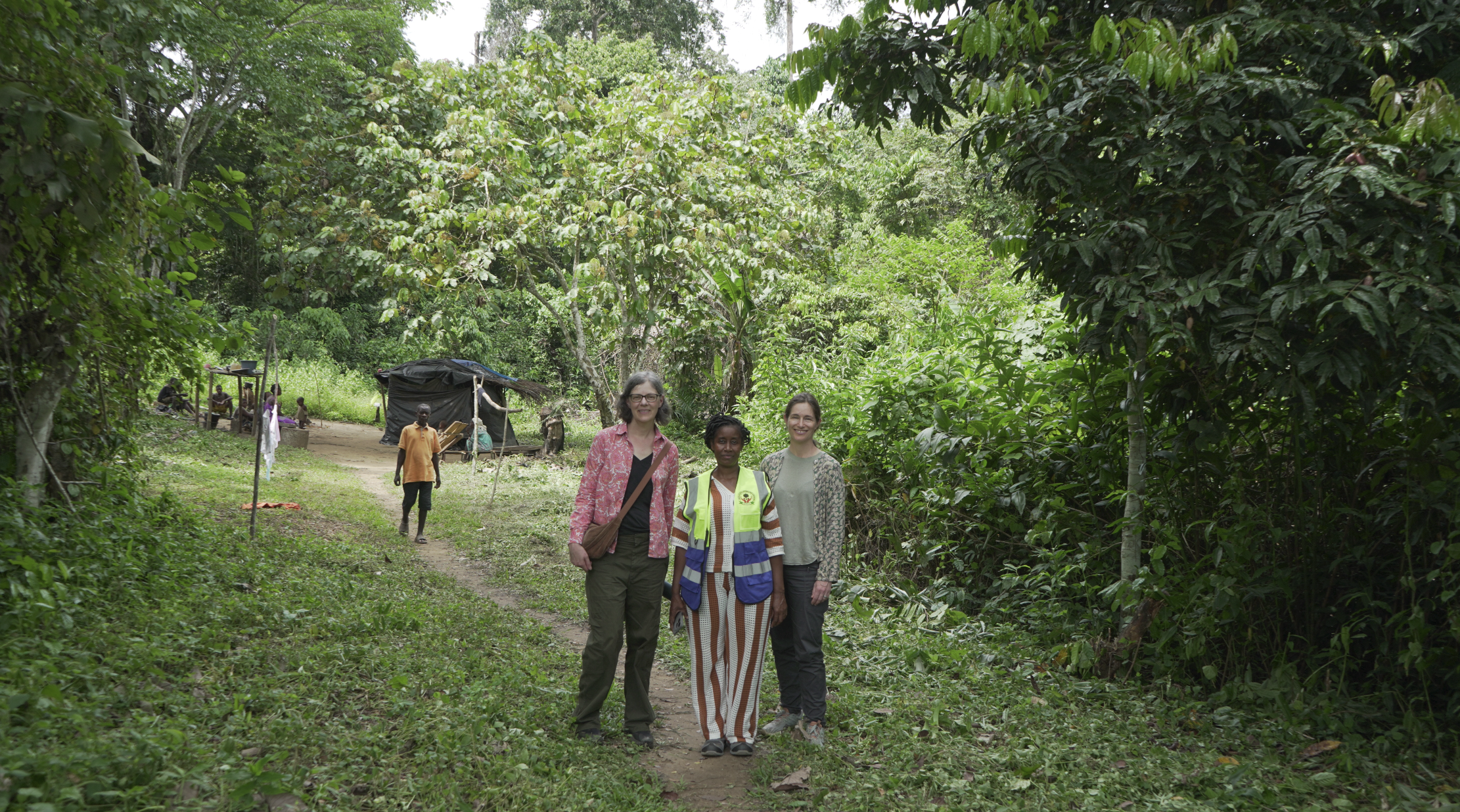
Tenure Facility and BACUDA team members visiting the Nloundabélé community in Cameroon.
Across tropical forest landscapes, Indigenous Peoples and local communities already play an essential role in managing their territories. Secure land rights can strengthen these governance systems, creating the conditions for more resilient livelihoods, stronger local institutions and the sustainable management of forests and natural resources.
“Thank you to BACUDA and Tenure Facility,” concludes Manzo’o Denise. “We hope this support will continue so that we can finally live on our land without fear of being evicted.”
The process is long and complex. It requires continued collaboration between communities, local authorities and national institutions.
It reflects a growing recognition that Indigenous Peoples’ land rights go far beyond legal recognition. They form the foundation for stronger community governance, greater autonomy, more resilient livelihoods and the ability of future generations to remain on their ancestral lands and continue caring for them.
In the Ocean Department, this transition is still unfolding. But for many Bagyeli families, it is finally opening up a possibility that has long remained out of reach: seeing future generations continue to live on the lands they have always called home.
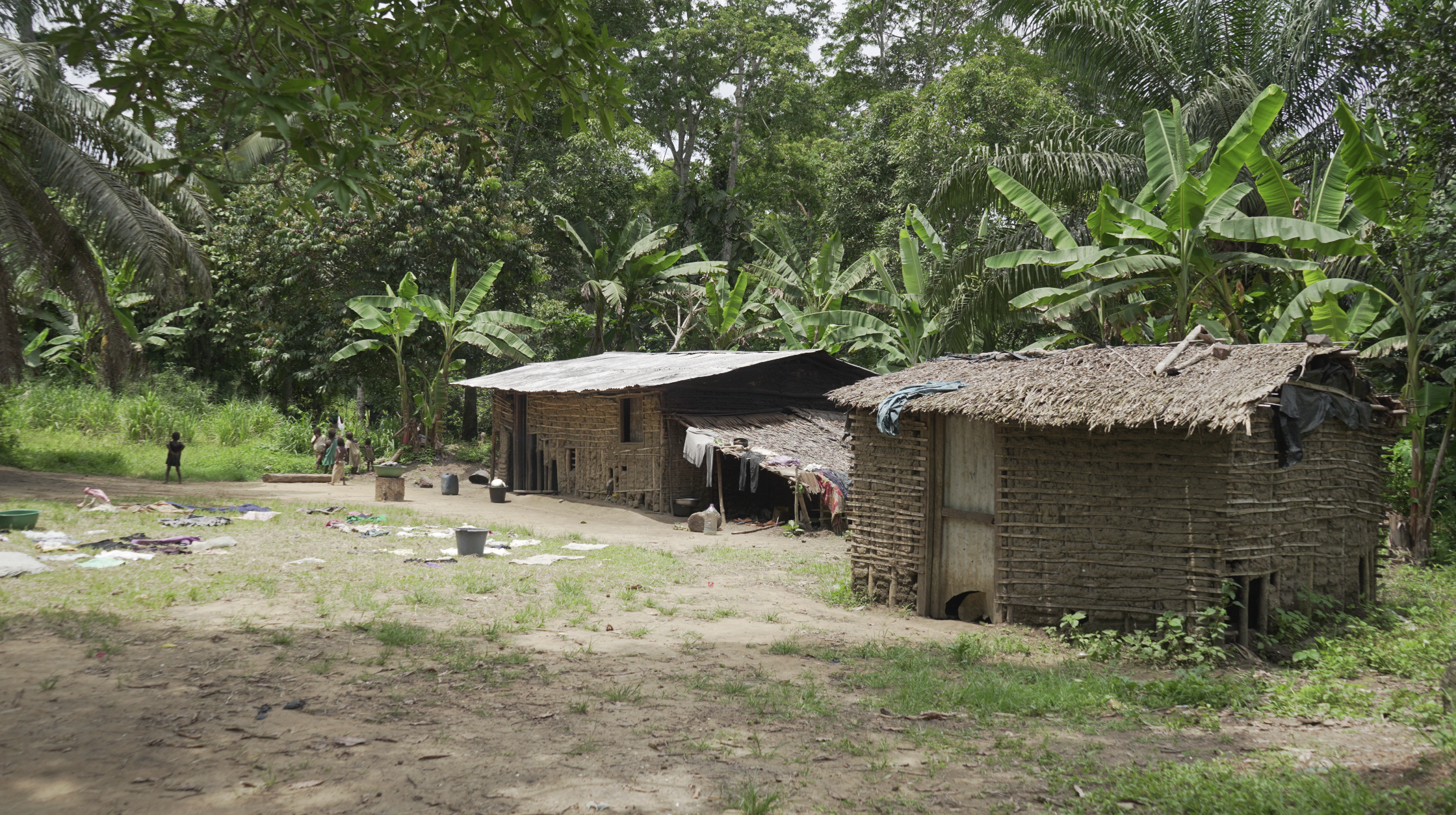
Homes in the Nloundabélé community, Cameroon.
Articles