
2026-02-02
By Latoya Abulu
Copince Ngoma, a member of the Bakouele Indigenous community, has relied on the lush green Congo Basin rainforest his whole life. His village’s forests, located in the Democratic Republic of Congo’s Sangha region, are a wide repertoire for hunting, fishing, and medicinal plants to care for his family. But in the last few years, as elsewhere across the world’s second-largest rainforest, the scars of unsustainable mining practices have cleared wildlife habitats, polluted waters, and dwindled resources.
“We used to drink this water, but not anymore… We used to hunt gazelles, monkeys… Now, to catch anything, you have to travel at least 20 kilometers [away],” he said. “We’re suffering.”
This is an example of a central and recurring issue across the region, which brought together experts during a Land Dialogue webinar on January 27, 2026, to discuss a recent $2.5 billion pledge to conserve forests that millions of people, including Ngoma, depend on for their material and cultural survival.
The pledge is part of a major political and financial commitment announced last November during the COP30 U.N. climate conference: the Belém Call to Action for the Congo Basin Forests.
The Congo Basin, covering several Central African countries in a wide green canopy, is facing several threats and faces chronic underfunding — and attention — for its conservation, say forestry experts and policymakers. Members of the Congo Basin Forest Partnership (CBFP), which supports implementation of the Belém Call to Action for the Congo Basin Forests, warned during the webinar that the initiative must not fall through the cracks, as many climate and conservation pledges have before.
The event was organised in partnership with the Ford Foundation, the Land Portal Foundation, Tenure Facility, and Mongabay. For some, it was the first time they were speaking publicly about the implementation priorities of the pledge, what it will look like in practice, the inclusion of Indigenous Peoples and local communities in the commitment, and the challenges the Call to Action faces.
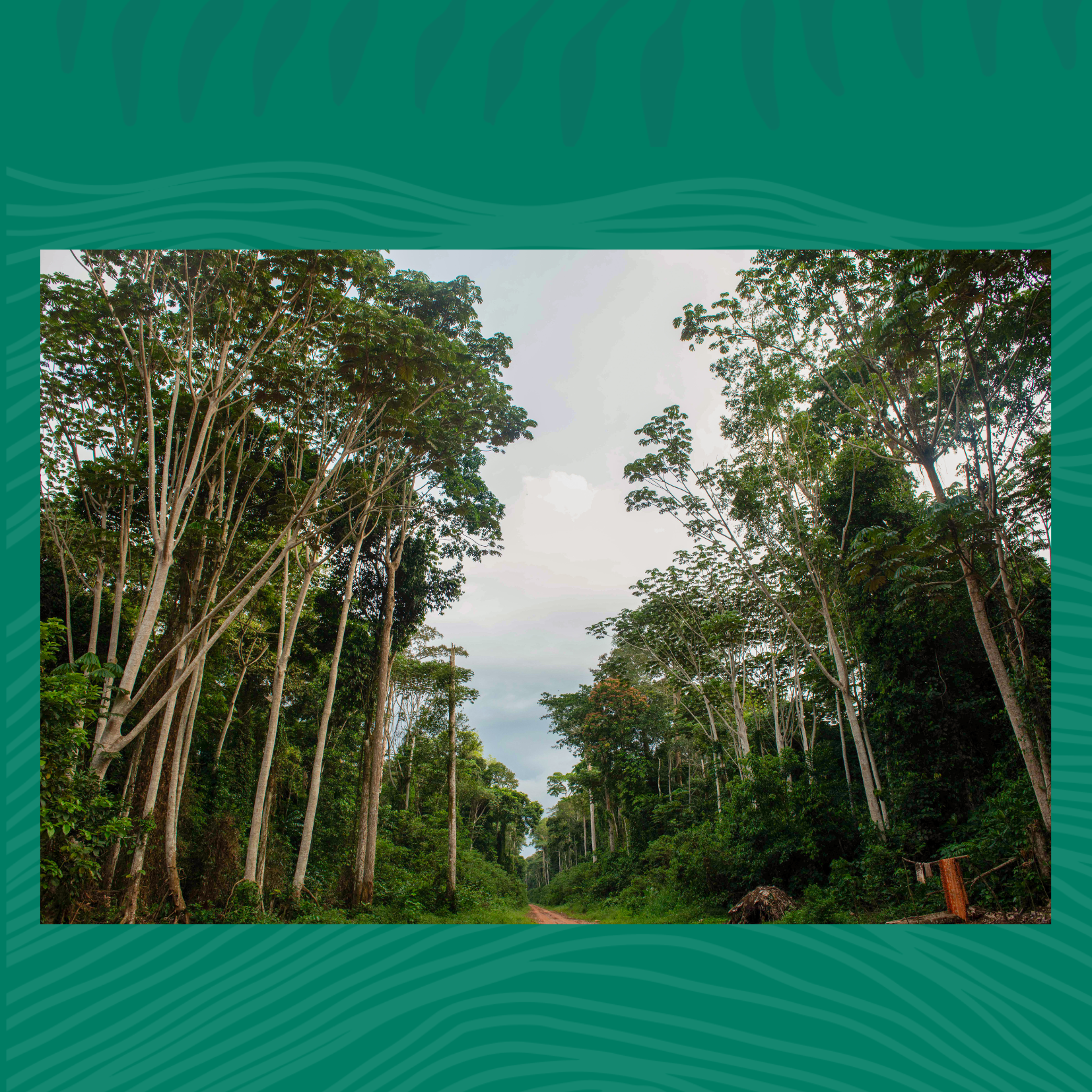
Forest in the Republic of Congo - Congo Basin
Communities and money
A central issue in the discussion that brought panellists together was the importance of securing land tenure rights and sustainable livelihoods for communities that rely on forests. Communities, say leaders of civil society organisations, are central to protecting forests from unsustainable extractive industries but must also be supported not to turn to destructive forestry practices to meet their needs.
“There is an interdependence between biological diversity and cultural diversity, and Indigenous Peoples contribute significantly to maintaining the Congo Basin forests,” said Joseph Itongwa, regional coordinator of the Network of Indigenous and Local Community Peoples for the Sustainable Management of Central African Forest Ecosystems (REPALEAC).
Additionally, Itongwa told the audience, an important question is whether Indigenous Peoples have direct access to funding. Critical barriers to direct funding include bureaucratic hurdles, differences between community priorities and donor agendas, and communities’ lack of participation in decision-making. A misunderstanding, he said, is that Indigenous Peoples always lack the capacity to handle funds, even though their capacity is growing.
A good example is the Tropical Forests Forever Facility (TFFF), which has an objective to allocate 20% of its funds specifically for Indigenous Peoples and local communities. The Call to Action should incorporate a similar mechanism to provide direct access, he said.
Simon Hopkins, UK board member for the Central African Forest Initiative (CAFI) and the current Chair, also highlighted direct funding.
“More funding must be directed to protecting standing forests, and innovative approaches are needed to channel funding directly to local communities who are the stewards of these forests,” he said.
"More funding must be directed to protecting standing forests, and innovative approaches are needed to channel funding directly to local communities who are the stewards of these forests"
Part of the innovative approaches he called for in the Call to Action is the need to move beyond traditional donors and sources of overseas development assistance, such as donors mostly from the global North. These traditional donors are facing increasing pressures that limit their capacity to continue providing sufficient funding, he explained.
Hopkins said that expanding the pool of contributors is essential for scaling up finance effectively. This includes greater involvement from multilateral organisations and non-traditional sovereign funders, including countries from the global South.
Women, said Dorothée Marie Lisenga, national president of the Coalition of Women Leaders for Environment and Sustainable Development (CFLEDD), should also be included in direct financing. Beyond this, women should have a seat at the table to meaningfully participate in decision-making. This will ensure the Call to Action properly addresses inequalities and that forest policies reflect women’s priorities, she told the audience.
“Women suffer disproportionately from deforestation impacts but are also key actors in conservation; direct financing to women and their participation in decision-making are essential,” said Marie Lisenga.
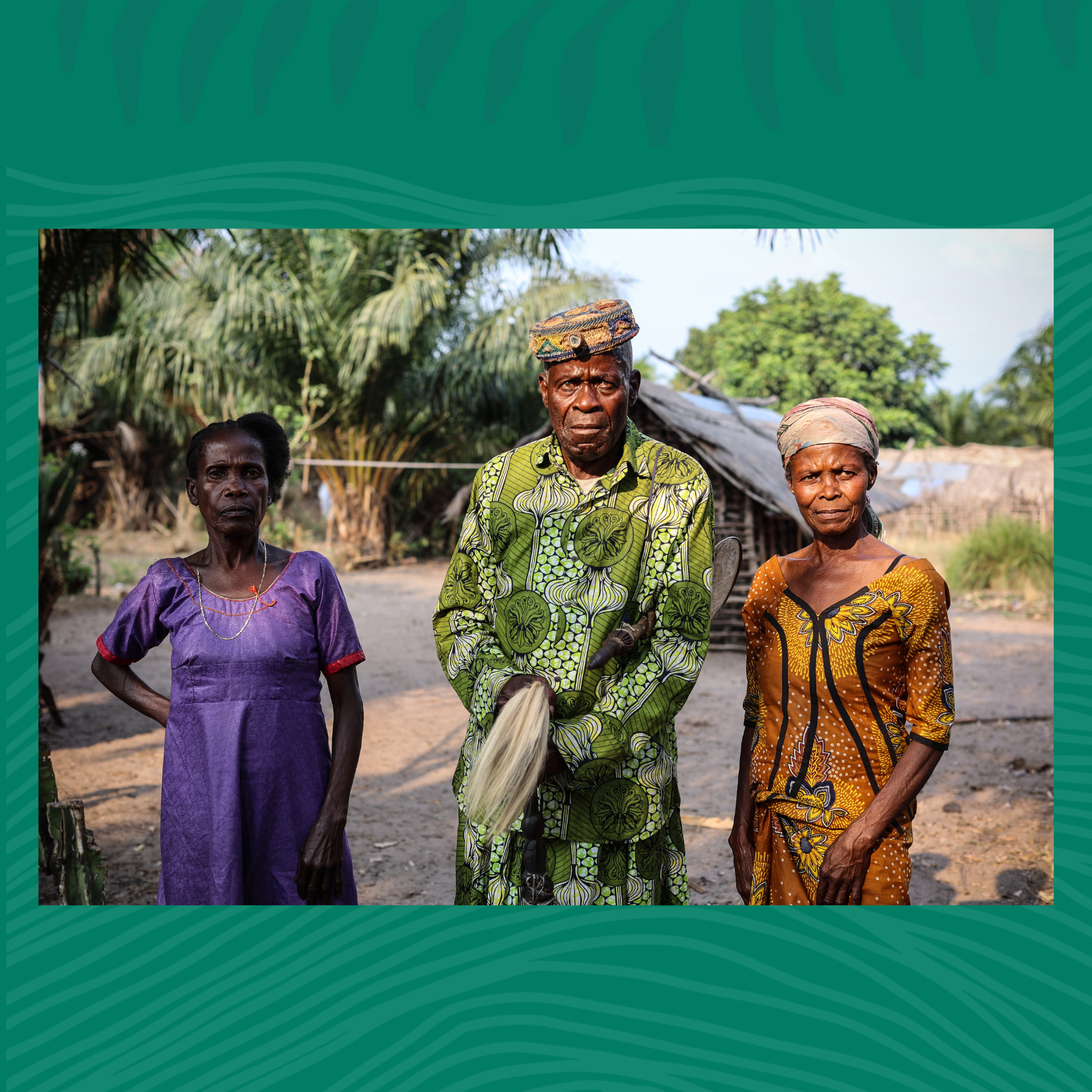
Community leaders from the Kwango province - Democratic Republic of Congo
Proper implementation
But what it takes to make this call to action move from theory to practice — from a paper commitment to effective actions on the ground — was a topic that had all panellists throwing in their ideas. In fact, a goal of the Call to Action is to halt and reverse deforestation by 2030, and there are only four years left.
Making sure the Call to Action is properly implemented and receives the funding it needs is urgent, the panellists stressed.
In the past, lack of transparency, poor coordination, and weak governance have slowed the progress of past financial pledges and conservation efforts on the ground. Communities that depend on forests have repeatedly expressed frustration with earlier commitments, in which promised funds were either delayed, mismanaged, lacked clear mechanisms or faced other hurdles.
For the Belem Call to Action to succeed, said Siemeni Kamtcheu Raoul Antoine, assistant coordinator of the Civil Society Organizations Coalition for the Congo Basin, there must be clear, traceable financing channels, strong institutional coordination, strong legal frameworks, and genuine engagement of civil society and local actors. He also highlighted the fragility of regional institutions like the Central African Forests Commission (COMIFAC), an intergovernmental body that coordinates forest and environmental policy across Central Africa, and the need for stronger cohesion among Congo Basin countries.
“Past delays and lack of transparency in financing mechanisms have cast doubt on announced funding. Clear mechanisms for traceability and access are essential for success,” he said.
Watch out for the weak involvement of high-level officials in adopting the Belem Call and the lack of clear governance structures, he stressed. These are early warning signs that the commitment might fall through and needs urgent attention, Raoul Antoine told the audience.
In terms of the actual efforts the pledge should fund and encourage, for Emmanuel-Tsadok N. Mihaha, who will soon lead the Congo Basin Forest Partnership on behalf of the Government of the DRC, these include those that link forest conservation with socio-economic development and poverty alleviation. These are particularly projects that support local communities economically, such as developing non-timber forest product value chains, he said.
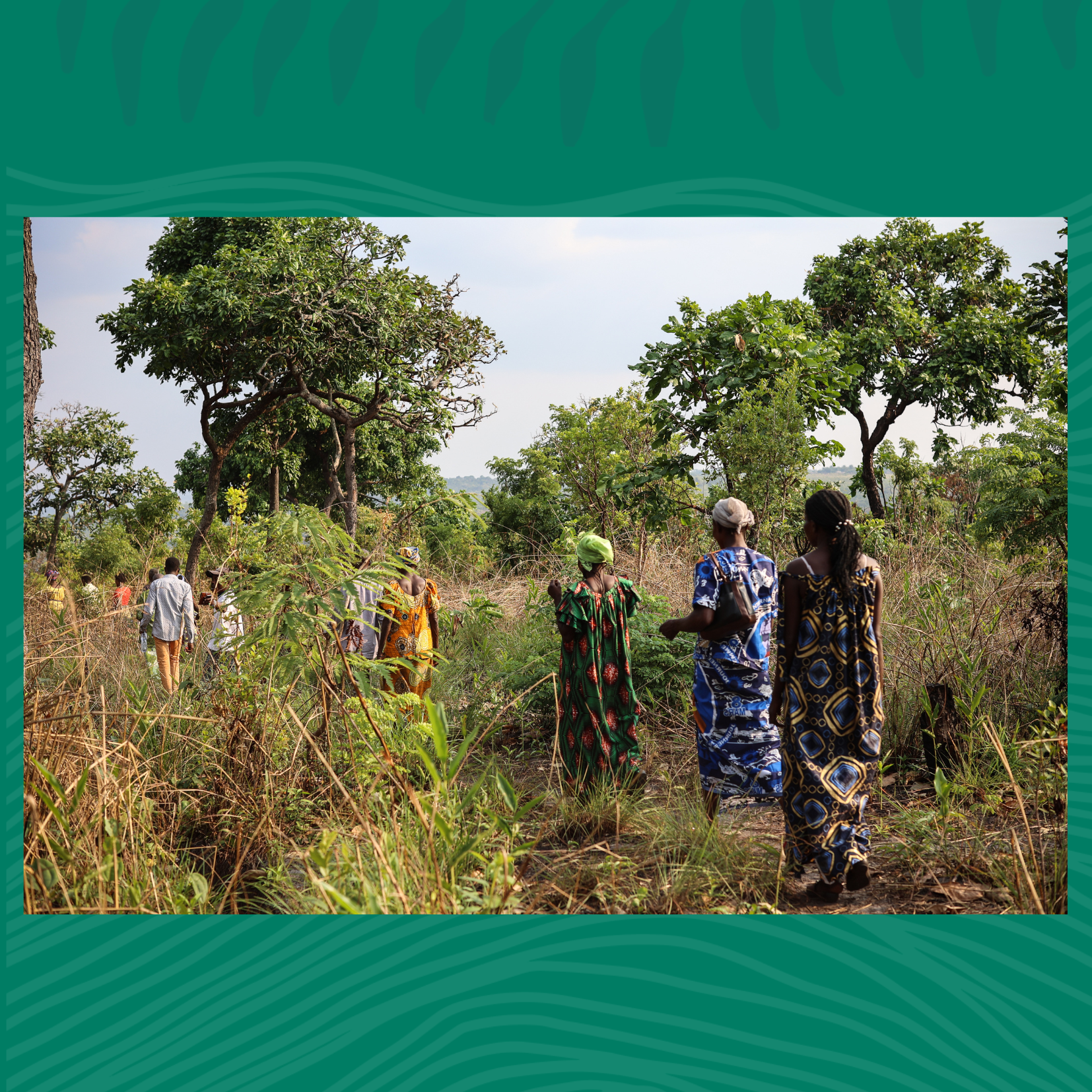
Community members walk in the forest Kwango province - Democratic Republic of Congo
"We have no interest for our generation to lose this ecosystem and we have the duty to protect it, to maintain it, and to manage it well for us and for those who will come after us. The forest is us, and we are the forest."
This is particularly noteworthy as across many countries in the Congo Basin, up to 80% of people rely on charcoal and firewood to meet their energy needs as they lack access to or the income for electricity. Addressing this issue head-on is key to tackling deforestation, said Margot Lessenge, bureau chief of the ministry of environment’s division of local communities and Indigenous Peoples in the Democratic Republic of the Congo.
“To address this, we must first strengthen access to electricity to enable local communities who depend on charcoal to have an alternative energy source and facilitate cooking,” she said. “We also need to develop sustainably managed plantations and charcoal production chains, alongside improving deforestation monitoring systems.”
Beyond that, developing renewable energies such as solar power and biogas is essential, and government or donors investing heavily in improved cooking stoves can reduce charcoal dependency, Lessenge said.
At the moment, deforestation across the Congo Basin is not slowing down, and the panellists say urgent action is needed. According to data from Global Forest Watch, the DRC was hit by record deforestation in 2024, with 590,000 hectares of forest lost. Primary forest loss across the region also reached a high, driven mainly by small-scale agriculture, charcoal demand, and mining.
But not all trends are leading in one direction, and some panellists say there’s cause for hope that the Call to Action can make real changes for the forests, wildlife, and people who live in the world’s second-largest rainforests. Community forest concessions are expanding, and innovative community projects are taking root to meet the needs of both nature and people.
“We have no interest for our generation to lose this ecosystem and we have the duty to protect it, to maintain it, and to manage it well for us and for those who will come after us,” said Mihaha. “The forest is us, and we are the forest.”
Articles