
2026-03-17
Indigenous, Afro–descendant, and local community movements are building the most effective climate and land rights financial institutions from within their own territories—voicing a truth that is reshaping climate finance: community-managed funds, created and governed by territorial organisations themselves, are delivering results at scale.
Among others, Brazil has been leading the way, with the Podáali Fund—the first Indigenous-led fund covering the Brazilian Amazon—established in 2020 after 20 years of collaboration and growing momentum from Indigenous Peoples in the region.
As Valéria Paye, the fund’s executive director, explains, “Podáali is not a fund for Indigenous Peoples, nor a fund with Indigenous Peoples—it is a fund of Indigenous Peoples. That’s different.
Built, governed, and managed by territorial organisations, community-led funds operate with the legitimacy, speed, and long-term impact that only true ownership can enable.
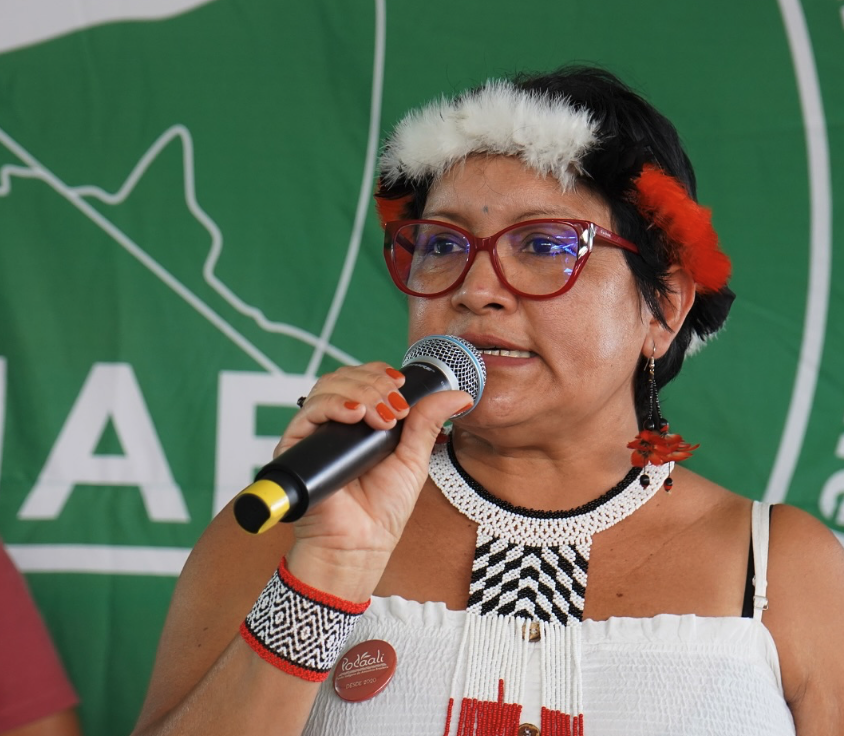
Valéria Paye, Podáali executive director
In Brazil, a growing ecosystem of territorial funds is taking shape. But what exactly are territorial funds?
Territorial funds are financial mechanisms designed by Indigenous, Afro-descendant, and local community movements to move resources directly to territories and communities—responding to the realities of those who live and lead there. They are bottom-up mechanisms, shaped by local priorities and the political vision of these movements.
While many territorial funds also support small initiatives and community-led projects, their role goes beyond project financing. Territorial funds function as long-term infrastructure for resourcing territorial governance—supporting collective processes such as land demarcation, institutional strengthening, rights defence, and climate protection at landscape scale.
Indigenous lands, extractive reserves (a special legal category in Brazil for areas with resource-dependent, or “extractivist,” communities), and Quilombola (Afro-descendant) territories together account for more than 150 million hectares already demarcated or titled across the Brazilian Amazon. But formal government recognition alone does not guarantee communities’ protection, governance capacity, or long-term sustainability. Managing territories of this scale requires financing mechanisms that can operate across vast geographies—channelling resources directly to forest guardians and strengthening the community institutions responsible for defending and governing these lands.
The scale of territories already recognised in Brazil underscores the need for such mechanisms.
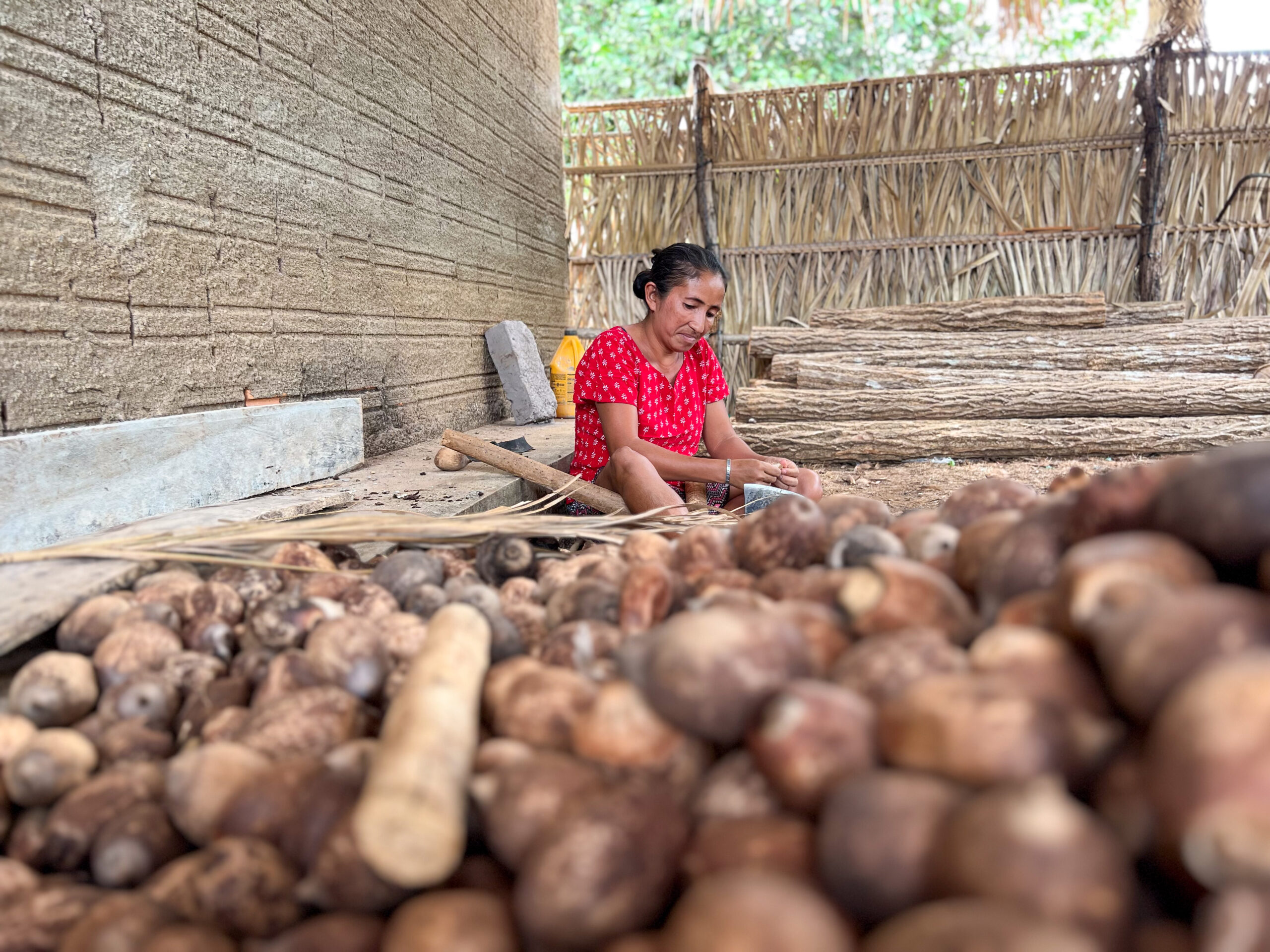
Babassu coconut breaker from Piauí, Brazil, processing babassu nuts, part of local extractivist livelihoods.
In Brazil, territorial funds are already an established part of the financing ecosystem. Those currently operating include the Podáali Fund, Babassu Fund, Dema Fund, Mizizi Dudu Quilombola Fund, Puxirum Fund, Rutî Indigenous Fund, Timbira Fund, the Rural Women’s Fund, and the Rio Negro Indigenous Fund.
Alongside these, other initiatives are emerging across the country, such as the Jaguatá Indigenous Peoples National Fund, the Maracá Indigenous Peoples Northeast Fund, and the Mocambo Quilombola Fund.
Each reflects the priorities, histories, and political processes of its respective social movement, while collectively advancing territorial rights, demarcation, and climate action. Territorial funds are not just funding mechanisms—they are movement infrastructure, built to sustain the long-term governance, protection, and future of territories.
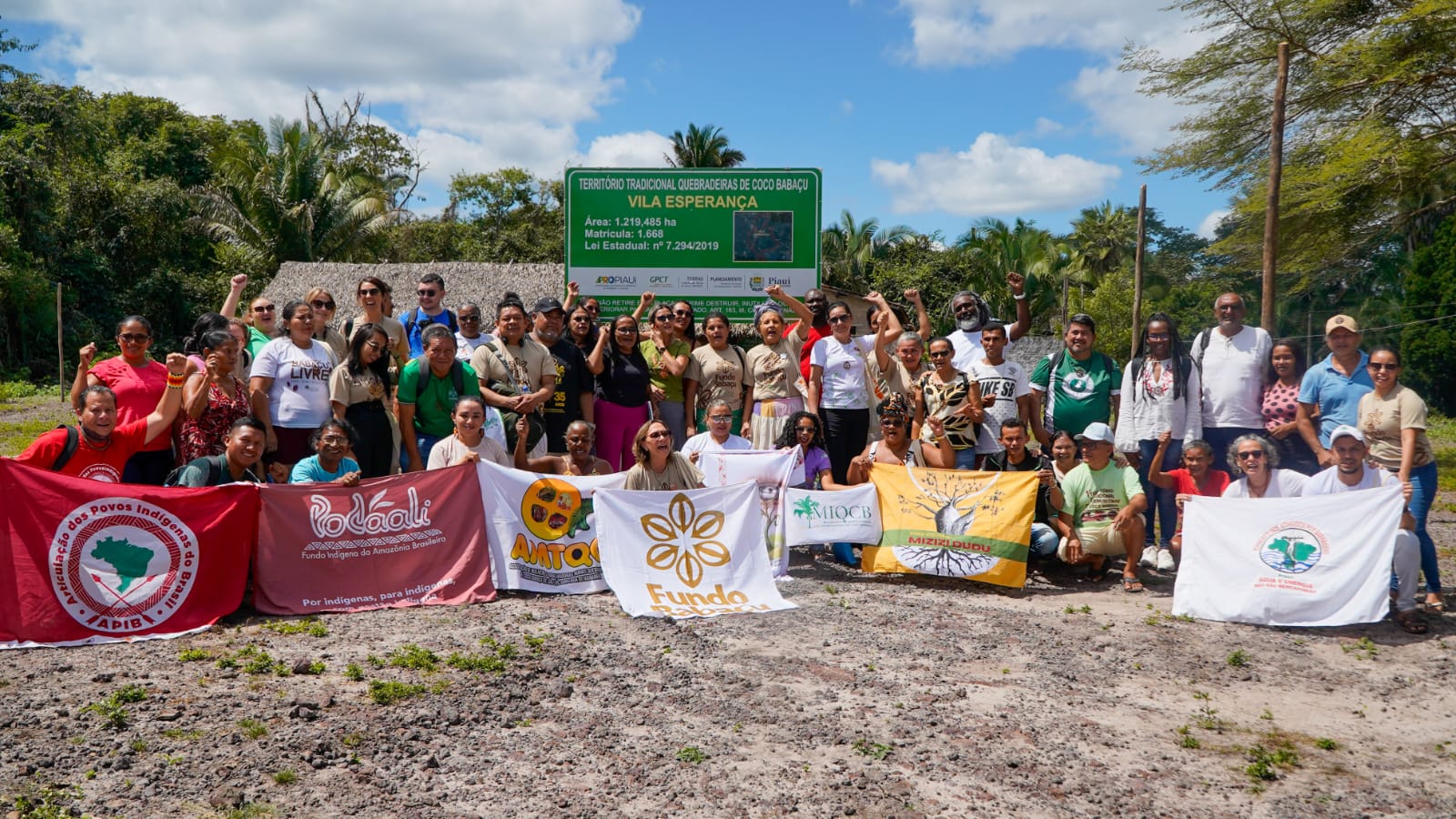
Network of the Amazon Community Funds in Brazil
At a pre–COP 30 event in June 2025 supported by Tenure Facility, Toya Manchineri, the coordinator of the Coordination of Indigenous Organisations of the Brazilian Amazon (COIAB), who helped build the Podáali Fund, said, “We want the state and government to recognise our fund as a mechanism of the Indigenous Peoples of the Brazilian Amazon, capable of mobilising and redistributing resources through public calls for proposals [and other means] in Indigenous territories across the nine Amazonian states.”
That vision is already taking shape. In its 2024 call for proposals, Podáali received proposals from 105 Indigenous Peoples from 30 of COIAB’s regional affiliate organisations. After a diverse committee of women, men, and youth leaders carefully evaluated them, it selected 40 initiatives across 37 Indigenous territories, ensuring representation from all nine states of the Brazilian Amazon. Grants ranged from R$20,000 to R$50,000 (US$3,700 to US$9,300) per project, totalling R$2 million (roughly US$373,000) in direct support to Indigenous-led initiatives.
Building on this momentum, Podáali launched its third call for proposals in 2025, titled “Guardians of the Amazon: Indigenous Women Defending Life and Climate Justice” This round focused on strengthening Indigenous women’s leadership across the Amazon. While it was not supported through Tenure Facility funding, it reflects the continued expansion and ambition of the fund’s Indigenous grantmaking.
"We want the state and government to recognise our fund as a mechanism of the Indigenous Peoples of the Brazilian Amazon, capable of mobilising and redistributing resources through public calls for proposals [and other means] in Indigenous territories across the nine Amazonian states."
Podáali has also begun experimenting with new ways of recognising and resourcing Indigenous solutions. During the 2025 Free Land Camp, it launched the first Indigenous Sciences Award, titled “Ancestral Solutions for the Climate, the Amazon, and All Life.” The initiative also supported by Tenure Facility, recognised Indigenous communities’ contributions to climate action and created a simple mechanism to channel resources to those already protecting forests. Functioning as a form of payment for environmental services, the award allows communities to use the funds according to their priorities without burdensome reporting requirements. Around 170 Indigenous organisations from the nine Amazonian states applied, and 47 received grants ranging from R$20,000 to R$50,000 (US$3,600 to US$9,000).
But Podáali is not alone. Other community-led funds supported by Tenure Facility are advancing land and climate justice in ways deeply connected to their territories, cultures, and daily lives. Two notable examples include the Mizizi Dudu Quilombola Fund, which supports Afro-Brazilian communities in the state of Pará in defending their ancestral lands, and the Babassu Fund, led by babassu coconut breakers—women from legally recognised traditional communities who sustainably manage and advocate for continued access to babassu forests, a livelihoods source.
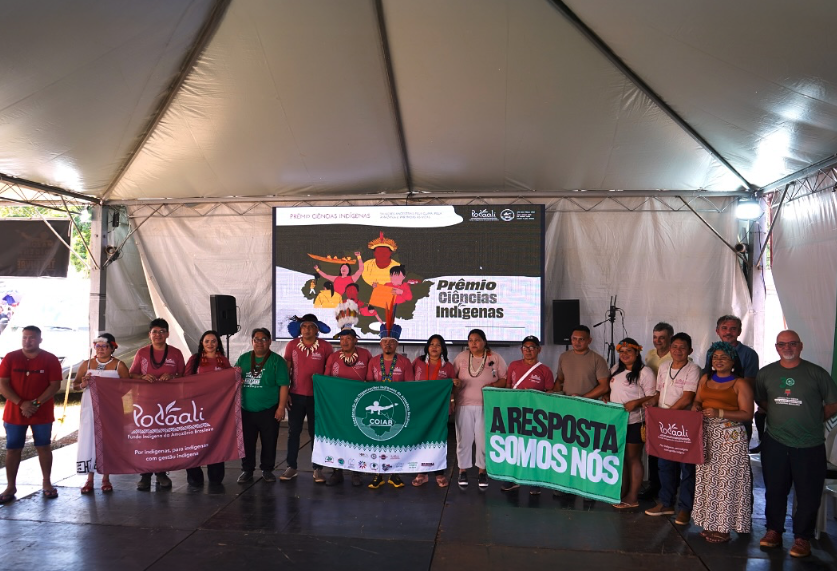
Representatives of the Podáali Fund and COIAB at Acampamento Terra Livre, 2025.
The Babassu Fund, coordinated by the Inter-State Movement of Babassu Coconut Breakers, has moved around R$10 million (approximately US$1.9 million) since its founding in 2012. Supported in part by the Amazon Fund—the climate finance mechanism managed by Brazil’s National Development Bank—it has funded hundreds of community organisations to conserve babassu forests, secure territorial rights and land titles, strengthen political advocacy, and support food security and income generation.
Broadly, these funds provide support to communities to:
Indeed, these funds respond to a wide range of community priorities. Because they are rooted in the movements themselves, they can recognise needs that external donors often overlook—from cultural revitalisation and community governance processes to local economic initiatives that sustain livelihoods and strengthen territorial stewardship.
Territorial funds also accompany communities throughout the process of accessing and using resources. Staff and partners—often coming from the same movements and territories—work closely with communities to identify priorities, shape proposals, and sometimes support implementation. This proximity allows them to provide guidance in local languages and with cultural understanding, ensuring that resources reach communities in ways that are meaningful, accessible, and aligned with their realities.
These funds are already delivering results. They move resources where they’re most needed and place decision-making power in the hands of those who know the land and forests best.
Indigenous Science short film - A production by Podáali and COIAB, with support from Tenure Facility and Imaginable.
What sets territorial funds apart is not just where the money goes, but how it gets there.
“We don’t want resources to pass through five or six hands before they reach people,” Rose Apurina, vice-executive director of the Podáali Fund, told us at the pre-COP event in Brasília in June 2025. “We want them to arrive at the territory’s gate.”
That’s exactly what these funds are built for. Their governance is territorial. Their leadership is local. Their accountability is horizontal—built on trust, proximity, and shared purpose. Grant decisions are often made through participatory processes involving movement leaders, elders, women, and youth representatives—reflecting the transparency and collective governance values of the movements themselves.
Rather than relying on externally contracted monitoring teams to oversee project implementation and territorial protection, Podáali prioritises community-based monitoring led by Indigenous people themselves.
“Instead of sending two monitoring agents from a capital city,” Valéria from Podáali said, “we may have 80 or 90 trained parentes* already there, ready to act.”
*Parentes (meaning “relatives” or “kin” in Portuguese) is a term used by Indigenous Peoples in Brazil to refer to one another across different ethnic groups—emphasising shared identity, solidarity, and a deep sense of connection among peoples.
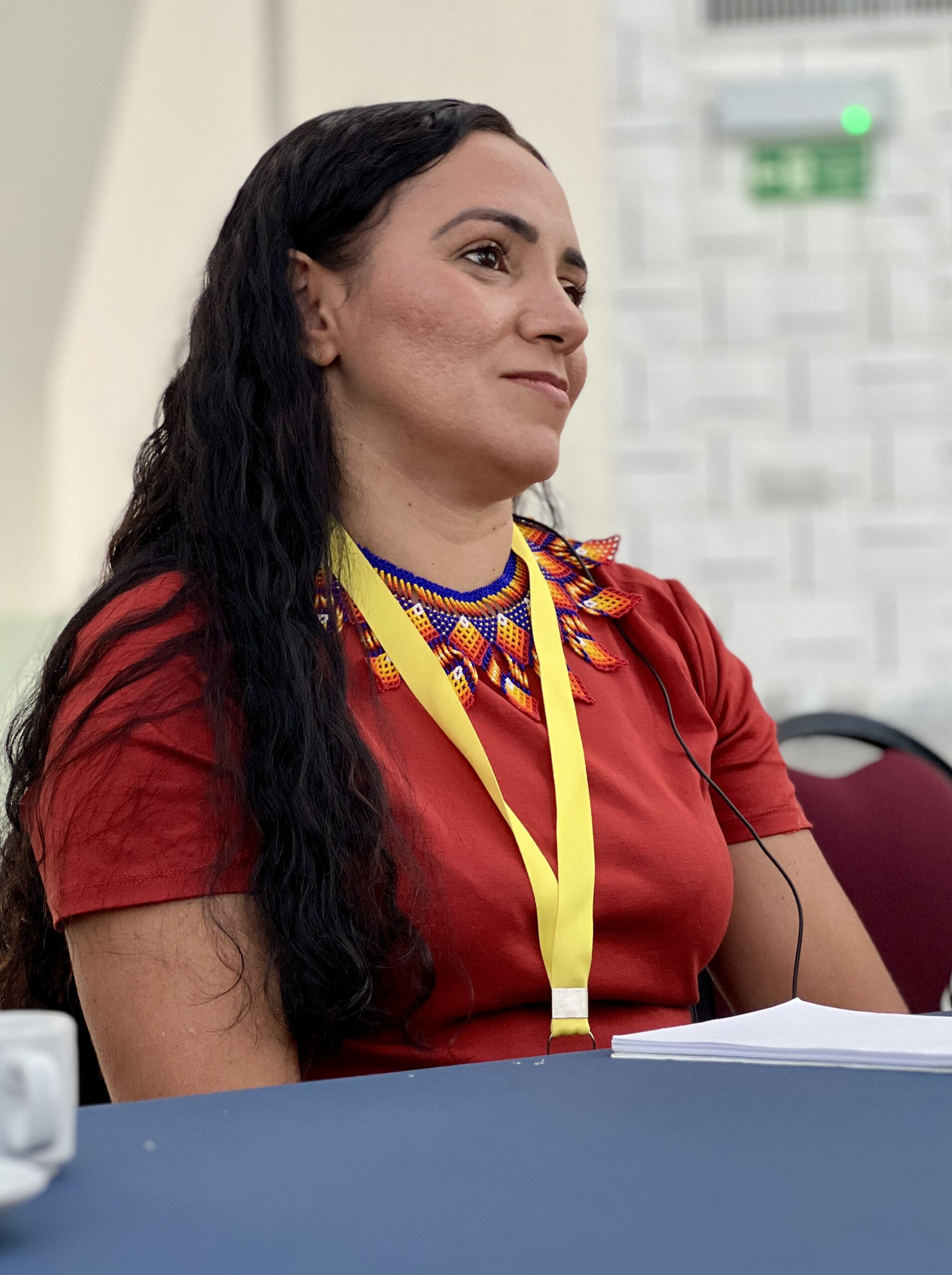
Rose Apurinã, vice executive director of the Podáali Fund, Brazil.
Many territorial funds place demarcation at the heart of these efforts—not just as a legal process but as daily resistance, survival, and climate protection. In Brazil, land demarcation is the multi-stage process through which Indigenous territories are identified, studied, mapped, and legally recognised by the federal government. It is not a single administrative step but an ongoing territorial process requiring technical capacity, political coordination, and sustained financing.
“We take care of our territories. But we also need our territories to be recognised and demarcated,” Rose said. “Demarcation isn’t symbolic. It’s how we show our commitment to protecting our home.”
Valéria echoes this sentiment: “Demarcation is evidence of care. And caring [for our territories] has been our job for over 500 years.”
Community-led initiatives of territorial protection, self-demarcation, and documentation help accelerate official procedures, strengthen land claims, and provide the technical evidence required for government recognition. Community funds are crucial in enabling this work.
Often coordinated with the land rights advocacy efforts of Indigenous, Quilombola, and traditional peoples’ movement organisations—such as COIAB, Malungu, and the National Council of Extractivist Populations—these initiatives help build the evidence base needed to advance territorial claims. While government agencies, particularly the National Indigenous Peoples Foundation (FUNAI), hold formal responsibility for demarcation, Indigenous and traditional communities themselves play a central role in making these processes possible.
This work goes far beyond digital mapping or GIS analysis. It involves physically reaching the boundaries of vast and often remote territories, identifying and marking limits on the ground, and documenting them through field expeditions that require deep territorial knowledge. In many cases, Indigenous leaders must guide technical teams through landscapes that are difficult to access and immense in scale. Through mechanisms such as the Podáali Fund, Indigenous organisations have been able to prepare and mobilise local leaders to lead these processes, including guiding contracted demarcation teams and ensuring that the work reflects the realities and knowledge of the communities who live there.
Community organisations also play a crucial role in protecting their territories through surveillance, monitoring expeditions, legal actions, and sustained public advocacy—demonstrating that territorial governance is already being exercised long before boundaries are officially recognised.
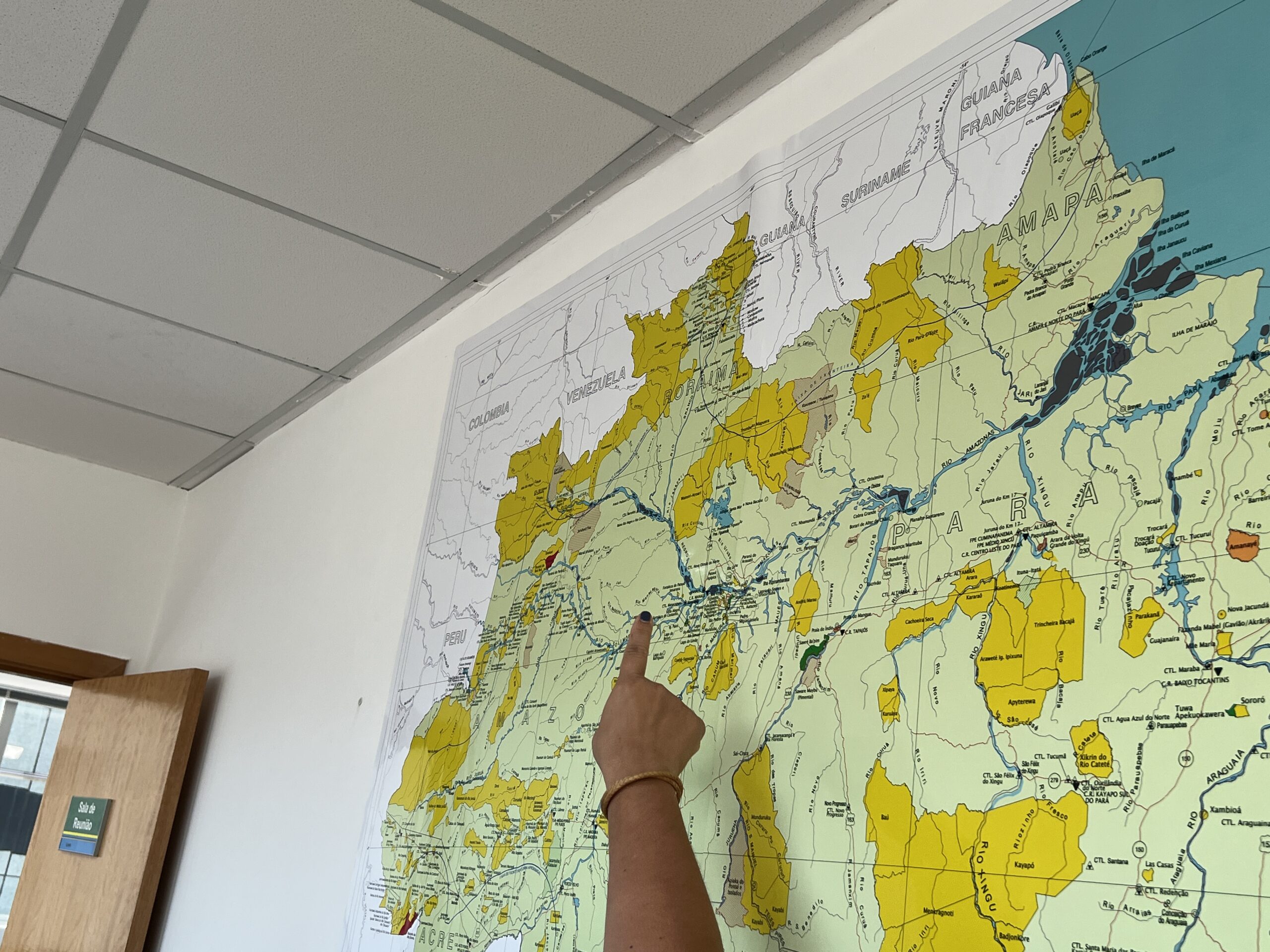
Map of the Brazilian Amazon at the FUNAI office in Brasília
One example is the physical demarcation in 2025 of the 2.18-million-hectare Kaxuyana–Tunayana Indigenous Land, stewarded by around 40 communities in the state of Pará. With support from the Podáali Fund and Tenure Facility—made possible through our international funding partners—Indigenous teams led territorial monitoring, preparation expeditions, and community mobilisation to support the demarcation process.
Around 110 Indigenous leaders were trained and equipped to guide and accompany the work on the ground—ensuring the technical teams could navigate and operate within the territory.
The demarcation itself was carried out through a partnership involving FUNAI, nongovernmental organisations, and academic institutions, with support from additional funders. The territory was later formally recognised by the government of Brazil (in a process known as homologation) at COP 30—a major milestone in which both the Podáali Fund and COIAB played key roles.
This achievement reflects years of organising, advocacy, and collaboration among multiple organisations and partners advancing the broader movement for territorial rights.
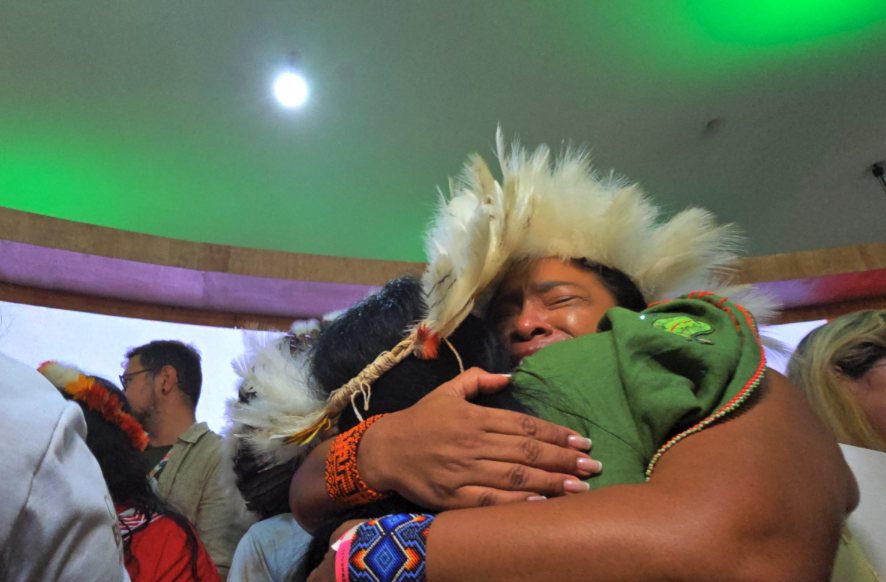
Ângela Kaxuyana, from the Kaxuyana–Tunayana Indigenous Territory, embraces Minister Sonia Guajajara after the announcement of its homologation at COP30 in Belém (Pará).Tatiane Maira Klein / ISA
Brazil’s experience is part of a wider global shift. Connected to initiatives such as the Shandia Platform of the Global Alliance of Territorial Communities, territorial funds are emerging across regions—from the Nusantara Fund in Indonesia to the Indigenous Peoples of Asia Solidarity Fund and the Mesoamerican Territorial Fund. Together, they are redefining how climate finance flows—moving resources directly to those who hold the legitimacy, knowledge, and solutions on the ground.
This is a departure from aid models controlled externally. It is climate finance rooted in territory: direct, flexible, and accountable.
As “The Answer Is Us” campaign reminds us, the solutions to climate and land challenges are not distant. They are already growing in the territories themselves—carried forward by the very peoples who have protected forests for generations.
“This is a process built from our own understanding of territory,” said Valéria. “It’s not a response to external agendas—it’s ours. The next step is strengthening the entire network of community funds—together, we can go further.”
At Tenure Facility, we see territorial funds as essential infrastructure for climate justice. They are changing how climate finance flows. They are advancing legal land rights. They are scaling up demarcation where biodiversity still flourishes. And they’re doing it now.
Articles