
2026-07-13
Written by Robervone Nascimento, Senior Consultant at Tenure Facility
Long before a land title is granted or a policy is signed, movements are built.
They are built by women and men organising communities, defending territories, passing on ancestral knowledge, protecting culture, and ensuring generations of struggle are never forgotten.
Between 10 and 14 June 2026, the III Meeting of CONAQ‘s Quilombola Women’s Collective brought hundreds of these leaders together from across Brazil, alongside representatives from Latin America and Africa. Over five days, they celebrated victories, confronted urgent challenges and strengthened a movement that continues to shape Brazil’s conversations on land rights, climate justice, gender equality and historical reparation.
What stayed with me wasn’t the scale of the gathering. It was the clarity of its message: protecting territories also means protecting the women who defend them.
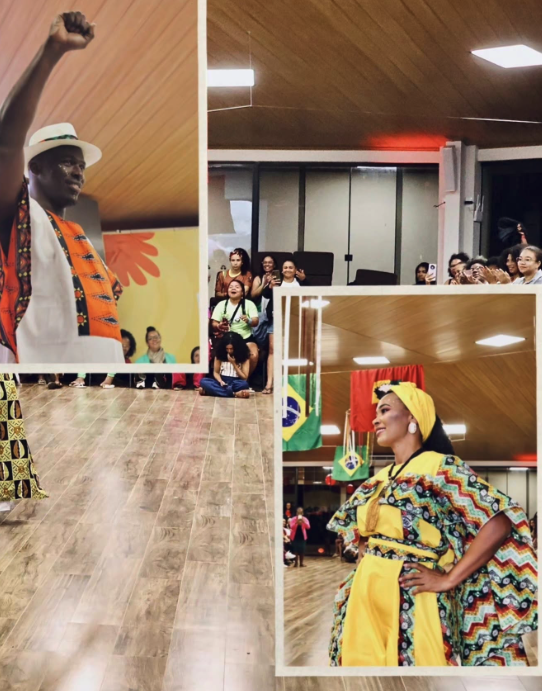
III Meeting of CONAQ's Quilombola Women's Collective - Photo credit: CONAQ
CONAQ, the National Coordination for the Articulation of Rural Black Quilombola Communities, is Brazil’s leading Quilombola organisation and a national reference in the defence of rural Black communities’ rights.
Quilombolas are descendants of communities formed by formerly enslaved Africans who resisted oppression and built collective territories. Their rights are recognised under Brazil’s Constitution and ILO Convention 169. According to Brazil’s 2022 Census, more than 1.3 million people identify as Quilombola across 24 states.
But recognition on paper does not always translate into security in practice. Across Brazil, many Quilombola communities continue to face delays in land titling, territorial pressures, environmental threats and structural inequalities that affect not only their lands, but their health, livelihoods and futures.
Gatherings like this do more than create visibility. They are where movements organise, alliances are built, priorities are set, and land rights, climate action and gender justice are recognised as inseparable.
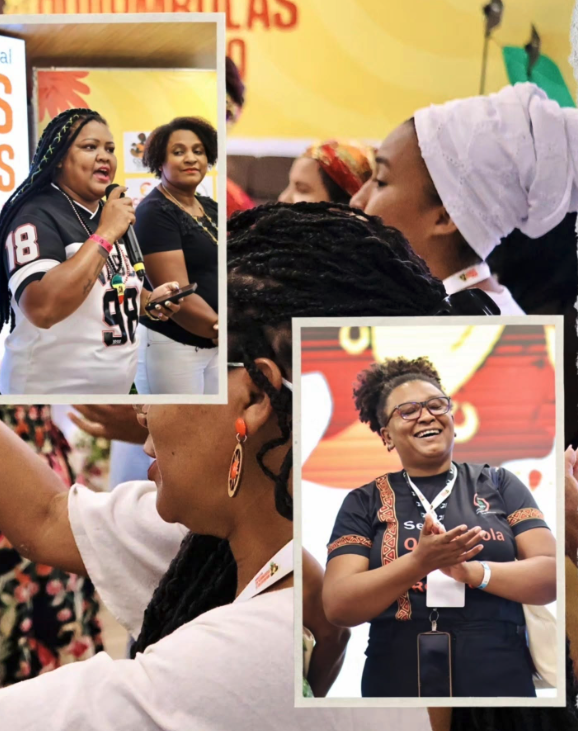
III Meeting of CONAQ's Quilombola Women's Collective - Photo credit: CONAQ
CONAQ, in partnership with the Fundo Brasil de Direitos Humanos (Brazil Human Rights Fund, FBDH) and supported by Tenure Facility, is advancing the recognition and governance of Quilombola territories, particularly in the Brazilian Amazon.
The initiative is strengthening Quilombola organisations, supporting community leadership and territorial governance, while advancing the formal recognition of more than 1 million hectares of Quilombola territories. These territories have the potential to store an estimated 44 million tonnes of carbon in their soils.
Behind those numbers are communities, histories and ways of life. Securing Quilombola territories is not only a matter of legal recognition. It is also a vital contribution to climate action, biodiversity protection, cultural survival and social justice.
Spending time at the gathering reinforced something we see across many of the communities we work alongside: progress begins long before a title is granted. It grows through strong organisations, trusted leadership, community mobilisation and the persistence of people who continue to defend their territories despite enormous challenges.
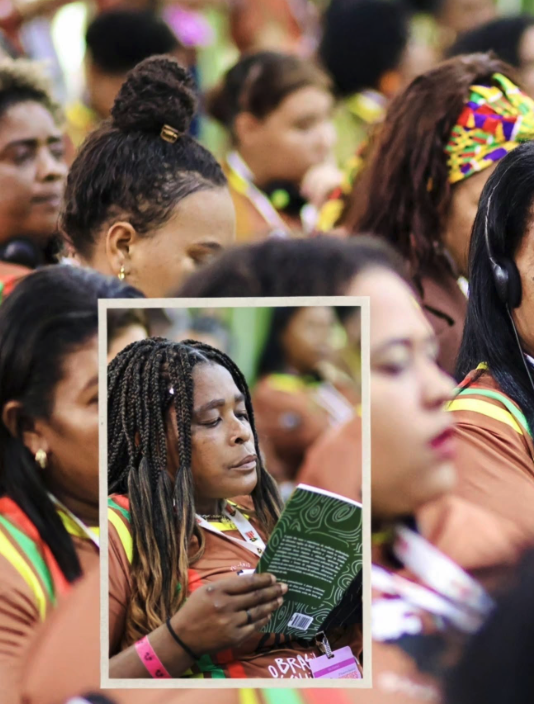
III Meeting of CONAQ's Quilombola Women's Collective - Photo credit: CONAQ
One of the most powerful aspects of the gathering was how quickly local conversations became global ones.
Quilombola leaders from across Brazil were joined by representatives from communities in Latin America and Africa. Different countries, different political realities, and yet many of the same questions emerged: how do communities defend ancestral territories? How do women protect one another while leading that work? How can economic autonomy, cultural survival and territorial governance reinforce each other?
The exchanges showed that the challenges faced by rural Black communities, Indigenous Peoples and traditional peoples are deeply connected. They also showed that many of the responses are collective: community organising, women’s leadership, solidarity-based economies, stronger territorial governance and alliances that cross borders.
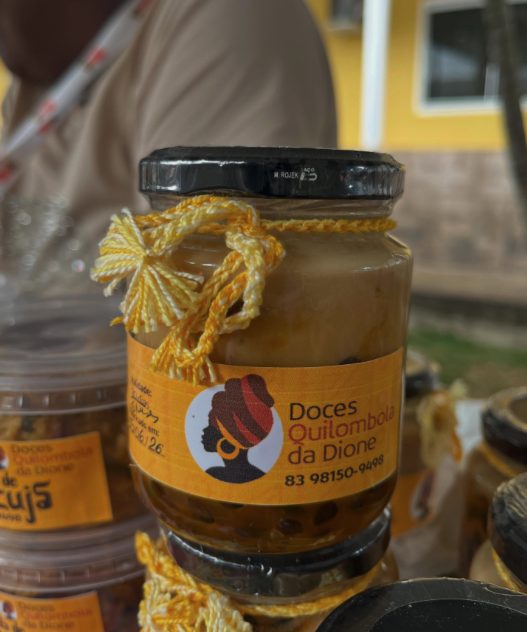
Quilombola Products Fair - Photo credit: CONAQ
At the Quilombola Products Fair, territory took many forms.
Handicrafts, jewellery, herbal medicines, teas, organic foods, sweets and other locally produced goods. But this was not just a marketplace. It was also a living expression of territory.
Each product carried part of a wider story: of traditional knowledge passed between generations, of local economies rooted in cooperation, and of women creating pathways for autonomy while continuing to care for their communities and lands.
Strengthening the economic autonomy of Quilombola communities is also a way of strengthening their ability to remain in their territories and shape their own futures.
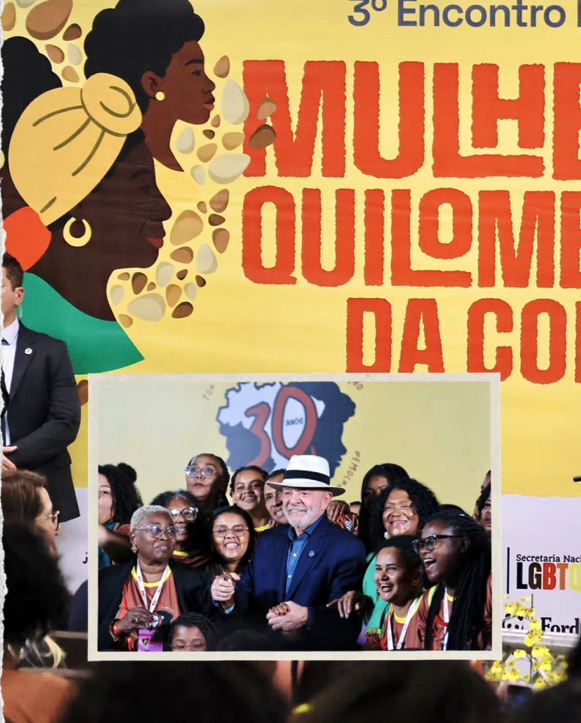
President Luiz Inácio Lula da Silva at the III Meeting of CONAQ's Quilombola Women's Collective - Photo credit: CONAQ
During the meeting, 18 Quilombola communities received formal land titles.
This was one of the most significant moments of the gathering. For communities, a land title means something much greater like security, reduced vulnerability and stronger conditions to govern their territories, protect their ways of life and plan for future generations.
The presence of President Luiz Inácio Lula da Silva underscored the national significance of Quilombola demands and reinforced a simple point: territorial rights are not a favour or a benefit. They are constitutional rights.
The participation of civil society organisations, institutional partners and allies strengthened the wider network supporting Quilombola communities. It also reinforced one of the central messages of the week: there can be no climate justice without secure territorial rights, and no just ecological transition without recognising the leadership of Black Quilombola women.
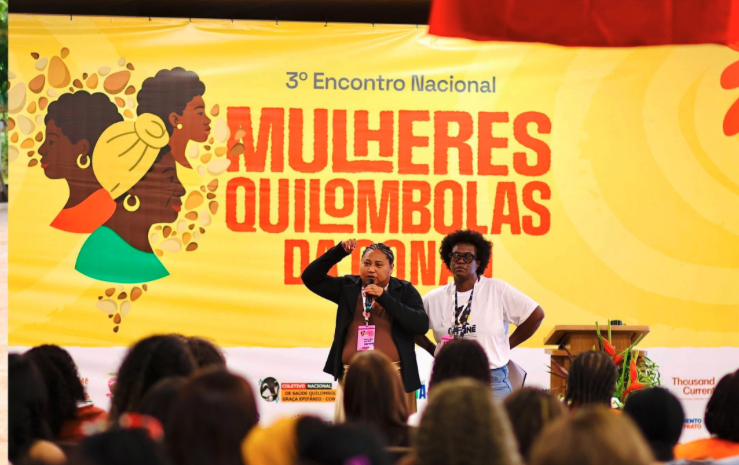
III Meeting of CONAQ's Quilombola Women's Collective - Photo credit: CONAQ
One of the most important announcements of the gathering was the launch of Project Cafuné, a CONAQ initiative focused on the protection and collective care of Quilombola women human rights defenders.
The initiative brings together actions related to mental health, wellbeing, safety and territorial defence. Its starting point is simple but urgent: protecting territories also means protecting the people who defend them.
According to CONAQ leaders, the project’s priorities go beyond traditional public security measures. They include:
This focus on care is not secondary to the struggle for land rights. It is central to it.
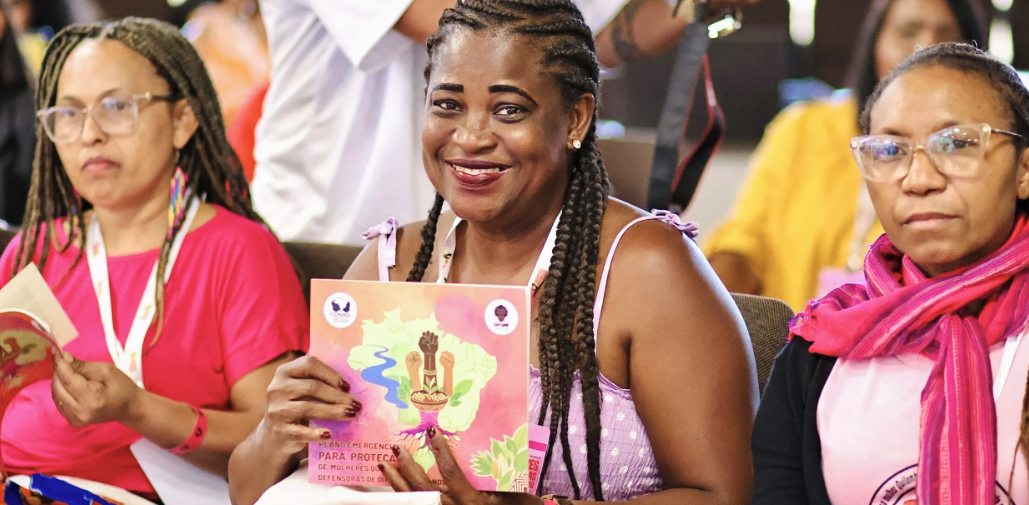
Launch of Project Cafuné Photo Credit: CONAQ
Delays in land titling, constant threats, land conflicts and the impacts of climate change have all taken a profound toll on Quilombola communities. Research published by Brazil’s Oswaldo Cruz Foundation (Fiocruz) at the end of 2025 found that Quilombola adults die more frequently from preventable causes than the Brazilian population as a whole. Among women, mortality from acute myocardial infarction is 18% higher, while deaths from stroke are 38% higher.
These findings make clear that territorial insecurity is also a public health issue. Defending land can come at a cost, and any serious commitment to land rights must also include the safety, dignity and wellbeing of those on the frontlines.
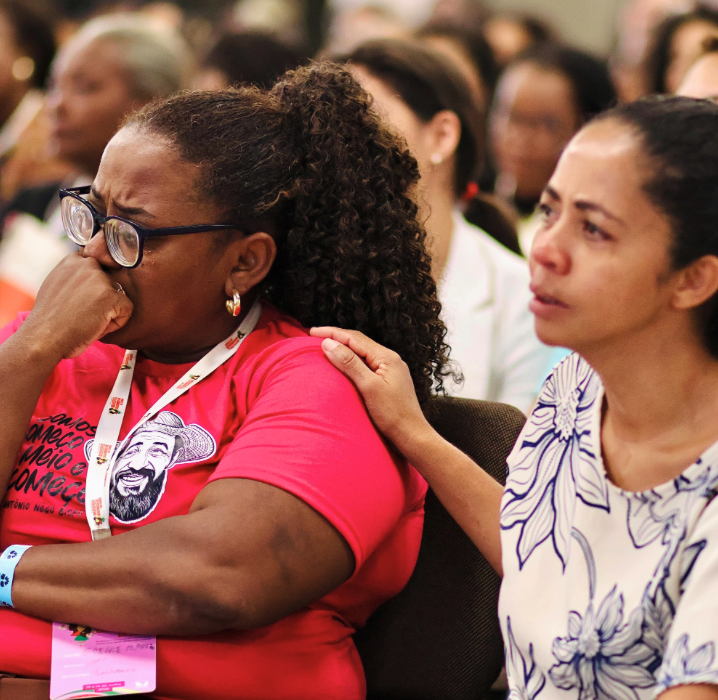
III Meeting of CONAQ's Quilombola Women's Collective - Photo credit: CONAQ
The III Meeting of CONAQ’s Quilombola Women’s Collective reaffirmed that the struggle for land rights is inseparable from climate justice, historical reparation, democracy and care.
It was a gathering of achievements, but also of questions that remain urgent: How can land rights be secured faster? How can women defenders be better protected? How can communities strengthen their economies without compromising their territories? How can public policy reflect the knowledge and leadership that already exist in Quilombola communities?
For Tenure Facility, the answer begins with investing in the organisations and movements that sustain this work every day.
Supporting Quilombola women’s leadership means supporting stronger communities, healthier territories, more inclusive governance and more durable responses to the climate and social challenges of our time.
The title of this piece borrows a phrase from the late Quilombola intellectual and thinker Nêgo Bispo, whose reflections on territory, ancestry and collective life continue to inspire movements across Brazil:
“We are the middle, the beginning and the middle.”
By the end of the week, those words felt less like a quote and more like a description of the movement unfolding before us. Quilombola women are not only defending what has been passed down to them. They are shaping what comes next.
Articles