
At COP30 in Belém, governments and funders pledged billions to advance the territorial rights of Indigenous Peoples, Afro-descendant Peoples and local communities. These communities steward some of the world's most important forests and ecosystems. One year on, the key question remains: will that funding reach the territories it is intended for, and who will decide how it is used?
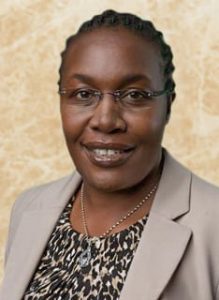
Margaret A. Rugadya is a natural resource economist, rights activist, and scholar, with more than twenty years of continuous contributions to land tenure, resource governance, and gender equity. Currently she serves as chief programme officer at Tenure Facility. Prior to this role, Margaret served as the global practice leader, on gender, land, and resource tenure at Resource Equity and as a program officer at the Ford Foundation in Kenya. Margaret also coalesced land rights activists, civil society organisations, and rural populations into a countrywide movement for pro-poor land law reforms, benefiting women and rural communities in Uganda. She received two distinguished awards for outstanding contribution to law and policy reforms from the government and civil society organisations in Uganda for this work. Margaret has authored a compelling collection of research papers, journal articles, and book chapters focusing on socio economic groups and fragile property rights. She has designed courses to train government agencies and non-state actors on land and natural resource policies that impact native communities and women. She holds a Ph.D. (Economics) from Maastricht University and a Master of Arts (Sociology) from Makerere University.

Joan Carling is an Indigenous leader and environmental defender with decades of experience advocating for Indigenous Peoples’ rights, land protection, and climate justice across local to international platforms. She currently serves as Executive Director of Indigenous Peoples Rights International (IPRI) and has held roles including Secretary-General of the Asia Indigenous Peoples Pact and as a UN Permanent Forum expert member. In recognition of her lifelong advocacy, she received the UN Environment’s Champions of the Earth Lifetime Achievement Award (2018) and the Right Livelihood Award (2024).
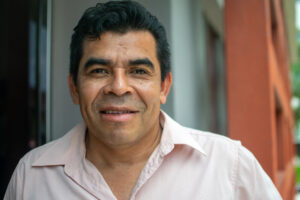
Levi Sucre Romero is an Indigenous leader from the Bribri community of Talamanca, Costa Rica. He currently leads the technical management and organizational processes of the Bribri and Cabécar Indigenous Network (RIBCA), which brings together eight Indigenous territories in Costa Rica. He is a farmer and a specialist in Indigenous organizations, cultures, and environmental issues in Central America. He has over 20 years of experience in rural development and community organizing, as well as 15 years of experience in the design, implementation, and evaluation of projects in Indigenous territories and local communities. He currently serves as General Coordinator of the Mesoamerican Alliance of Peoples and Forests (AMPB)

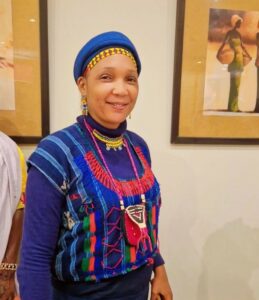
Balkisou Buba is from the Mbororo Fulani Pastoralist community of Cameroon. She is the Founder and President of Indigenous Peoples and Sustainable Development Association (IPSD-Cameroon) and the Vice National Coordinator of the Network for Indigenous Peoples and Local communities for sustainable management of Forest Ecosystems in Central Africa (REPALEAC Cameroon). She has been working for the protection and promotion of the rights of Indigenous Peoples for about 15 years.
She focuses her work on community development, climate change, land rights, biodiversity conservation, traditional knowledge, lobbying and advocacy, empowerment of women. She has been representing Indigenous Peoples nationally, regionally and internationally in different forums, working groups and thematic issues. She is currently one of Africa’s representatives in the Indigenous Peoples Advisory Group (IPAG) of the Green Climate Fund (GCF).
She is a 2015 Mandela Washington Fellow, was trained at the University of Delaware, and carried out her professional development experience in the Phoenix Indian Center in Arizona. She also holds a master’s degree in international Cooperation, Humanitarian Action and Sustainable Development from the International Relations Institute of Cameroon, (IRIC).

Maggie Charnley is the Head of the UK government’s International Forests Unit, directing a joint team in the Department for Energy Security and Net Zero (DESNZ) and the Foreign, Commonwealth and Development Office (FCDO). Maggie’s team leads on international forest strategy with a particular focus on supporting the actions taken by tropical forest countries. This includes in relation to International Climate Finance, as well as forest carbon markets, the UNFCCC framework for forests (REDD+), innovative approaches to mobilising private finance, tackling deforestation in supply chains, and forest governance. Her team also leads on the follow up to the forest commitments made in Glasgow at COP26 in 2021. Maggie is the senior official for the UK’s interests in the Central African Forests Initiative (CAFI), of which the UK is currently chair.
Maggie has twenty years’ experience working in international environment policy, building on a degree in Environmental Sciences from the University of East Anglia. She took on leadership of the forests team in October 2020, having spent the previous 17 years in the Department for Environment, Food and Rural Affairs (Defra) covering a wide range of portfolios with an environment, land use and agriculture focus, both domestic and international.
Fernanda Garavini holds a bachelor’s degree in economics and a master’s degree in strategy from COPPEAD/UFRJ, and has served as head of the Amazon Fund’s Management Department since the Amazon Fund was reestablished in 2023. While at the BNDES, she has worked in the areas of sanitation, culture, indirect operations, and strategic planning over the past 16 years.
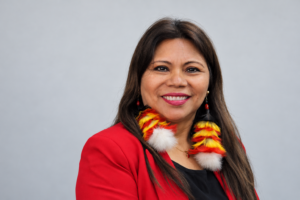
Leader of the Uitoto People, Jitomagaro clan, of the Predio Putumayo Reserve, in the Colombian Amazon.
Fany is a lawyer, specialist in senior government management and holder of a Master’s degree in political and international studies. She is an advocate for Indigenous collective and environmental rights, she comes from a family of traditional leaders and has dedicated her career to strengthening Indigenous Peoples, territorial protection and the active participation of Indigenous women in governance and decision-making forums.
Fany is currently general coordinator of the coordinating body of Indigenous Organisations of the Amazon Basin (COICA) and the first woman to hold this post in the organisation’s 42-year history. In this role, she represents and articulates the demands of the Indigenous Peoples of the nine countries in the Amazon Basin.
She also serves as co-chair of the Global Alliance of Territorial Communities (GATC), strengthening the presence and voice of Indigenous Peoples and local communities in international forums.

Eleni Kyrou is a development practitioner with over 25 years of experience across the global South.
Currently she serves as the Green Climate Fund's head of sustainability and inclussion. Before this role she served at the European Investment Bank (EIB) in different roles. During her time at the she led EIB Group’s Strategy on Gender Equality and Women’s
Empowerment. She has a strong operational background and has worked across different sectors and regions including Northern, Eastern and Southern Africa, Central and South America, South and East Asia, as well as within the European Union.
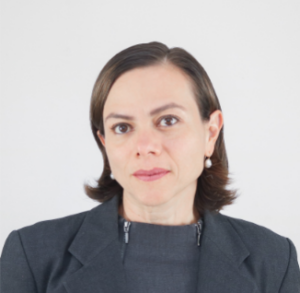
MSc. María Pía Hernández Palacios is a lawyer specializing in International Environmental Law, with a master’s degree from Johann Wolfgang Goethe University in Frankfurt am Main, Germany.
Since 2023, she has served as the Regional Manager of the Mesoamerican Territorial Fund (FTM), an innovative, indigenous and community-led financing mechanism designed and governed by the Mesoamerican Alliance of Peoples and Forests (AMPB). The FTM serves as a strategic vehicle to channel direct territorial investments, strengthen local capacities, and promote culturally appropriate monitoring systems that respond to the priorities and needs of Indigenous Peoples and Local Communities (IPLCs).
The Fund aims to strengthen Indigenous and community-led organizations across Mesoamerica, particularly in forest-rich territories of exceptional biodiversity and significant natural and cultural heritage. Through its territorial approach, the FTM seeks to advance locally driven solutions, reinforce territorial governance, and support the long-term stewardship of forests and ecosystems.
Despite being a relatively recent initiative, the FTM has already allocated more than USD 4 million in small and medium-sized grants to initiatives led and implemented by Indigenous Peoples and Local Communities across six Mesoamerican countries: Mexico, Guatemala, Honduras, Nicaragua, Costa Rica, and Panama.
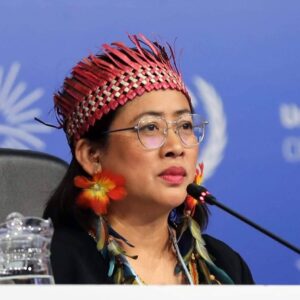
Jenifer Lasimbang, a Kadazan from Sabah, Malaysian Borneo, has devoted over three decades to advancing Indigenous Peoples’ rights and dignity. Her leadership spans education, socio-economic development, healthcare, natural resource management, climate justice, and cultural biodiversity.
From championing mother tongue-based education to shaping policies as a former member of the Sabah State Legislative Assembly and Assistant Minister of Education and Innovation (2018–2020), Jenifer has consistently bridged grassroots realities with systemic change.
Today, she serves as Executive Director of the Indigenous Peoples of Asia Solidarity Fund (IPAS) and is affiliated with JOAS, the Indigenous Peoples’ Network of Malaysia. In these roles, she continues to drive transformative initiatives, ensuring direct access to funding for Indigenous Peoples across Asia and amplifying Indigenous-led solutions for a just and sustainable future.
Her work embodies the living relationship between culture and nature, reminding the world that to protect biodiversity is to protect humanity’s collective heritage.
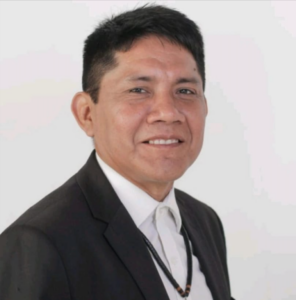
Mário Nicácio, a member of the Wapichana People, was born in the Pium Indigenous community in the Itacutu region and currently lives in the Laje community in the Serra da Lua region of Roraima. He holds a technical qualification in Agriculture, Livestock and Environmental Management from CIFCRSS/RR and a degree in Business Administration with a specialisation in Information Systems from Faculdade Cathedral de Ensino Superior. He also holds a Professional Master’s degree in Sustainability from the University of Brasília (UnB).
He has extensive experience in the Indigenous movement and public administration, having served as coordinator of the Indigenous Council of Roraima (CIR) between 2011 and 2017, deputy coordinator of COIAB between 2017 and 2020, and coordinator of the PNGATI Management Committee between 2018 and 2019. He was deputy mayor of the municipality of Bonfim, Roraima, from 2021 to 2024 and a member of the Podáali Audit Committee between 2021 and 2025. He served as a technical and administrative adviser to the Legislative Assembly of Roraima and as a technical adviser to the Itacutu and Serra da Lua ethno-regions, and in May 2026 he took up the post of Executive Director of Podáali.
Eleni Kyrou is a development practitioner with over 25 years of experience across the global South.
Currently she serves as the Green Climate Fund's head of sustainability and inclussion. Before this role she served at the European Investment Bank (EIB) in different roles. During her time at the she led EIB Group’s Strategy on Gender Equality and Women’s
Empowerment. She has a strong operational background and has worked across different sectors and regions including Northern, Eastern and Southern Africa, Central and South America, South and East Asia, as well as within the European Union.
Maggie Charnley is the Head of the UK government’s International Forests Unit, directing a joint team in the Department for Energy Security and Net Zero (DESNZ) and the Foreign, Commonwealth and Development Office (FCDO). Maggie’s team leads on international forest strategy with a particular focus on supporting the actions taken by tropical forest countries. This includes in relation to International Climate Finance, as well as forest carbon markets, the UNFCCC framework for forests (REDD+), innovative approaches to mobilising private finance, tackling deforestation in supply chains, and forest governance. Her team also leads on the follow up to the forest commitments made in Glasgow at COP26 in 2021. Maggie is the senior official for the UK’s interests in the Central African Forests Initiative (CAFI), of which the UK is currently chair.
Maggie has twenty years’ experience working in international environment policy, building on a degree in Environmental Sciences from the University of East Anglia. She took on leadership of the forests team in October 2020, having spent the previous 17 years in the Department for Environment, Food and Rural Affairs (Defra) covering a wide range of portfolios with an environment, land use and agriculture focus, both domestic and international.